What Monsoon Season Does to Las Vegas Attics And Why Most Homeowners Never Find Out
Your upstairs feels like a sauna in July. Your energy bills climbed without a clear explanation. Your HVAC is running harder than it did last summer. Most homeowners in the Las Vegas Valley chalk that up to desert heat, and they move on. Sometimes that is the right call. But attics in this region take on a specific kind of stress during monsoon season that has nothing to do with temperature, and by the time the damage becomes visible, it has often been building for years without a single obvious symptom.
If you have started wondering whether something invisible is causing the problem, calling a professional mold inspector in Las Vegas is the right instinct. Most mold content online focuses on bathrooms, under sinks, and laundry rooms. Your attic almost never makes the list, even though it is often the first place conditions turn dangerous after monsoon rains.
Las Vegas Attics Accumulate Moisture in Ways Coastal Climates Do Not
The mechanics of an attic mold problem in the desert differ from what you would find in a humid coastal climate. During monsoon season, outdoor humidity in the Las Vegas Valley can spike from under 10 percent to 50 or 60 percent in a matter of hours. That moisture-laden air gets drawn into attic spaces through passive vents, soffit openings, and any gaps in the building envelope.
Once inside, it meets a roofing structure that may have reached 150 to 160 degrees Fahrenheit on the surface by midday. The attic becomes a problem not because of the heat alone, but because rapid temperature swings cause humidity to condense on the underside of roof decking, on rafter surfaces, and on the facing material of fiberglass insulation batts. The condensation is brief, often invisible, and repeats with every storm cycle. That repetition is exactly what mold needs to establish itself.
Attic Mold Does Not Look or Smell Like What You Expect
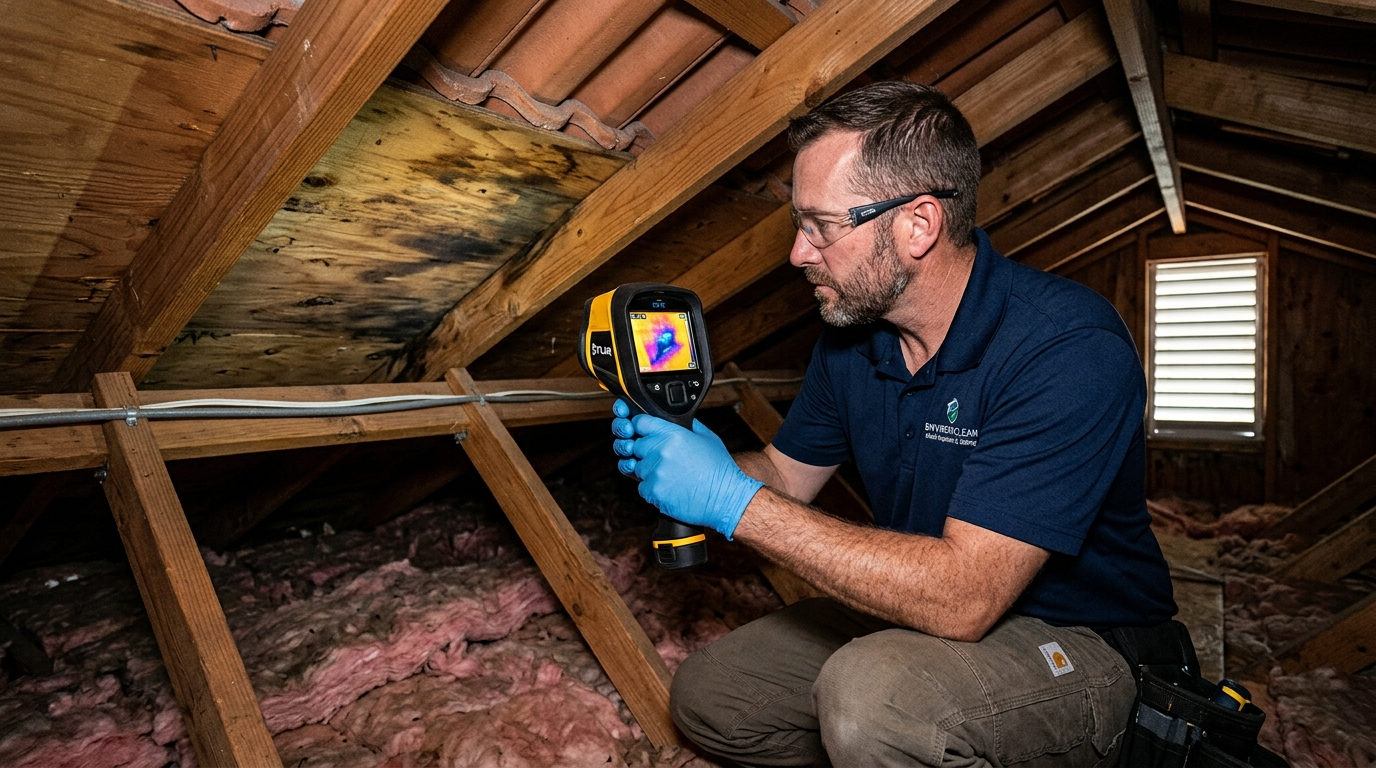
Mold in a bathroom shows up as a visible stain. Attic mold reads differently. The first signs are often structural rather than cosmetic: roof decking that appears darker than surrounding wood, a subtle waviness in the plywood, or insulation that has compressed in patches where moisture has repeatedly cycled through it.
You will rarely smell attic mold from the living space below, especially in a well-sealed home with a functioning vapor barrier. The odor pathway gets interrupted. What you notice instead is a gradual drop in energy efficiency as compromised insulation loses its R-value, and a vague stuffiness in upper-level rooms that your HVAC cannot resolve.
We regularly see properties where the attic shows active fungal growth on roof decking while the homeowner reports no odor whatsoever. The absence of smell is not reassurance. It is a data gap.
Poor Ventilation Is What Tips a Marginal Attic Into a Mold Problem
Not every attic exposed to monsoon humidity develops mold. The variable that separates marginal from dangerous is ventilation. An attic with properly balanced intake and exhaust can flush humid air before it condenses. An attic where soffit vents are blocked by insulation, ridge vents are undersized for the roof area, or bathroom exhaust fans vent into the attic rather than outdoors creates the conditions for repeated moisture accumulation.
Clark County residential construction during the 1990s and early 2000s frequently used ventilation configurations that met code at the time but fall short of current best practices. If your home was built during that window and has never had its attic ventilation audited, the structure may be working against you every monsoon season. Learn more about how the desert climate creates unexpected mold conditions in this overview of mold growth patterns specific to the Las Vegas area.
Thermal Imaging Finds What a Flashlight and a Good Eye Cannot
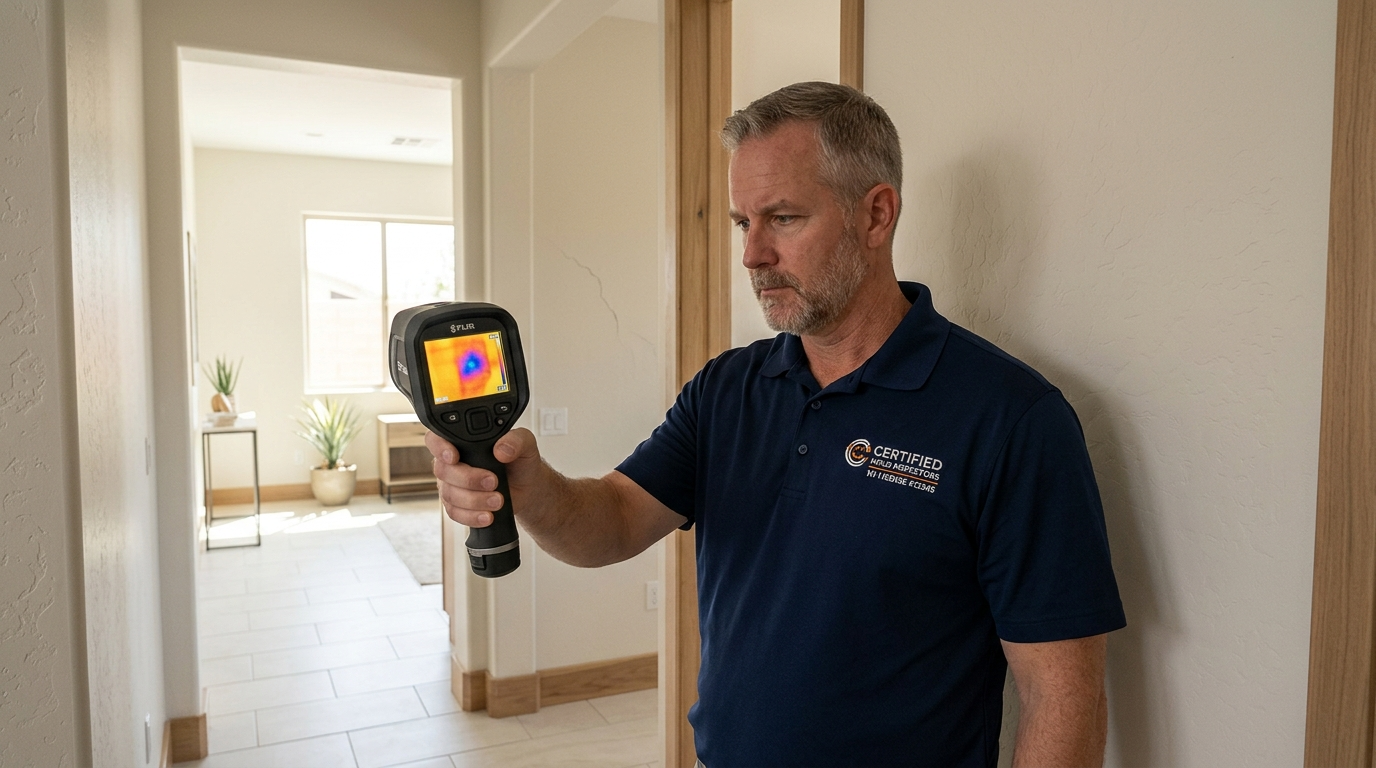
Standard visual inspections have real limitations in an attic. Experienced eyes can identify visible fungal growth, but early-stage moisture accumulation behind insulation or within rafter cavities is not visible. FLIR thermal imaging closes that gap.
Thermal cameras detect temperature differentials across surfaces. In an attic, areas where moisture has condensed and evaporated repeatedly show as thermal signatures that deviate from the surrounding structure, even when the surface looks completely dry. No materials are disturbed. No surfaces need to be opened. A qualified inspector can walk the attic with a thermal camera and identify moisture-affected zones that would otherwise require destructive investigation to locate. For a detailed explanation of how this technology works in practice, see how FLIR thermal imaging detects what you cannot see.
Air Sampling Answers the Question That Actually Matters for Your Family
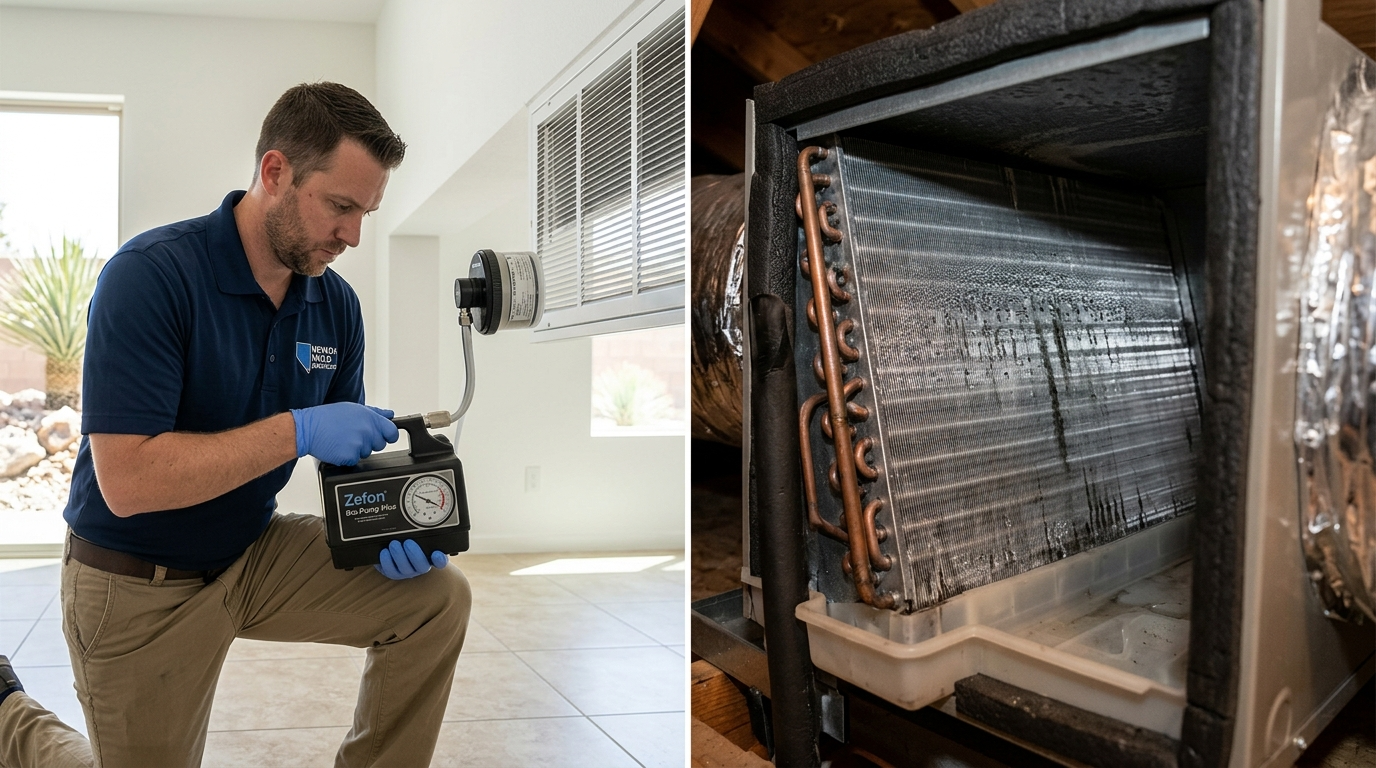
Finding mold on a roof deck is one part of the assessment. The more urgent question is whether spores from that attic growth have migrated into your conditioned living space. Spores travel through recessed lighting fixtures, attic access panels, and any penetration in the ceiling plane. They also enter through return air pathways if ductwork runs through the attic.
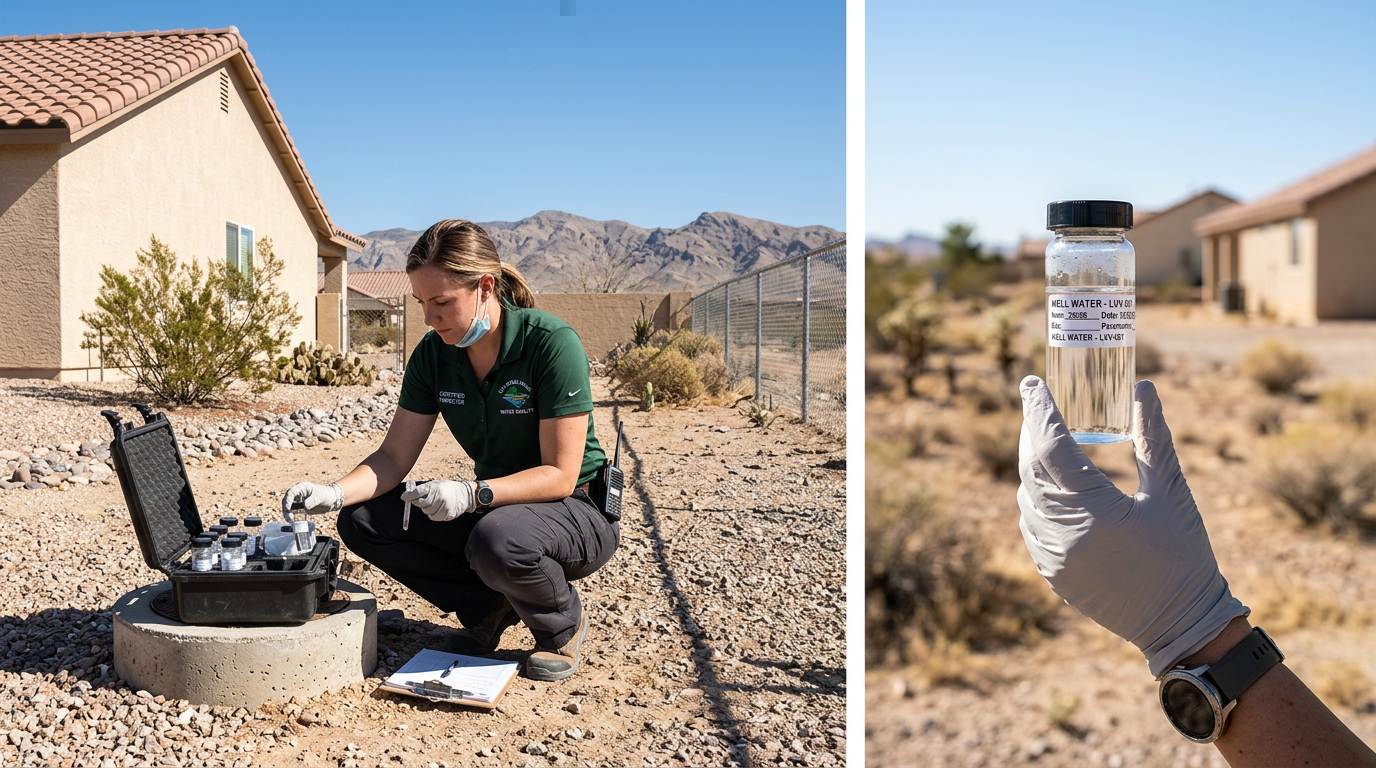
Air sampling in both the attic and the living area, analyzed against an outdoor baseline, produces a spore count comparison that answers this question with laboratory precision. If attic spore levels are elevated and living space levels show a corresponding signature, you have a documented pathway. If they do not correlate, that is equally useful information.
The written report from a certified inspection gives you something a DIY test strip cannot: a defensible professional record of conditions at a specific point in time. For an explanation of what goes into that laboratory process, this breakdown of how mold testing labs work is worth reading before your inspection.
Questions Homeowners Ask Before Scheduling an Attic Mold Inspection
My home inspector looked at the attic when I bought the house. Doesn't that cover mold?
Home inspectors assess structure, not microbiology. A general home inspection is not the same as a mold inspection. Most home inspectors are not certified environmental assessors. They are looking for visible structural defects and code concerns, not spore counts or fungal growth that has not yet caused obvious discoloration. The two inspections serve entirely different purposes and produce different kinds of documentation.
I went up there with a flashlight and didn't see anything. Can mold really be there without being visible?
Yes. Early-stage growth on roof decking can appear as a slight gray or green tint that reads as weathered wood in inadequate lighting. Thermal imaging and air sampling detect conditions before they reach the obvious-stain stage. Waiting for visibility means waiting for significant damage, and by then the remediation scope is larger and more expensive.
I've been told to just have a remediation company spray the attic as a precaution. Is that a good idea?
No. Treating a space without a confirmed diagnosis is unnecessary expense, and it does not address the ventilation or moisture conditions that caused the problem. More importantly, a remediation company profits from treating your attic. An independent testing company profits from telling you the truth. Those are different incentives, and they produce different recommendations. If you are unsure which type of company to call first, this comparison lays out exactly what each one does and why sequence matters.
If mold is found, will Las Vegas Mold Testing try to sell me a remediation package?
No. Las Vegas Mold Testing is an inspection and testing company only. We do not remediate or repair, and that separation is intentional. Our findings have no commercial relationship to any remediation outcome, which means your report reflects conditions as they are, not as a contractor needs them to appear to justify a scope of work. You get the findings. You choose what to do with them.
Schedule an Attic Assessment Before the Moisture Cycles Add Up
Monsoon season in the Las Vegas Valley runs from roughly July through September. The window after the first significant storms is the right time to schedule an attic assessment, before repeated moisture cycles compound into a documented problem.
Las Vegas Mold Testing is certified through InterNACHI, IAC2, and NAMP. Every inspection includes FLIR thermal imaging, air sampling with laboratory analysis, a physical assessment of the attic structure, and a written report you can use for insurance, real estate, or your own records. You walk away knowing exactly what is in your attic, not guessing.
Call (702) 766-8030 or submit a contact form to schedule. You will get a clear answer, not a sales pitch.
Contact Form
Check Out Our Other Environmental Blogs!