The Surprising Truth About Mold Growth in the Las Vegas Desert

Many homeowners assume that living in a dry desert climate protects them from mold. In reality, the Las Vegas environment creates hidden mold risks that often go unnoticed until property damage or health symptoms appear. While Southern Nevada is known for low humidity and intense heat, indoor conditions and sudden moisture events frequently create the exact environment mold needs to grow behind walls, beneath flooring, and inside HVAC systems.
Las Vegas Mold Testing helps property owners identify these concealed risks through precise, professional testing focused on indoor air quality, hidden moisture detection, and structural vulnerability. In a region where mold is underestimated, objective testing becomes essential.
How Las Vegas Desert Conditions Actually Contribute to Mold Growth
At first glance, the Las Vegas desert appears too dry to support mold. Outdoor humidity levels are often low, especially during peak summer heat. However, mold growth does not depend on outdoor humidity. It depends on indoor moisture, organic building materials, and stagnant air.
Several conditions specific to Las Vegas increase hidden mold risk:
- Heavy reliance on air conditioning systems
- Tightly sealed modern construction
- Flash flooding during monsoon season
- Plumbing leaks beneath slab foundations
- Evaporative coolers in certain properties
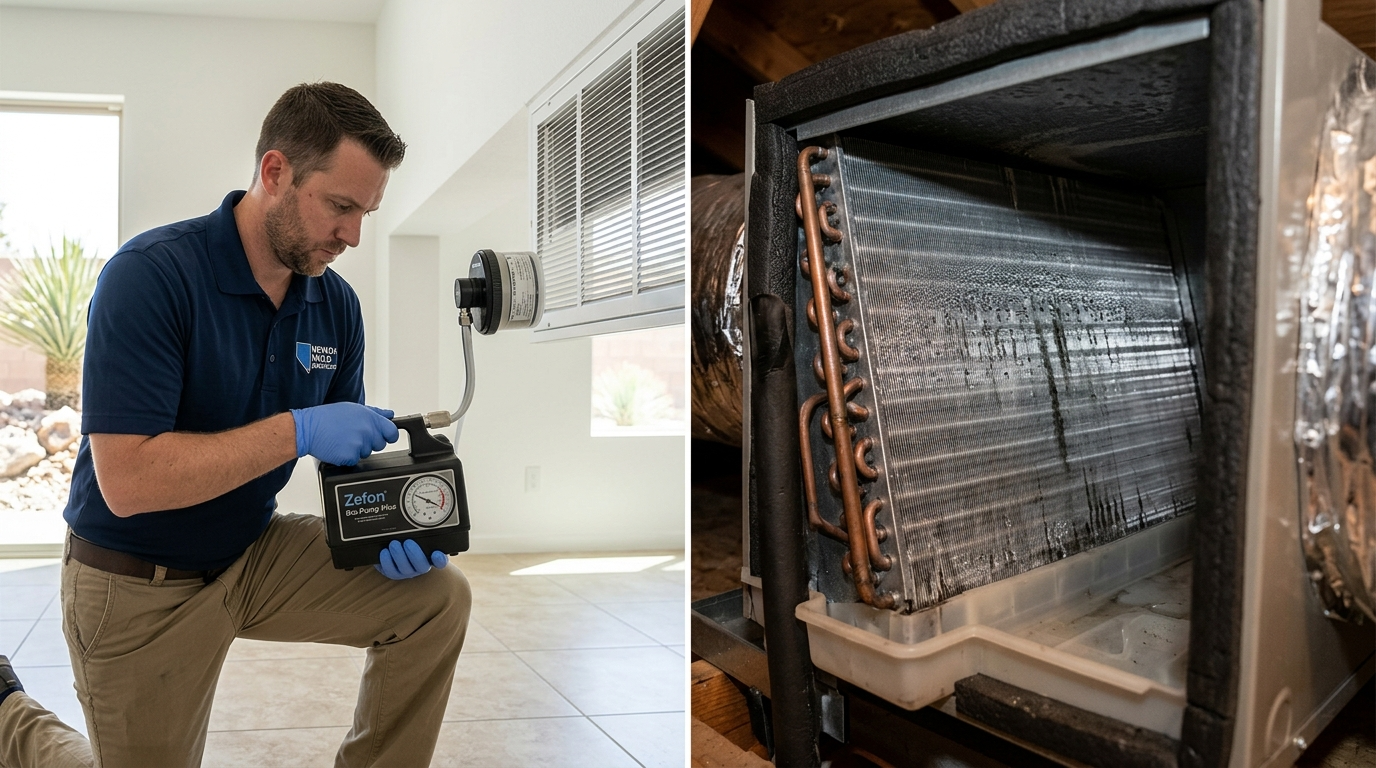
Air conditioning systems run for much of the year in Southern Nevada. These systems naturally produce condensation. When condensation accumulates in drain lines, drip pans, coils, or ductwork, moisture can remain trapped in dark interior spaces. Without proper maintenance, microbial growth may begin inside the HVAC system and circulate spores throughout the home.
Modern energy efficient construction can also limit airflow. While sealed buildings reduce cooling costs, they can trap moisture indoors when leaks or condensation occur. In a dry climate, homeowners rarely think about humidity buildup, which allows hidden moisture to persist unnoticed.
Monsoon Season and Sudden Water Intrusion Risks
Late summer monsoon storms in Las Vegas are brief but intense. Heavy rainfall, strong winds, and localized flooding can push water into roofing systems, around windows, and through small structural gaps.
Desert homes are not exposed to steady rainfall throughout the year, so minor vulnerabilities in flashing, seals, or drainage systems may go undetected. When a sudden storm forces water inside, moisture can penetrate building materials such as attic insulation, drywall, wall cavities, and subflooring.
Surface water often evaporates quickly in desert heat. This rapid drying creates a false sense of security. While visible areas may appear dry within hours, moisture trapped inside structural materials can remain long enough to support mold growth. Without professional moisture detection and air sampling, hidden microbial colonies may develop for weeks or months before being discovered.
Why Air Conditioning Can Increase Indoor Mold Risk
In Las Vegas, cooling systems operate for extended periods, especially from late spring through early fall. Constant temperature differences between indoor and outdoor air can lead to condensation on cooler surfaces.
Common areas where localized moisture develops include supply vents, return ducts, bathroom ceilings, areas around windows, under sinks, and garage to home transition walls. Even small amounts of repeated condensation can introduce enough moisture for mold to begin growing on drywall backing, wood framing, or insulation.
The issue in desert climates is rarely high overall humidity. Instead, it is isolated pockets of moisture in concealed spaces. Las Vegas Mold Testing frequently identifies elevated spore levels in areas homeowners never suspected, particularly around poorly insulated ducts or slow plumbing leaks.
Slab Foundations and Undetected Plumbing Leaks
Many Las Vegas homes are built on concrete slab foundations. When plumbing lines beneath the slab develop leaks, moisture can migrate upward into flooring materials and lower wall sections.
Homeowners may notice subtle warning signs such as slight flooring warping, persistent musty odors, minor staining near baseboards, or unexplained allergy symptoms. Because visible surfaces dry quickly in the desert, these symptoms are often dismissed as unrelated issues.
Moisture trapped beneath tile, laminate, or carpet padding can support microbial growth for extended periods. Professional air and surface sampling can determine whether abnormal spore counts are present and whether further investigation is warranted.
In arid climates, mold growth is frequently concealed rather than visible. Families may experience health symptoms before identifying a source.
Possible indicators linked to indoor mold exposure include:
- Persistent nasal congestion
- Chronic coughing or throat irritation
- Headaches without a clear cause
- Worsening asthma symptoms
- Eye irritation
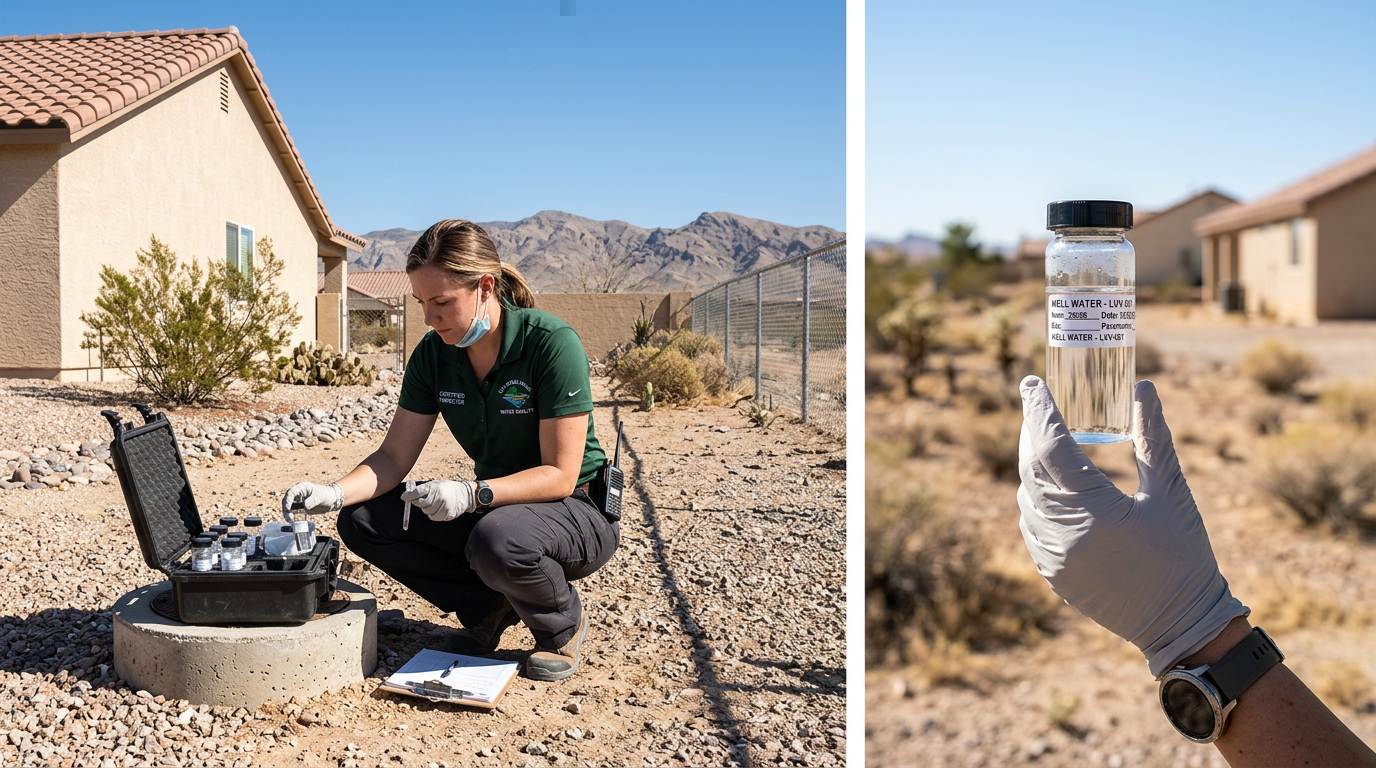
While many factors can contribute to these symptoms, indoor air contamination is often overlooked in desert regions. Las Vegas Mold Testing relies on calibrated air sampling equipment and laboratory analysis to objectively measure spore concentrations indoors and compare them to outdoor baseline levels.
Why DIY Mold Testing Often Misses Hidden Problems
Over the counter mold test kits frequently provide incomplete or misleading results. In Las Vegas, outdoor spore counts are typically low. Without proper comparative sampling and professional interpretation, homeowners may not recognize subtle indoor amplification.
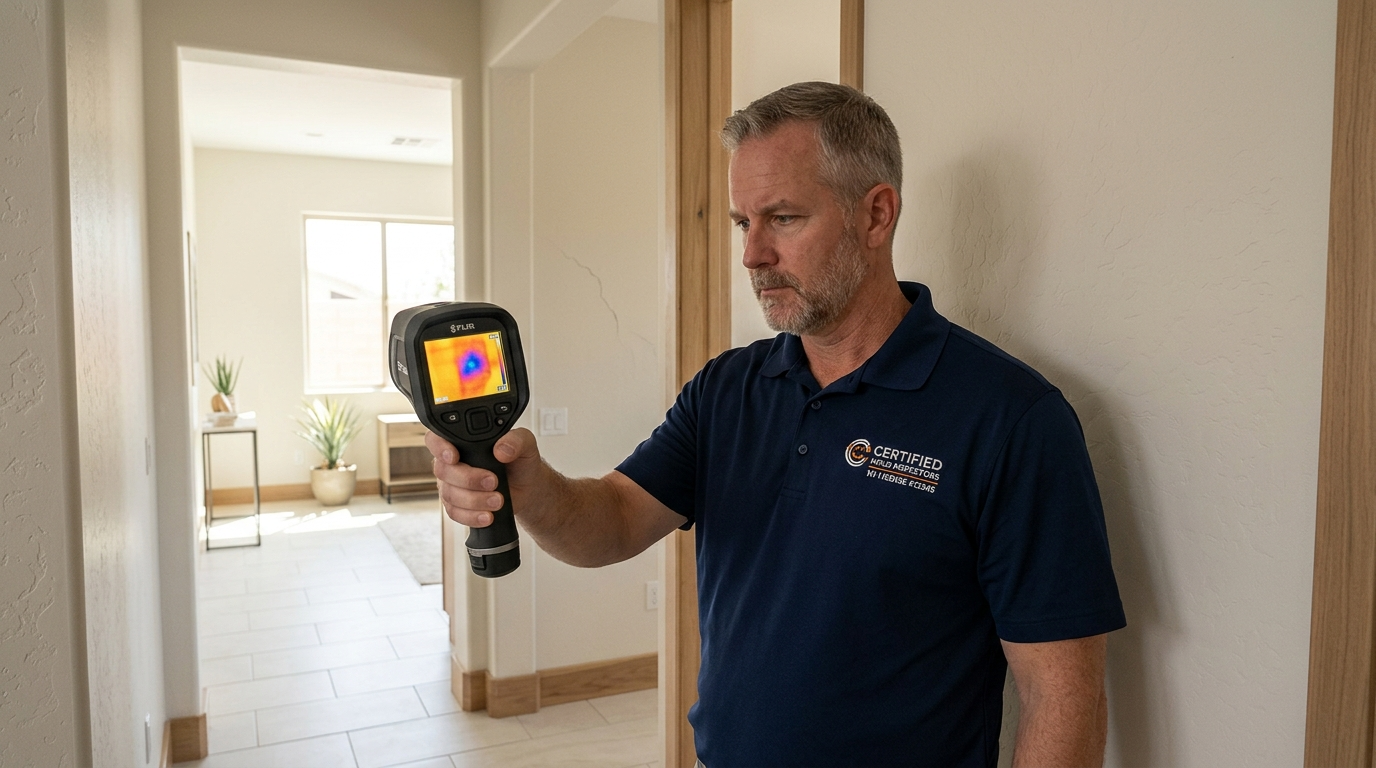
Accurate mold evaluation requires a structured, science based process that includes indoor and outdoor air sampling, moisture mapping with professional instruments, targeted surface sampling when appropriate, laboratory analysis, and detailed written reporting.
Las Vegas Mold Testing performs testing only and does not offer remediation services. This separation eliminates conflicts of interest and ensures results remain objective and health focused.
Who Should Consider Professional Mold Testing in Las Vegas
Professional mold testing is especially important after roof leaks, plumbing failures, or monsoon related water intrusion. It is also valuable during real estate transactions, for property managers overseeing multi unit buildings, and for families experiencing unexplained respiratory irritation.
Because mold growth in desert climates often develops quietly behind surfaces, testing provides clarity before structural damage becomes extensive.
Practical Steps to Reduce Hidden Mold Risk in Desert Homes
While no environment is immune to mold, homeowners in Las Vegas can reduce risk through consistent maintenance and moisture awareness:
- Schedule routine HVAC inspections and clean condensate lines
- Inspect roofing, flashing, and window seals before monsoon season
- Address plumbing leaks immediately, even minor ones
- Use proper bathroom ventilation during and after showers
- Monitor indoor humidity when possible
Even in a dry climate, moisture control remains essential to protecting indoor air quality.
Why Las Vegas Homeowners Choose Las Vegas Mold Testing
Las Vegas Mold Testing approaches each inspection with clinical precision and a safety focused mindset. The company specializes exclusively in mold testing, not remediation, ensuring unbiased results.
Homeowners trust Las Vegas Mold Testing because testing methods are laboratory verified, reports are clear and detailed, inspections prioritize health and indoor air quality, and recommendations remain practical and evidence based.
Schedule Professional Mold Testing Before Hidden Damage Spreads
The Las Vegas climate does not eliminate mold risk. It changes how and where mold develops. Sudden moisture events, HVAC condensation, and concealed plumbing leaks create hidden conditions that allow mold to thrive unnoticed.
If you suspect a moisture issue or want reliable insight into your indoor air quality,
contact Las Vegas Mold Testing today to schedule a professional assessment. Early detection protects your property, your investment, and your health.
Contact Form
Check Out Our Other Environmental Blogs!