What August Rain Does to the Crawl Space Under Your Las Vegas Home
You have been telling yourself the desert is dry. That logic works eleven months out of the year. Then August arrives, the monsoons hit, and whatever is living under your floor joists stops being your neighbor's problem and starts being yours. Mold testing in Las Vegas, NV during monsoon season consistently surfaces problems that started beneath the home and worked their way up before anyone noticed the smell.
The North American Monsoon is not a Las Vegas myth. Between July and September, the region receives more than a third of its annual rainfall in concentrated, high-intensity storms. That water saturates soil that has been baked and compacted all summer. Compacted soil does not absorb efficiently. It redirects. And in homes with crawl spaces, it often redirects upward.
Why Desert Soil Becomes a Moisture Pump After Heavy Rain
When Las Vegas gets a heavy monsoon event, the ground cannot absorb the volume fast enough. Water finds the path of least resistance, which frequently means it pools near foundations and seeps beneath homes with raised floor systems. Once soil beneath a crawl space becomes saturated, vapor moves upward through capillary action. Even without standing water, the relative humidity inside an unventilated crawl space can spike to levels that support mold growth within 48 to 72 hours of a rain event.
Crawl spaces in Clark County homes are frequently constructed with minimal ventilation. Some were sealed improperly during renovation. Others were never designed for the level of soil moisture that an anomalous monsoon season delivers. The result is a dark, still, humid microenvironment directly beneath your living space. It can turn hostile faster than most homeowners expect.
The Air You Breathe Inside Comes Partly From Below
Stack effect is the mechanism that makes crawl space mold a whole-home problem. Warm air inside your home rises and escapes through upper levels, pulling air upward from below to replace it. In a home with a crawl space, that replacement air passes through whatever is growing beneath your floor joists before it reaches your living areas.
This is why homeowners sometimes experience respiratory symptoms, persistent fatigue, or worsening allergy conditions before they ever identify a visible mold source. The contamination is below them, invisible, and circulating continuously. If anyone in your household has asthma or allergies, crawl space growth is one of the most underdiagnosed drivers of those conditions getting worse without explanation.
Surface-Level Checks Miss the Problem Almost Every Time
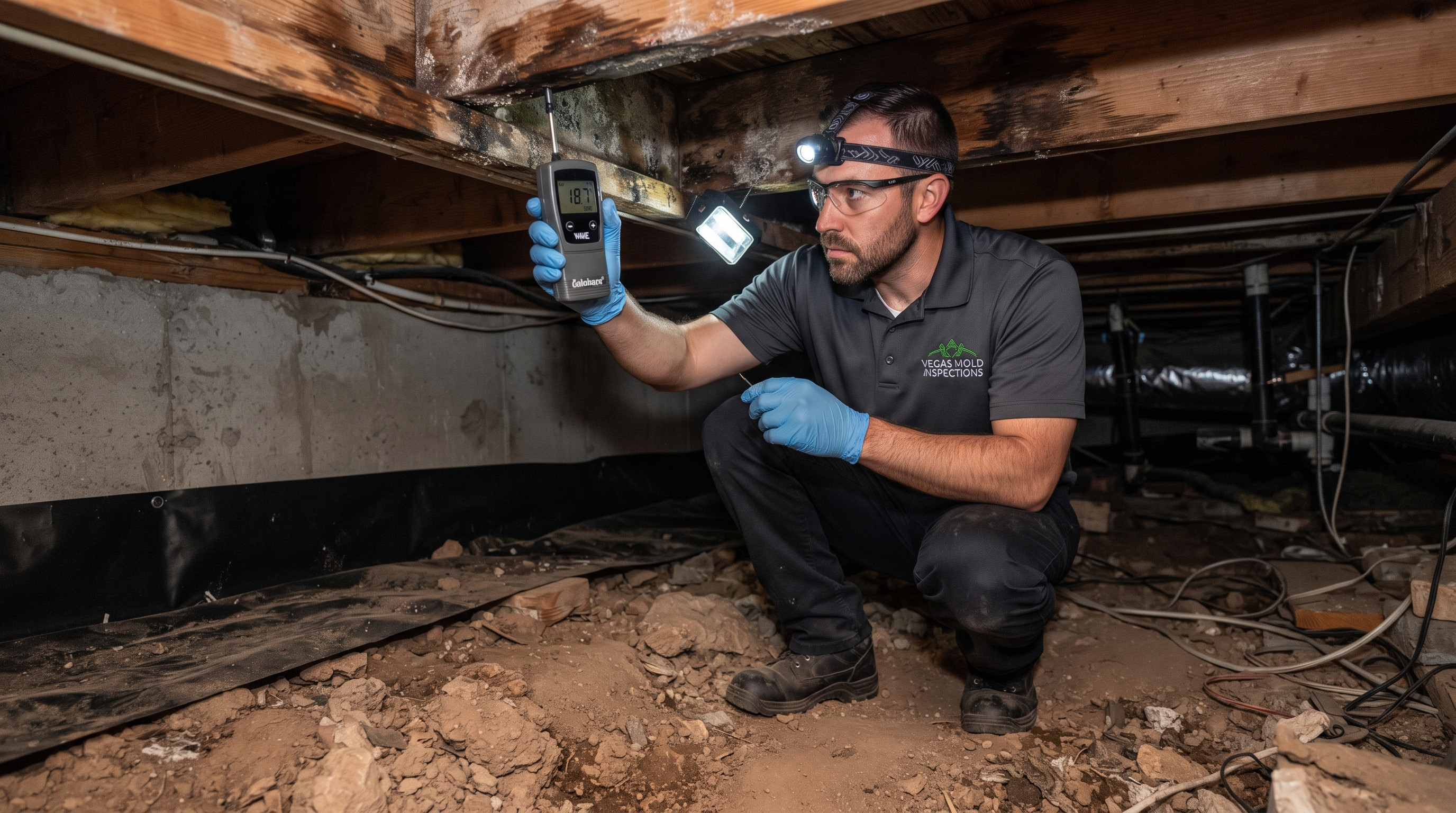
A visual scan of your home's interior will not catch crawl space mold. The growth is on wood framing, floor sheathing, and insulation facing. You cannot see those materials from inside the home, and you cannot safely assess them without proper equipment and protective gear.
DIY test kits from a hardware store are unreliable in this scenario for a specific reason: they measure what is settling in your air at one moment in time. They cannot tell you where the source is, how extensive it is, or whether what they detected came from your crawl space, your HVAC system, or outdoor air.
We regularly see homes where a homeowner purchased a DIY kit, received an inconclusive result, and delayed professional testing by weeks or months. By the time a certified inspector accessed the crawl space, growth had spread across multiple joist bays. Earlier documentation would have narrowed the remediation scope significantly.
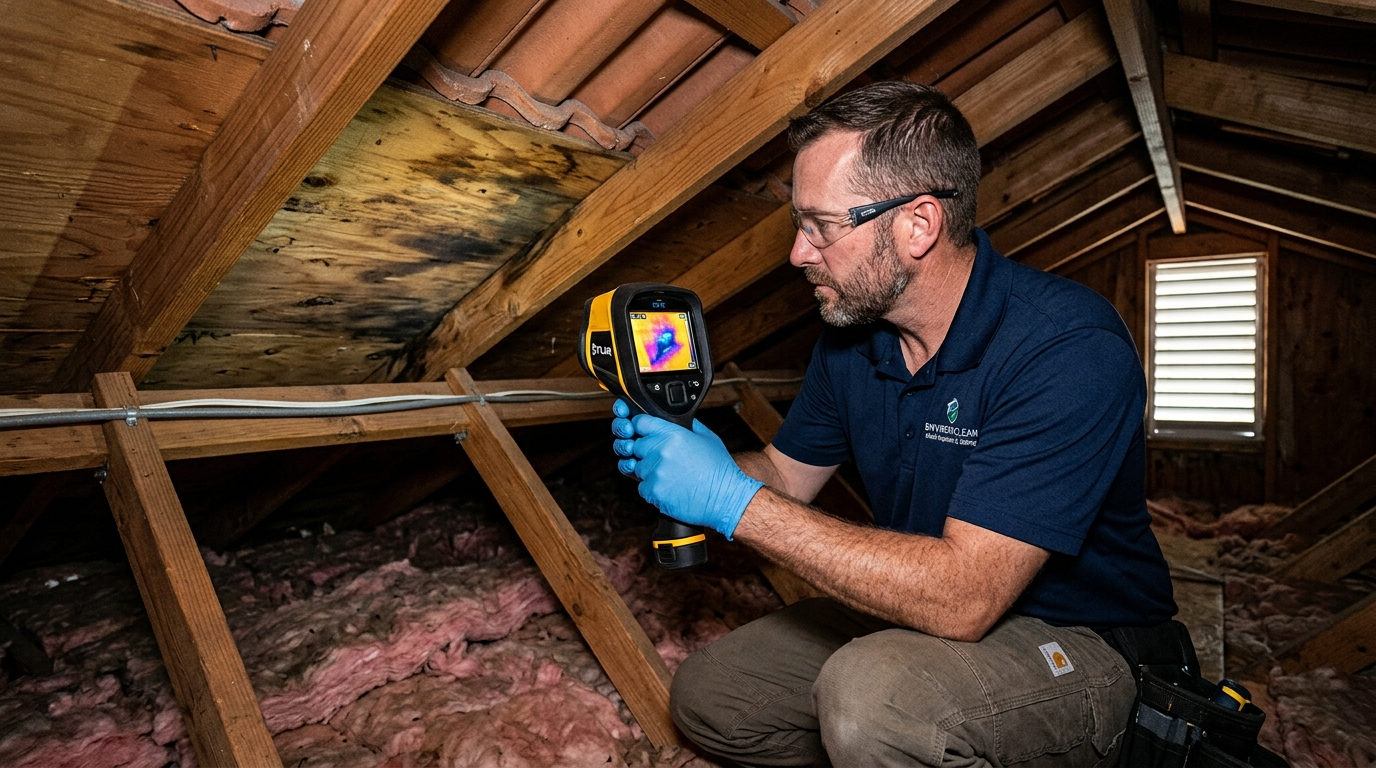
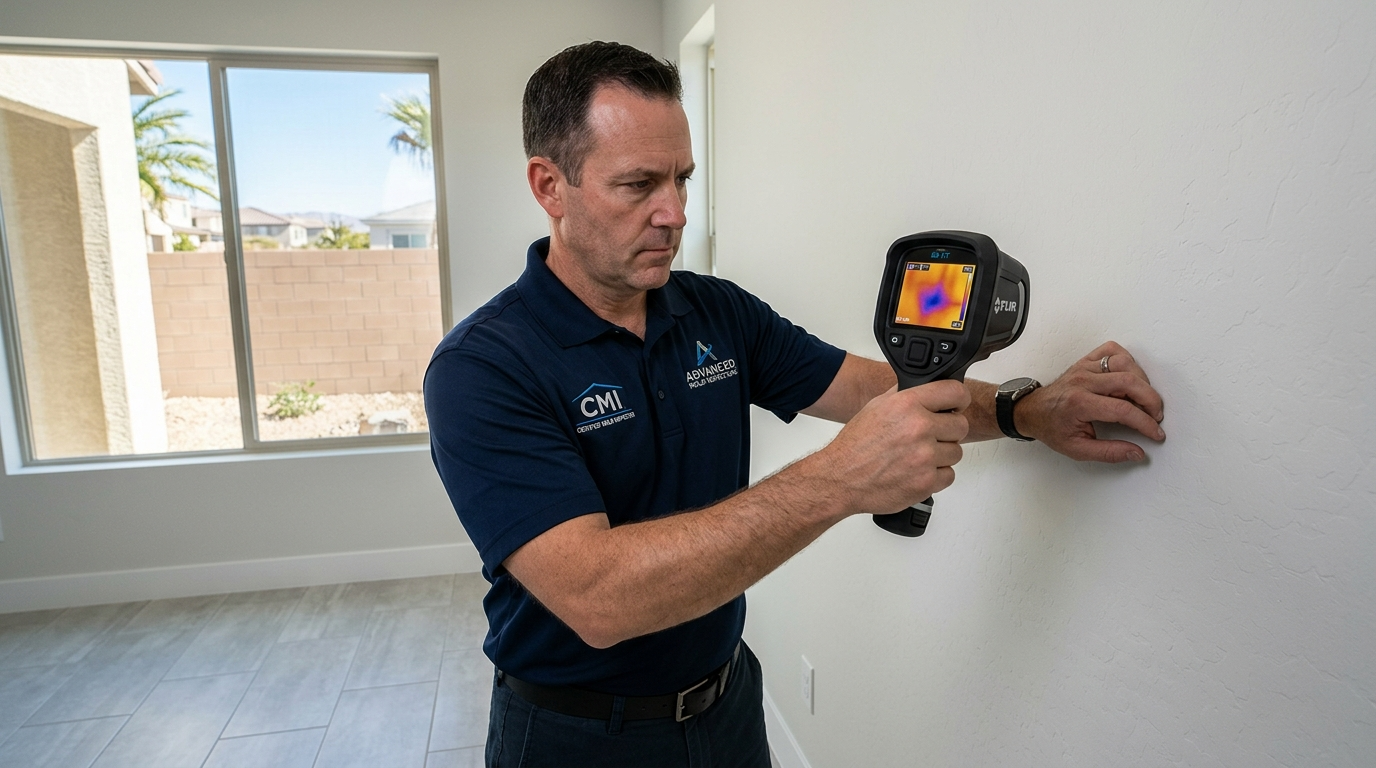
FLIR thermal imaging changes what is detectable at the inspection stage. A certified inspector using a thermal camera can identify moisture anomalies in subfloor materials from above, without cutting access holes or disturbing the space. Thermal imaging detects temperature differentials that indicate trapped moisture behind surfaces you cannot see during a standard visual inspection. Testing gets targeted rather than speculative, and findings are documented before a contractor ever touches the space.
Waiting Out the Smell Is Not a Strategy
Outside of July through September, crawl space moisture in Las Vegas is genuinely rare. This is not a year-round problem for most properties. But monsoon season compresses the risk window sharply. A storm event on a Tuesday can create growth conditions by Thursday.
The pattern we encounter most often after monsoon events: a homeowner notices something, a smell, a floor that feels slightly soft in one area, an allergy flare that started around the same time as a heavy rain, and then waits to see if it resolves. It does not resolve. Mold does not retreat when conditions dry out. It goes dormant and reactivates with the next humidity event. Each additional storm narrows the window where early testing could have limited the scope.
What Homeowners With Crawl Spaces Are Asking Right Now
Is a musty smell after rain always mold?
Not always, but it warrants investigation rather than assumption in either direction. A musty odor after monsoon rain in a home with a crawl space is a specific combination of factors that should not be dismissed. Soil off-gassing can produce similar smells, but a persistent odor after the home airs out points toward biological growth. The only way to know is a professional inspection with air sampling and surface samples where indicated.
My pest inspector flagged moisture in the crawl space. Do I need a mold inspector separately?
Yes. Pest inspectors identify conditions that invite wood-destroying organisms, and moisture detection is part of that process. But they are not equipped to identify mold species, quantify spore concentrations, or produce a report usable for remediation planning, insurance claims, or real estate documentation. A certified mold inspector produces a different kind of report for a different purpose. The two do not substitute for each other.
If I have mold tested and the report finds something, am I now required to disclose it when I sell?
This is the question most homeowners are actually sitting with before they call. The answer depends on your state and the specifics of what was found, and you should confirm disclosure obligations with your real estate agent or attorney. What we can tell you is that an uninspected problem does not protect you legally. A documented problem with a remediation record behind it is a far stronger position than a problem that surfaces during the buyer's inspection.
Does a crawl space inspection cost more than a standard inspection?
Crawl space access is part of a standard inspection at Las Vegas Mold Testing. You do not pay extra because we had to get under the house. The inspection covers the space, takes samples where conditions indicate risk, and includes all findings in your written report.
Know What Is Under Your Home Before the Next Storm
Las Vegas Mold Testing performs inspection and testing only. We do not offer remediation services, which means we have no financial reason to overstate what we find. What you get is an objective assessment, certified by InterNACHI, IAC2, and NAMP, backed by accredited lab results, and written in plain language you can act on.
If you have a crawl space and your home experienced monsoon rain this season, call us at (702) 766-8030 or schedule online. You will receive a written report that documents current conditions, identifies any active growth, and gives you a clear basis for whatever decision comes next.
Contact Form
Check Out Our Other Environmental Blogs!