When You Turn Off the AC, the Mold Problem Often Starts
Most Las Vegas homeowners spend the summer worried about mold growing while the AC runs constantly. That concern makes sense, but it is focused on the wrong end of the season. The period after peak cooling demand drops is when indoor spore counts often spike. If you have noticed a new smell or started sneezing more in September, your HVAC system is a likely source, and scheduling an HVAC mold inspection in Las Vegas before you shut down for fall is the most direct way to find out why.
This is not a minor quirk of desert climate. It is a predictable pattern tied to how ductwork behaves once the pressure and airflow that kept moisture moving through the system starts to slow down.
When the System Runs Less, Residual Moisture Has Nowhere to Go
During July and August, your AC runs long, hard cycles. That continuous airflow keeps condensation from sitting in one place. The evaporator coil sweats, but the fan pushes air across it quickly enough that moisture drains away before it accumulates.
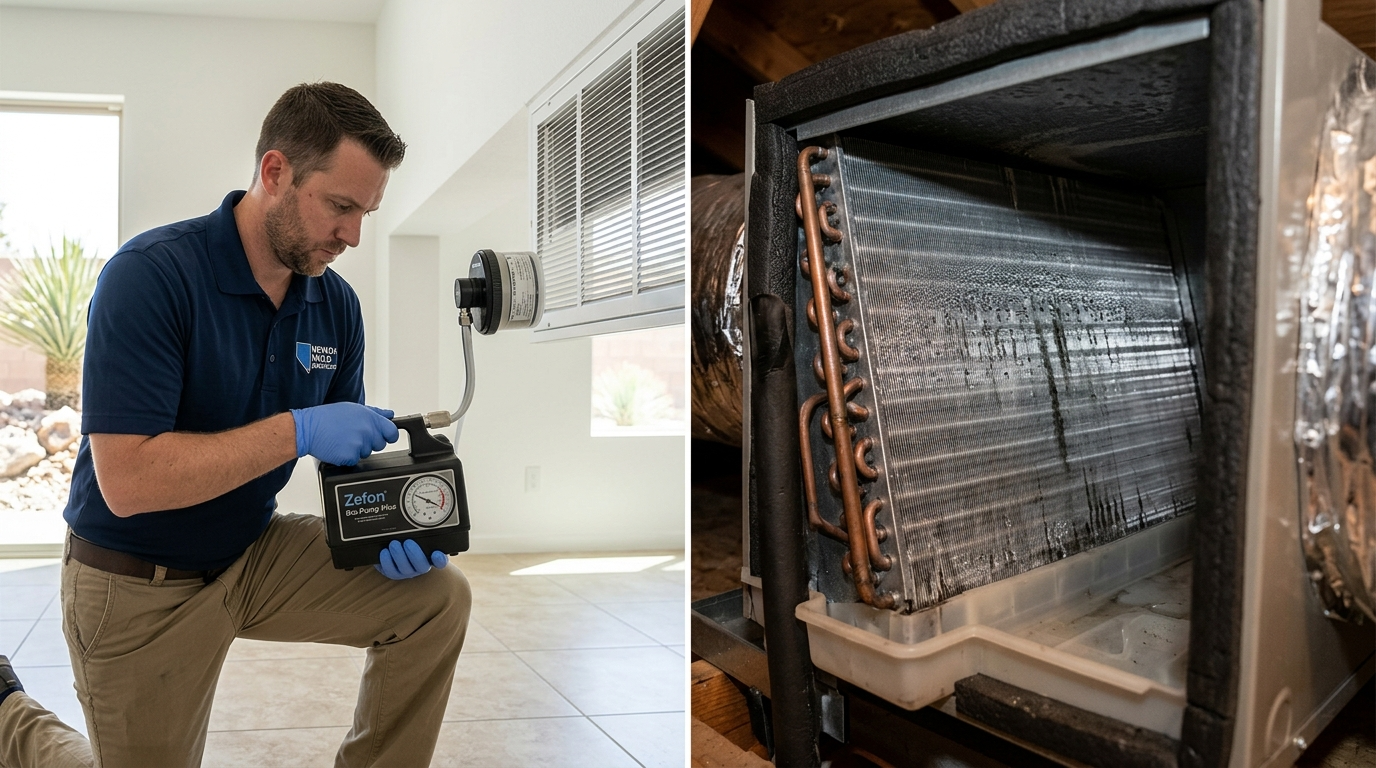
September changes the equation. Temperatures drop enough that the system cycles on and off less frequently. That moisture still forms on the coil, but now it sits. Short cycles mean incomplete drainage. The drain pan that worked fine all summer does not always empty fully when cycles are brief and infrequent. That residual moisture, sitting in a warm enclosed duct environment, is exactly what mold needs to establish a foothold.
The transition is when conditions align for growth. Not the peak season.
The Smell Is a Signal, Not a Coincidence
A musty odor when you first run the AC in spring gets a lot of attention. The late-season version of that same smell gets dismissed. People assume it will go away as temperatures cool and they open windows. Sometimes it does. But when the smell returns every time the system cycles on, or when it intensifies in rooms closest to supply vents, that points to contamination inside the ductwork rather than something environmental.
Volatile organic compounds released by mold colonies travel directly through your air distribution system. The smell you notice in your bedroom at 7 a.m. when the system kicks on is those compounds moving through ducts that have been sitting still overnight. Ignoring the odor does not make the source smaller. It gives the colony more time to establish before the system goes dormant for winter.
What a Professional Inspection Covers That You Cannot Access Yourself
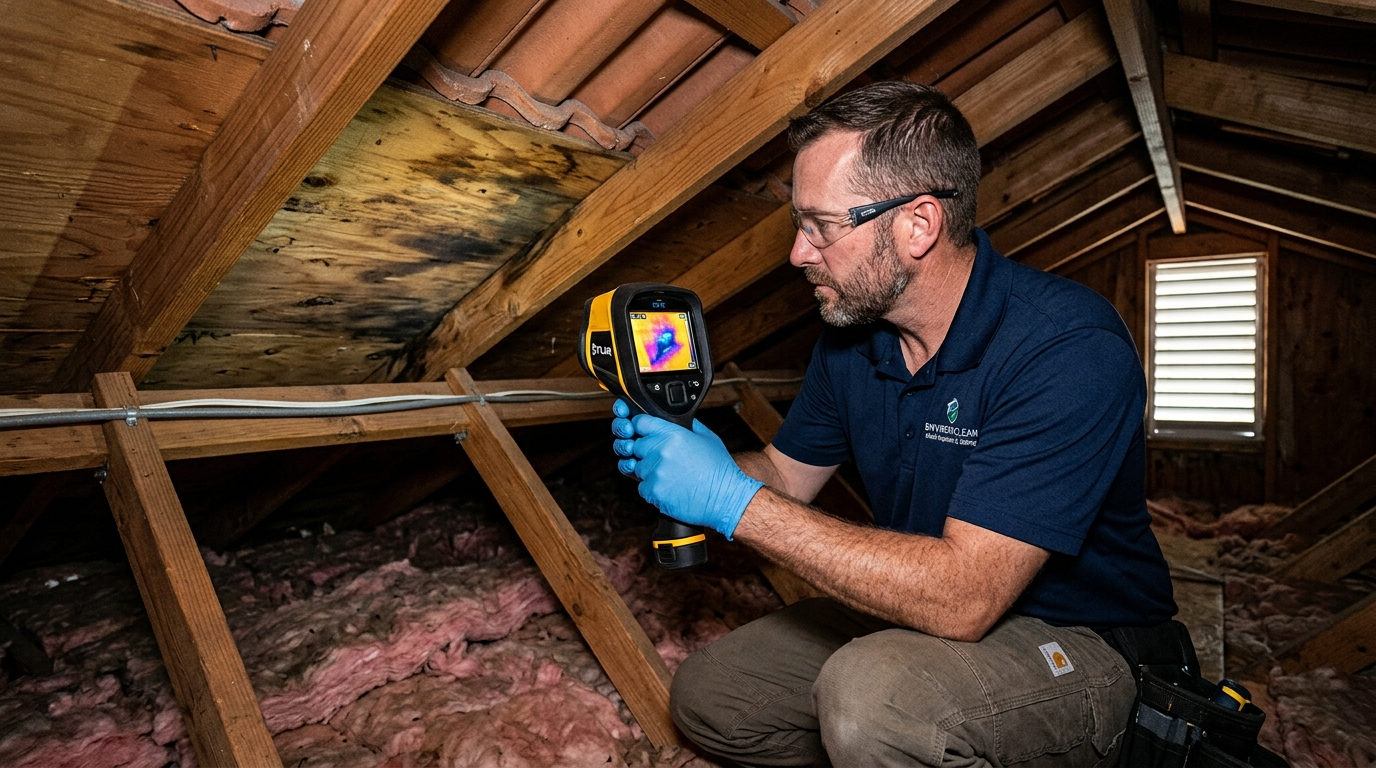
Ductwork in a typical Las Vegas home runs through attic spaces where temperatures during summer regularly exceed 150 degrees. That heat does not kill mold inside sealed ducts. It concentrates the humidity that condenses on cooler interior duct surfaces when the system is running.
Most homeowners can look at a vent cover and see dust. They cannot see the evaporator coil, the interior of flex duct runs, the drain pan condition, or the area surrounding the air handler. Those are not minor omissions. They are the exact locations where problems originate.
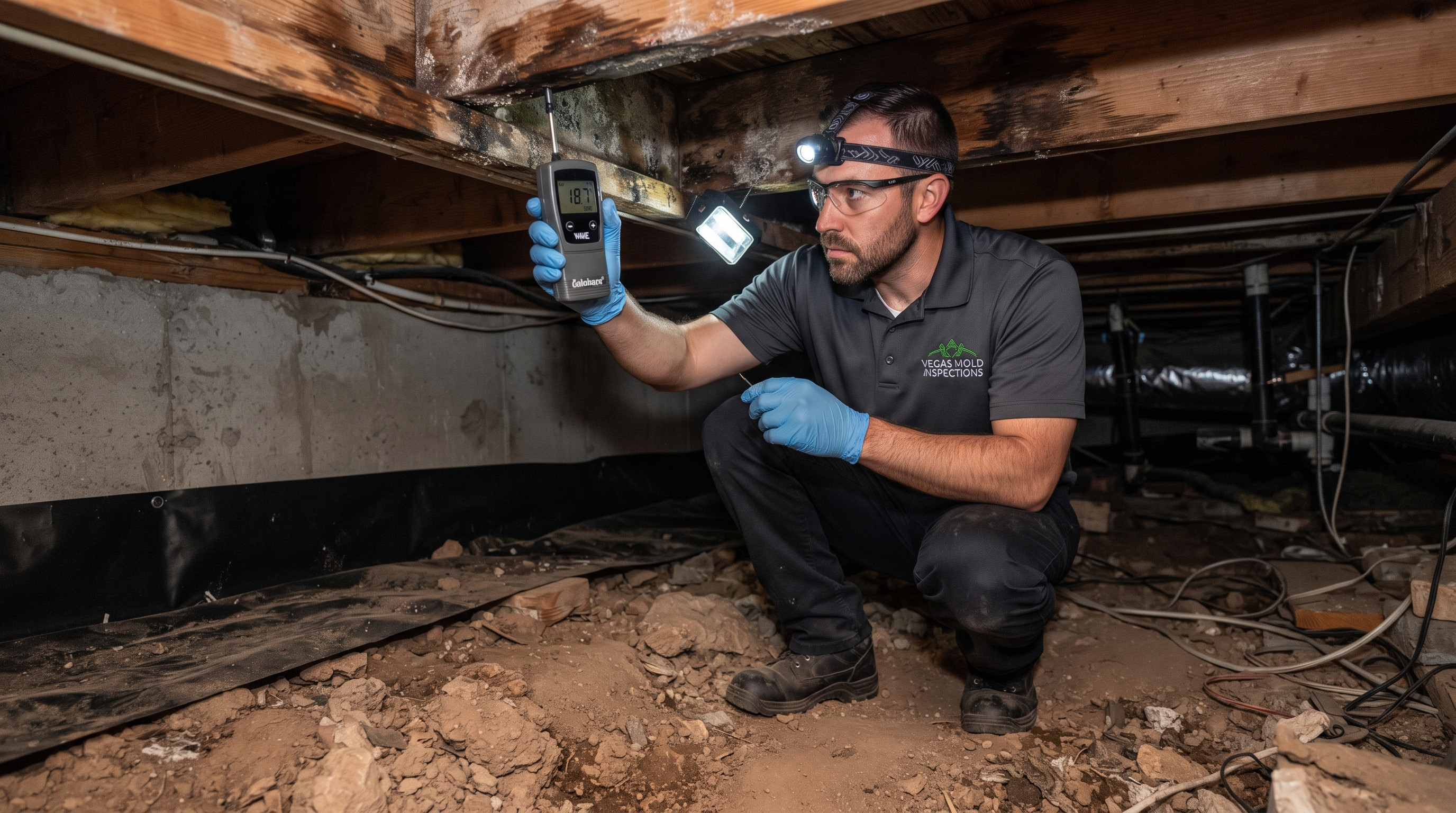
A professional HVAC mold inspection in Las Vegas covers the components that generate and distribute the problem: swab sampling from inside the HVAC system, air sampling from the living space to document what occupants are breathing, and a written report that connects the two.
We regularly see properties where ductwork surfaces look clean at the register but swab samples from inside the air handler return counts far outside normal range. Visible inspection alone misses this consistently. That is why sampling from the source matters.
Why Thermal Imaging Catches What Visual Inspection Misses
Mold does not always grow in ductwork. The transition season also creates condensation problems at ceiling penetrations, around supply registers, and on walls adjacent to exterior-facing duct runs. These are the spots where warm indoor air meets a surface that has been cooled by the duct running behind it.
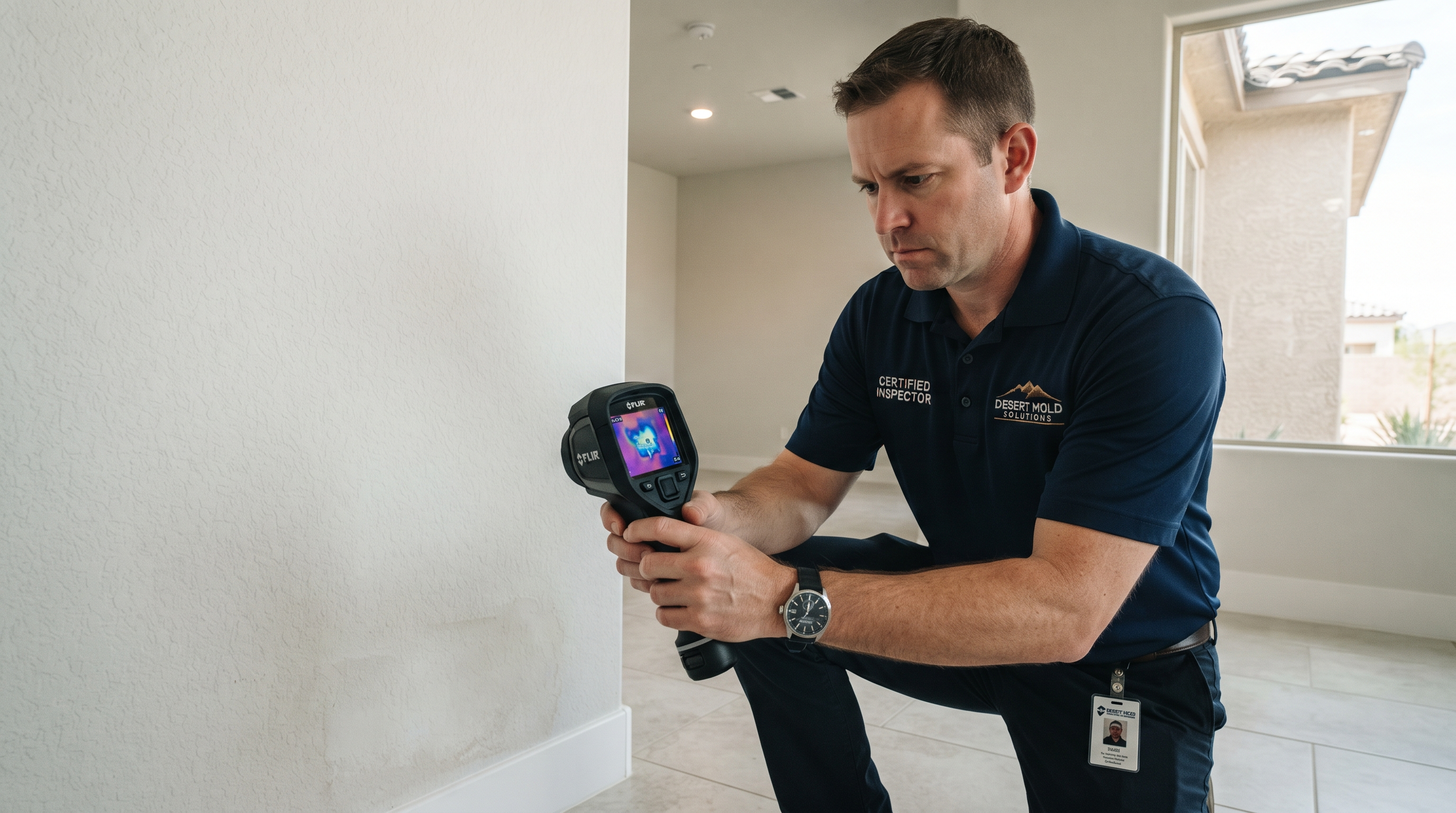
FLIR thermal imaging identifies temperature differentials behind finished surfaces without cutting into walls. An inspector using a thermal camera can see where moisture is accumulating inside a wall cavity before there is any visible sign on the surface. That information shapes what gets sampled and where, and it often changes the scope of what the inspection finds.
What Homeowners Ask Before They Call
Is the smell enough reason to schedule an inspection, or do I need visible mold first?
You do not need visible mold. The smell alone is a reason to test. Mold growing inside ductwork, on a coil, or behind a wall surface will not be visible until the problem is well established. The odor often appears long before visible growth. Trust what your nose is telling you and do not wait for confirmation you can see.
I already changed my air filters. Does that rule out an HVAC mold problem?
No, and this frustrates a lot of callers who expected the filter swap to solve it. Filters capture particles in the airstream, but they do not clean the evaporator coil, the drain pan, or the interior duct surfaces upstream of the filter. Those are the locations where mold actually colonizes. A new filter in a contaminated system still distributes spores throughout your living space.
My landlord says it is just monsoon dust blowing in. How do I know if that is true?
Air sampling with lab analysis identifies exactly what is in your indoor air and at what concentration. If the results show elevated fungal spore counts, that is a documented finding your landlord cannot attribute to outdoor conditions without explaining why counts are higher inside than outside. The report gives you an objective record, not a competing opinion.
If I schedule an inspection and nothing is found, did I waste the money?
No. A clear report is useful documentation, especially if symptoms continue or if you decide to sell the property later. It also tells you something specific: the problem is probably not your HVAC system, which redirects the search to other moisture sources. Not finding mold is information. It is not a failure of the inspection.
Should I wait until I smell it again to schedule, or act now?
Act now. The conditions that produce the smell do not disappear between episodes. They persist and often worsen. Scheduling an inspection while the system is still cycling occasionally is actually ideal timing because the inspector can run the system during the visit, which can trigger the very conditions that produce elevated air sample counts.
September and October Are the Right Window
Once temperatures drop and your AC stops running for weeks at a time, the evidence from the fall transition becomes harder to capture. Scheduling now, while the system still cycles occasionally, gives the inspection the best conditions for accurate air sampling.
Las Vegas Mold Testing performs HVAC mold inspections with air sampling, HVAC swab sampling, and written laboratory reports. The company does not offer remediation or repair services. Every finding is objective, every report is unbiased, and your decision about next steps belongs entirely to you.
Call (702) 766-8030 or submit a request online. The report you receive will tell you exactly what is in your system and what your air contains, so you can make an informed decision about your HVAC before winter arrives.
Contact Form
Check Out Our Other Environmental Blogs!