The One Month Las Vegas Homes Are Actually Vulnerable to Mold
You've been told Las Vegas is too dry for mold to matter. That's mostly true. August is the exception, and by the time most homeowners figure that out, the problem has already been growing for weeks.
If you've noticed a musty smell recently, a family member's allergies suddenly getting worse, or water stains appearing after a storm, you're not imagining things. Scheduling a mold inspection in Las Vegas, NV during August isn't an overreaction. Given what's happening inside and outside homes right now, it's probably the most useful thing you do this year.
August Combines Two Separate Risk Factors at Once
Most conversations about summer mold risk treat June, July, and August as interchangeable. They aren't. June and early July in the Las Vegas Valley are hot and dry. Mold risk during those months stays relatively low because low humidity limits spore germination.
August changes the equation. Monsoon season typically peaks between mid-July and mid-August, pushing outdoor humidity into ranges Las Vegas rarely sees. Afternoon storms roll through Henderson, Summerlin, North Las Vegas, and the valley floor in unpredictable bursts. That moisture doesn't evaporate instantly. It gets tracked indoors, absorbed by building materials, and held in spaces your HVAC system can't fully address.
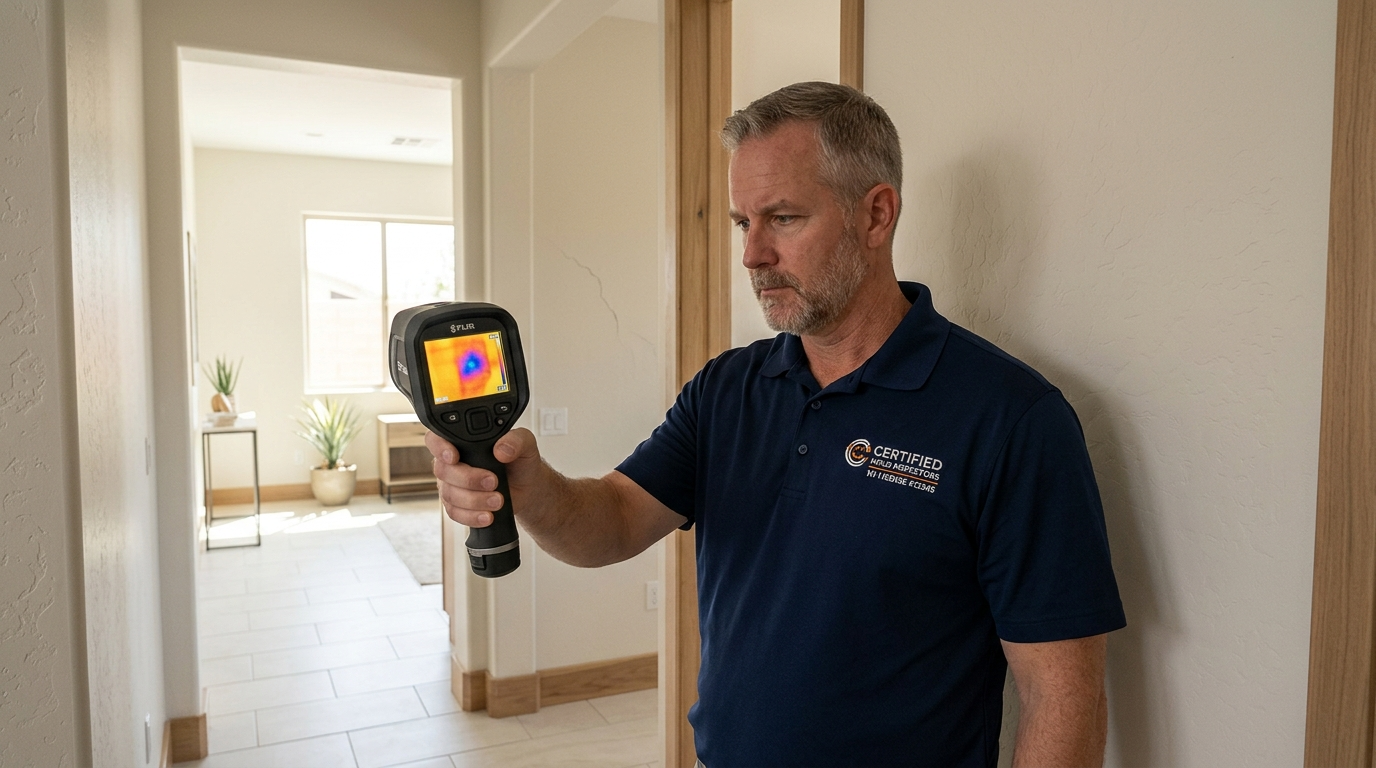
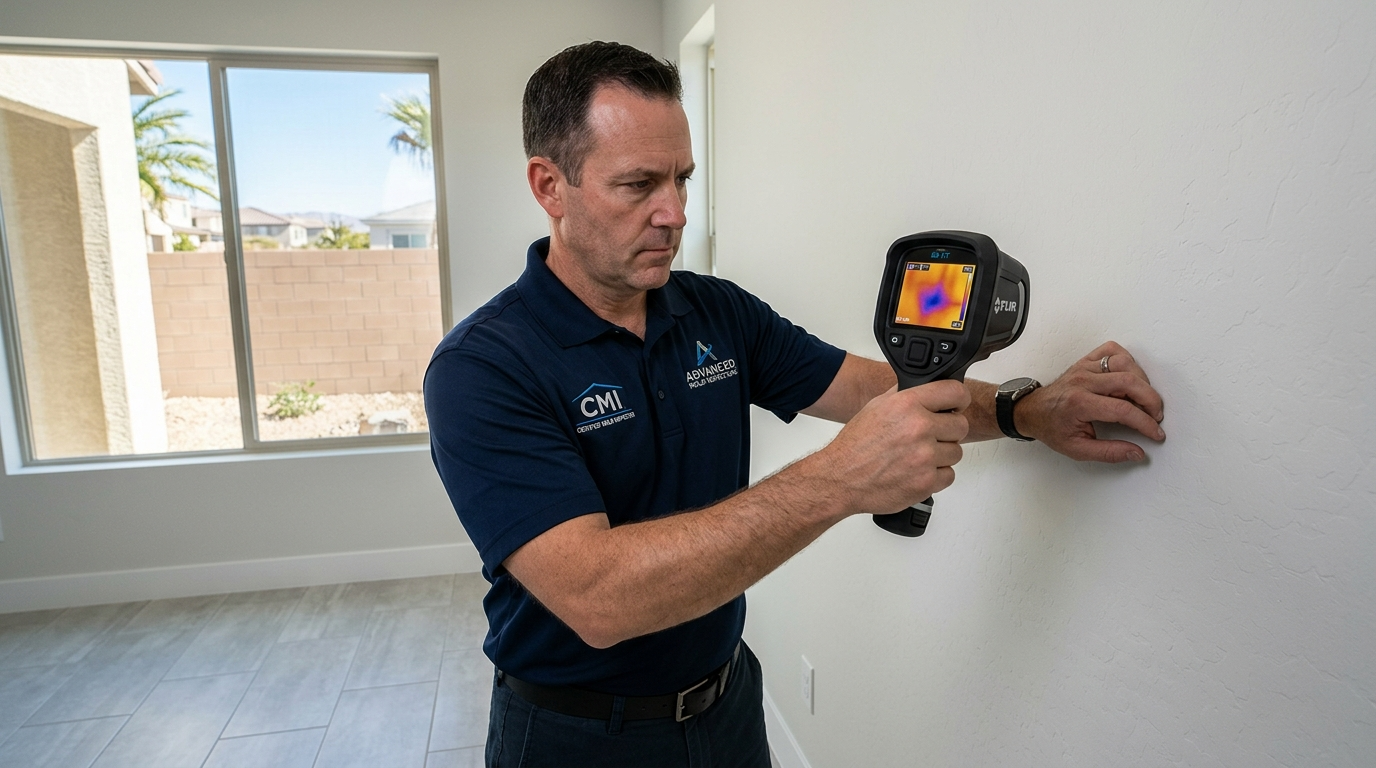
At the same time, your AC system has been running at maximum capacity for 90 or more consecutive days. FLIR thermal imaging regularly reveals moisture pockets behind walls that form because overworked air handlers produce more condensation than their drain pans can reliably handle. When that overflow contacts drywall or insulation, it creates the exact conditions mold needs: hidden from view and undetectable without the right equipment.
Both risk factors exist independently throughout summer. August is when they arrive together.
Your AC System May Be Creating the Problem
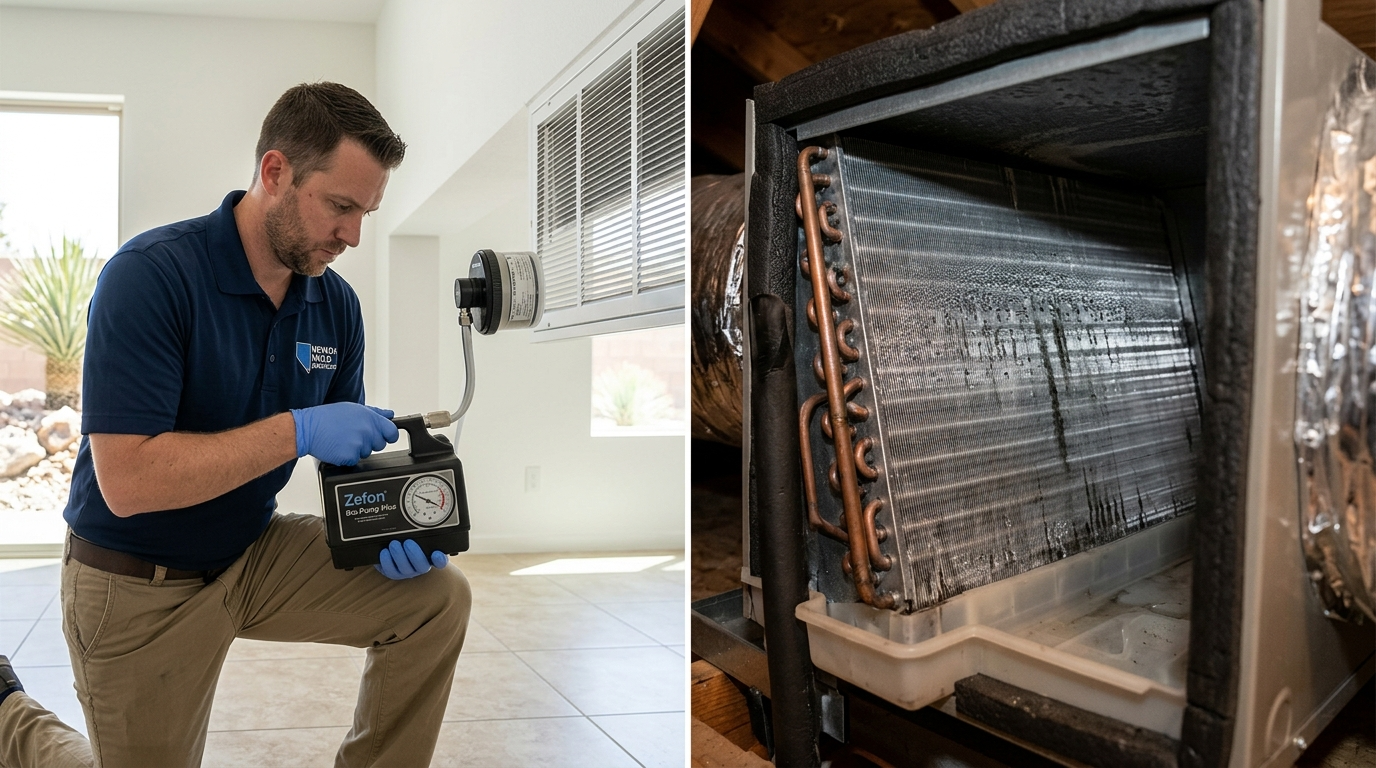
This is the part most homeowners don't hear until it's too late. Air conditioning doesn't just cool air. It removes moisture from air by passing it over a cold evaporator coil. That process creates condensate, which drains away through a pan and condensate line. When those components are clean and functioning correctly, the system manages moisture effectively.
After three months of continuous operation in extreme heat, drain pans accumulate biofilm, condensate lines develop partial blockages, and coil surfaces collect dust that traps moisture. The result is often a slow, invisible overflow: water that pools, wicks into adjacent building materials, and feeds mold colonies for weeks before anyone notices a smell.
This pattern shows up regularly in Clark County properties where the HVAC system appears to be functioning normally. The air feels cool, the thermostat responds, but inside the air handler or in the wall cavity where the refrigerant line runs, there's active moisture damage. What the system reads and what's actually happening inside your walls are two different things.
Monsoon Storms Leave Moisture Behind Long After the Rain Stops
A typical Las Vegas monsoon storm lasts between 20 minutes and two hours. The damage it causes can persist for weeks.
Flat or low-slope roofs, common in Las Vegas-area construction, collect standing water faster than pitched roofs drain it. Window seals that expand and contract through 115-degree summer days develop gaps that weren't there in spring. Water intrusion during a storm rarely announces itself. It finds the path of least resistance through a compromised seal, a roof penetration, or an improperly flashed vent, then travels along framing and insulation until it reaches a surface where it stops moving. That surface is where growth begins.
If you've had any rain intrusion in the past 30 days, regardless of how minor it seemed, the clock is already running. Mold colonies can establish within 24 to 48 hours under the right conditions, and August conditions in the Las Vegas Valley qualify.
A Musty Smell Is a Diagnostic Signal, Not a Housekeeping Problem
A musty odor in your home isn't a cleanliness issue. It's a signal that microbial activity is happening somewhere in the structure. Many homeowners spend weeks running air fresheners, changing HVAC filters, or cleaning visible surfaces before considering that the source might be inside a wall, above a ceiling, or beneath a floor.
A certified inspector can correlate the odor location with thermal imaging findings and air sample results to identify the source rather than guess at it. Covering the smell doesn't reduce the spore count in your air. It delays the inspection and extends the growth period.
What Homeowners Ask Before Scheduling in August
Can't I just wait until monsoon season is over to get tested?
Waiting until September doesn't reduce the problem. It extends the growth period by four to six weeks. Mold colonies that establish in August don't pause while you wait. If the moisture source remains, the colony expands. Smaller problems cost less to address, which makes earlier inspection the practical choice.
I don't see any visible mold. Does that mean I'm fine?
Not necessarily. Visible mold is the late-stage version of a problem that starts invisibly. The absence of visible growth doesn't confirm the absence of elevated spore counts or hidden moisture damage. Air sampling quantifies what's present in your indoor environment regardless of whether you can see a source.
I've already had one contractor tell me there's nothing wrong. Why would an inspection find something different?
Because a contractor who offers remediation services has a complicated relationship with the word "nothing." That's not an accusation. It's a structural problem. When the same company inspects and remediates, the financial incentive runs in one direction. Las Vegas Mold Testing performs inspection and testing only, with no remediation services and no interest in the outcome of your results. An objective written report is the only thing leaving this inspection.
My symptoms started weeks ago. Is it too late for testing to help?
No. Testing doesn't have a deadline. It gives you documentation of current conditions, a starting point for remediation if growth is confirmed, and if you're concerned about personal exposure, a mycotoxin urinalysis can screen for toxin presence in your system. People who've been symptomatic for weeks often find that documentation is exactly what they needed to move forward.
Is a professional inspection really different from a DIY kit?
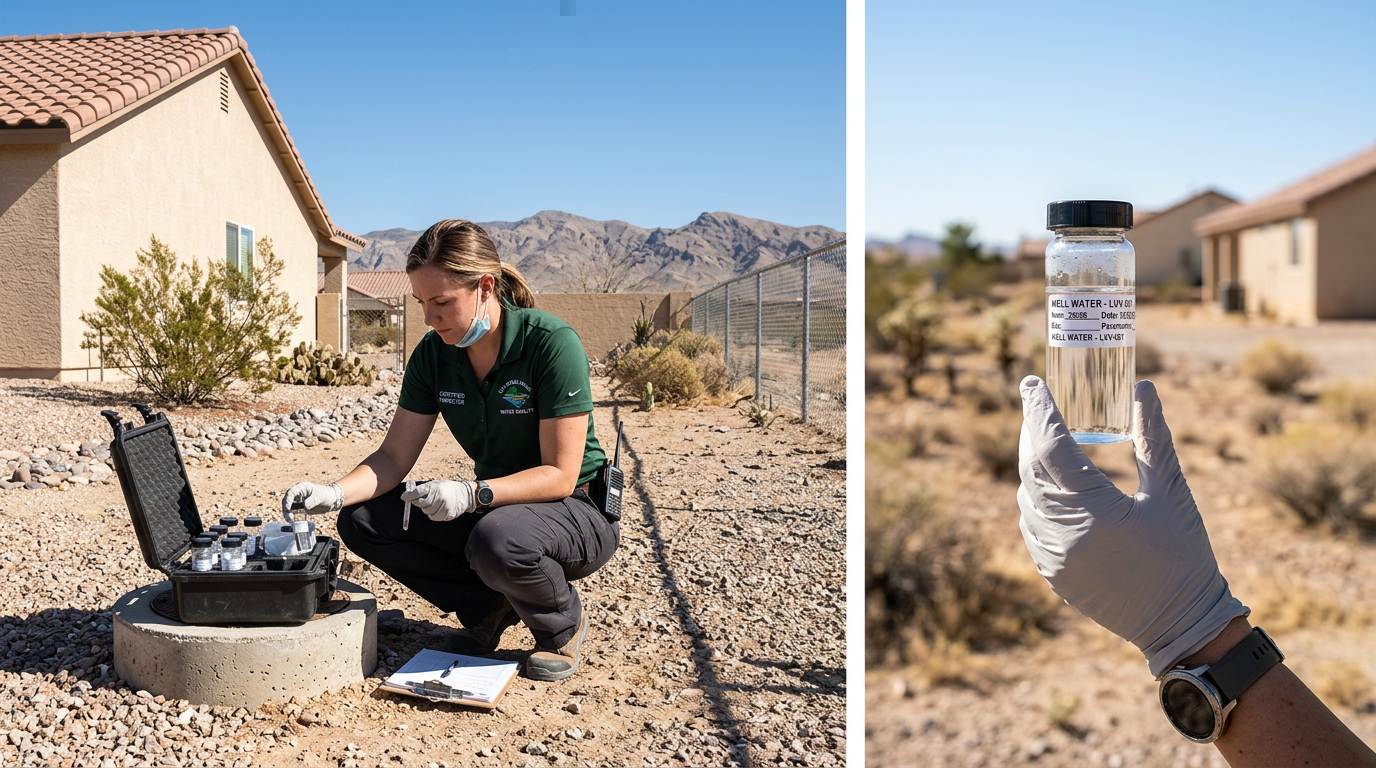
Yes, significantly. A settle plate left on a counter tells you mold spores exist in your home, which is true of virtually every home. A professional inspection tells you whether levels are elevated, where the source is, and what species are present. Those are the findings that actually inform a decision.
Get Answers Before the Problem Grows
August mold risk in Las Vegas is real, specific, and time-sensitive. The combination of monsoon humidity and overworked HVAC systems creates conditions that don't exist at any other point in the year. If you've noticed a smell, experienced recent water intrusion, or have household members with worsening respiratory symptoms, this is the right time to get answers.
Las Vegas Mold Testing serves the entire Las Vegas Valley, including Henderson, Summerlin, North Las Vegas, and surrounding Clark County communities. Inspections include air sampling, HVAC evaluation, written reporting, and optional thermal imaging.
Call (702) 766-8030 or schedule online to book your inspection. You'll receive a written report with actual findings, not a recommendation for services the inspector profits from.
Contact Form
Check Out Our Other Environmental Blogs!