What Your Evaporative Cooler Is Doing to Your Indoor Air (And Why Las Vegas Homeowners Miss It)
Your house is in the Mojave Desert. It almost never rains. You have lived here for years without a single moisture problem. Then July arrives, and your home starts smelling like a wet basement. You check the obvious suspects and find nothing. The smell stays. What you are probably not checking is the system running twelve hours a day to keep you cool.
In Las Vegas, evaporative coolers are responsible for indoor moisture and mold problems more often than most homeowners realize. If you have been searching for answers about air quality testing in your home, read this before you make a call or buy anything.
The Desert Climate Is Not Protecting You the Way You Think
Las Vegas averages less than four inches of rain per year. That fact gives homeowners a false sense of security about moisture. The reasoning seems sound: no rain, no humidity, no mold. But outdoor humidity and indoor humidity are two different measurements, and your evaporative cooler is manufacturing the second one every hour it runs.
Evaporative coolers work by pulling outdoor air across water-saturated pads and pushing that moisture-laden air into your living space. That is the cooling mechanism. It is also a continuous introduction of humidity into an enclosed environment. The outdoor air starts dry. By the time it reaches your lungs, it carries significantly more moisture.
Most of the time, that trade-off is manageable. Conditions shift during monsoon season, when overnight humidity climbs, or when a cooler runs longer than usual during a heat spike. Interior relative humidity rises, surfaces absorb that moisture, and mold finds exactly what it needs. The conditions people assume prevent mold growth in the Las Vegas desert are often the reason they miss it until it has been growing for weeks.
Your Cooler Has Parts That Mold Targets First
The cooling pads inside an evaporative unit stay wet by design. They cycle air across their surface continuously. If they are not cleaned or replaced on schedule, organic debris accumulates. Mineral deposits from hard Las Vegas water create surface irregularities where biological material settles. Old pads stop being a cooling component and start being a growing medium.
The water reservoir and pump assembly face the same problem. Standing water that sits between cycles, combined with warm temperatures inside mechanical compartments, accelerates microbial growth. Mold and bacteria established inside the unit then distribute through every room the cooler serves.
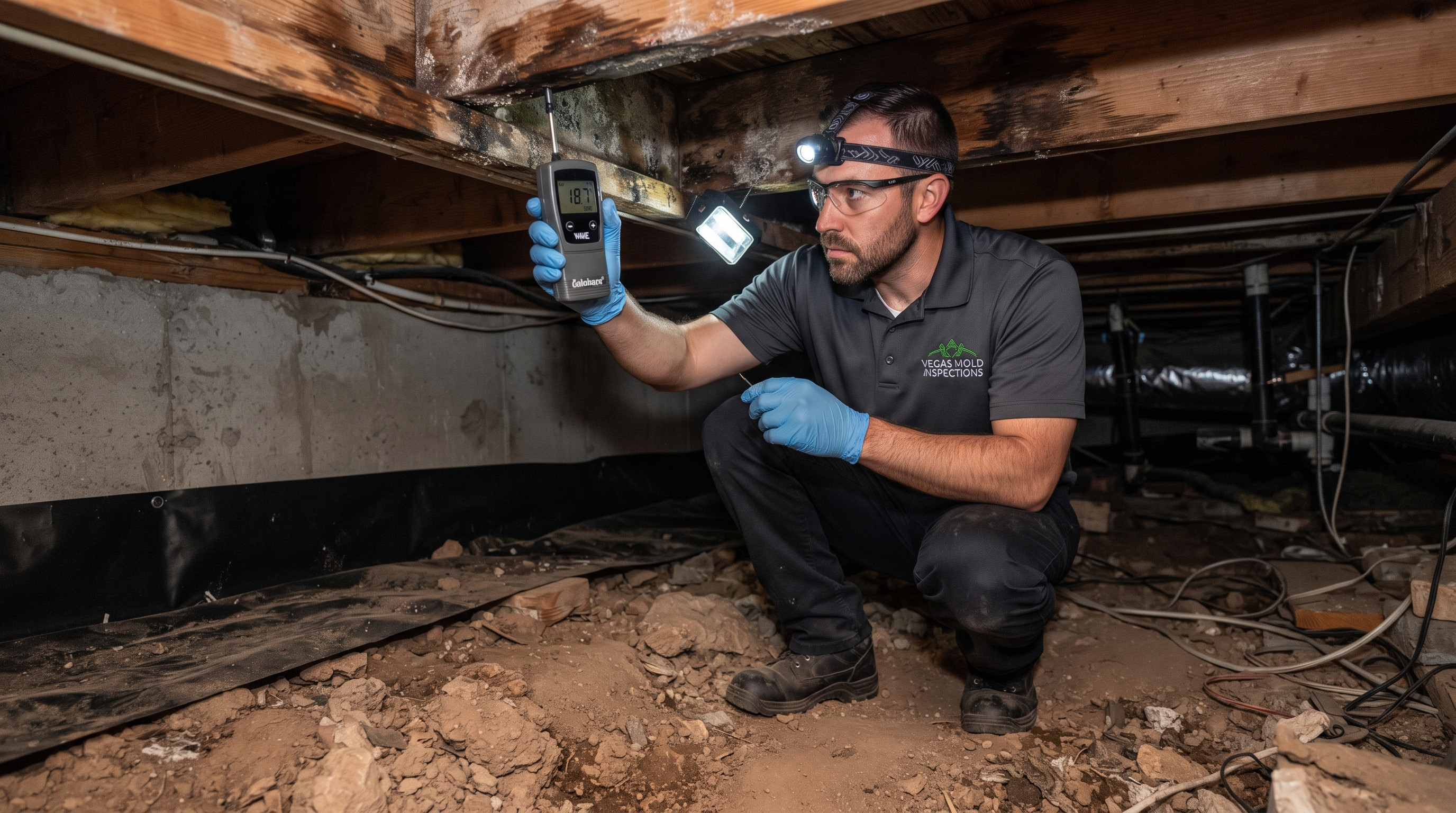
We regularly see properties where the unit itself tests clean on a surface level but the ductwork and interior registers show elevated spore counts. The contamination already traveled. By the time a homeowner notices an odor, distribution has happened. If your home has a persistent musty smell even after you clean the pads, the problem is likely downstream from the unit, not inside it.
Where Moisture Settles After It Leaves the Vents
Evaporative coolers direct humid air at specific surfaces. Registers push air toward floors, furniture, and walls. In rooms with poor circulation, moisture concentrates in corners and behind furniture. Those are also the locations where mold growth goes undetected the longest.
Walls that back up to cool exterior surfaces experience temperature differentials. Warm, humid interior air meets a cooler wall surface. That difference causes condensation inside wall cavities or on drywall paper, often without any visible evidence on the surface you can see. You will not find it by looking.
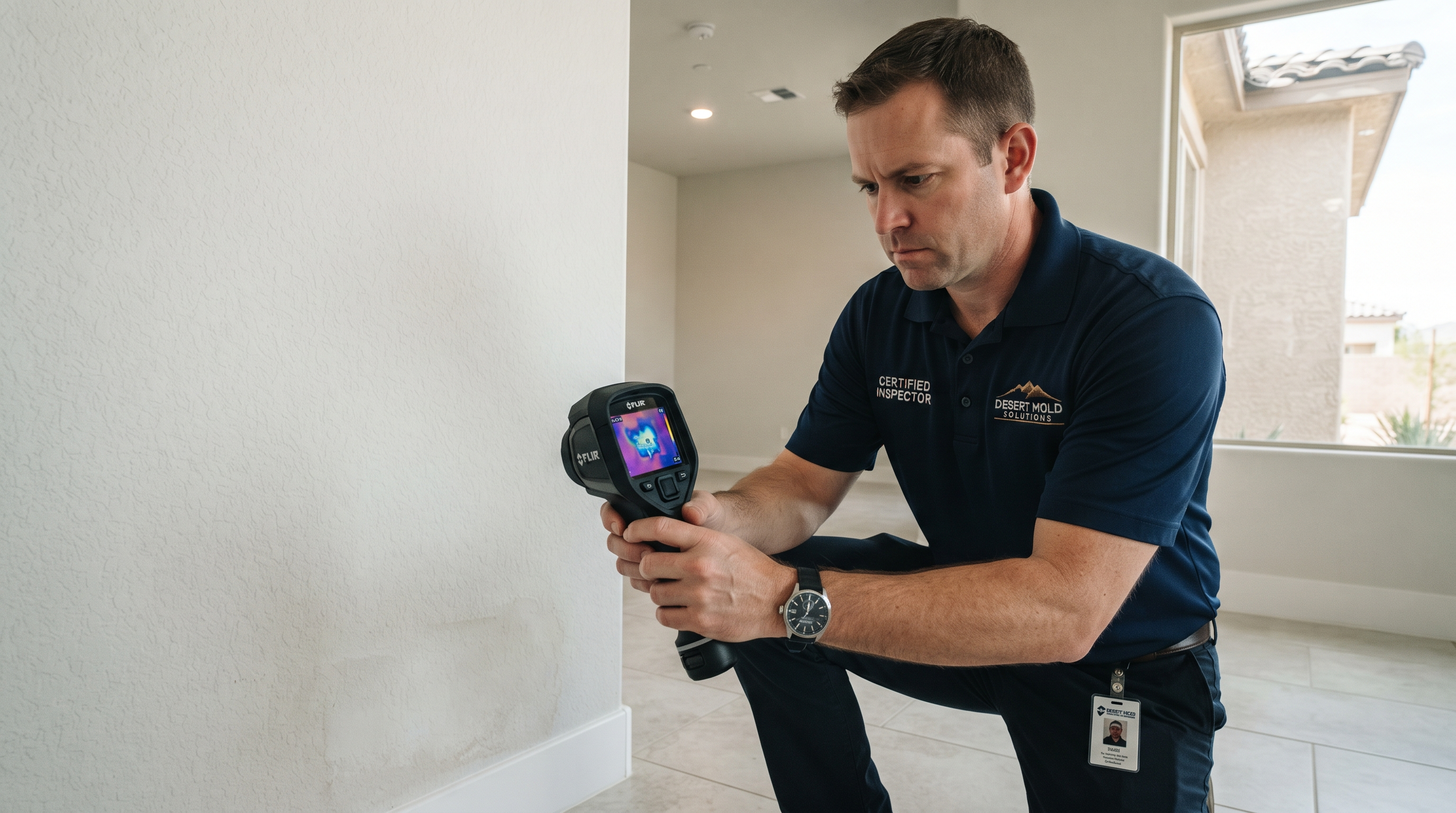
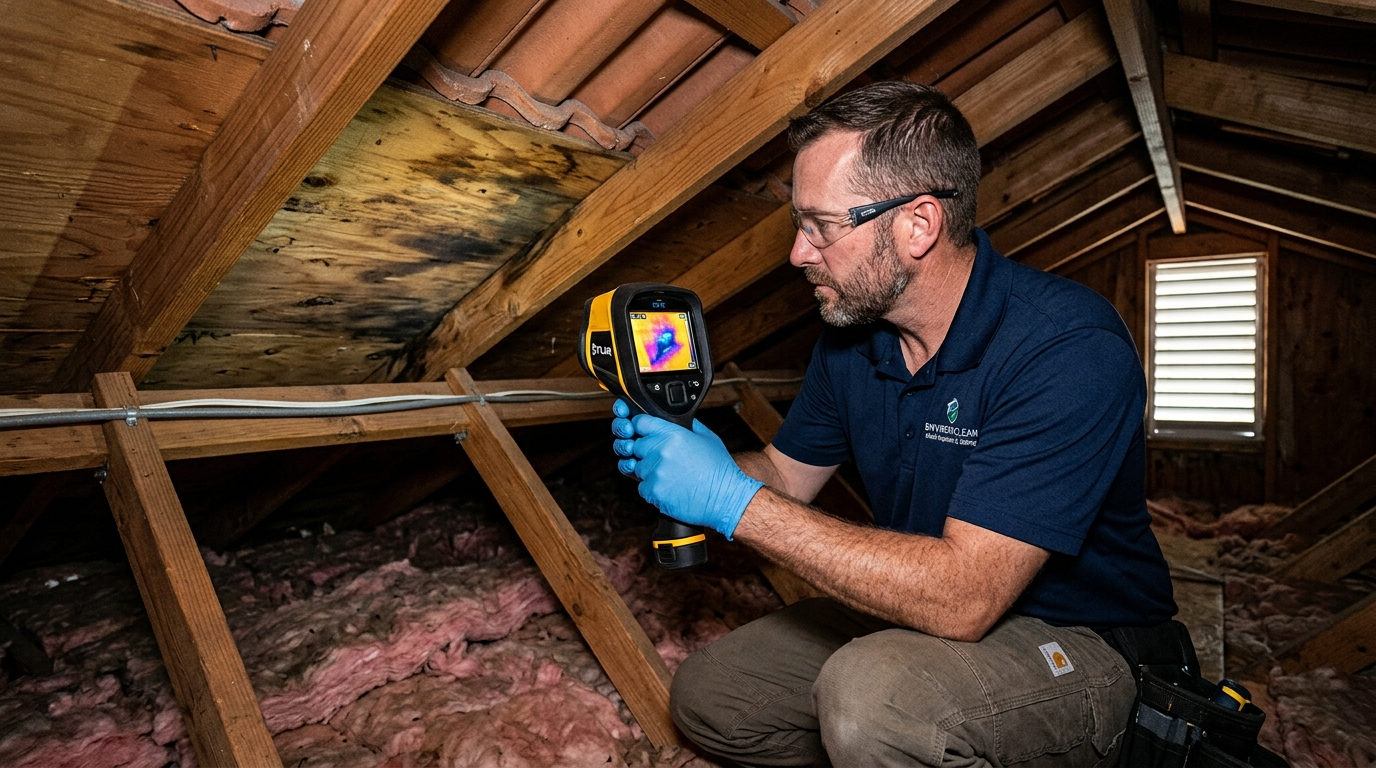
FLIR thermal imaging identifies these zones without cutting into anything. A thermal camera reads surface temperature variation and locates areas where moisture has concentrated behind walls, under flooring, or above ceiling drywall. It is non-invasive and precise. When the source is not obvious from a visual inspection alone, thermal imaging removes the guesswork.
What Air Sampling Finds That Your Eyes Cannot
You can inspect every visible surface in your home and still miss an air quality problem. Mold spores are microscopic. They circulate through the same airflow your cooler creates, and a home can have elevated spore counts in the breathing zone long before any visible growth appears.
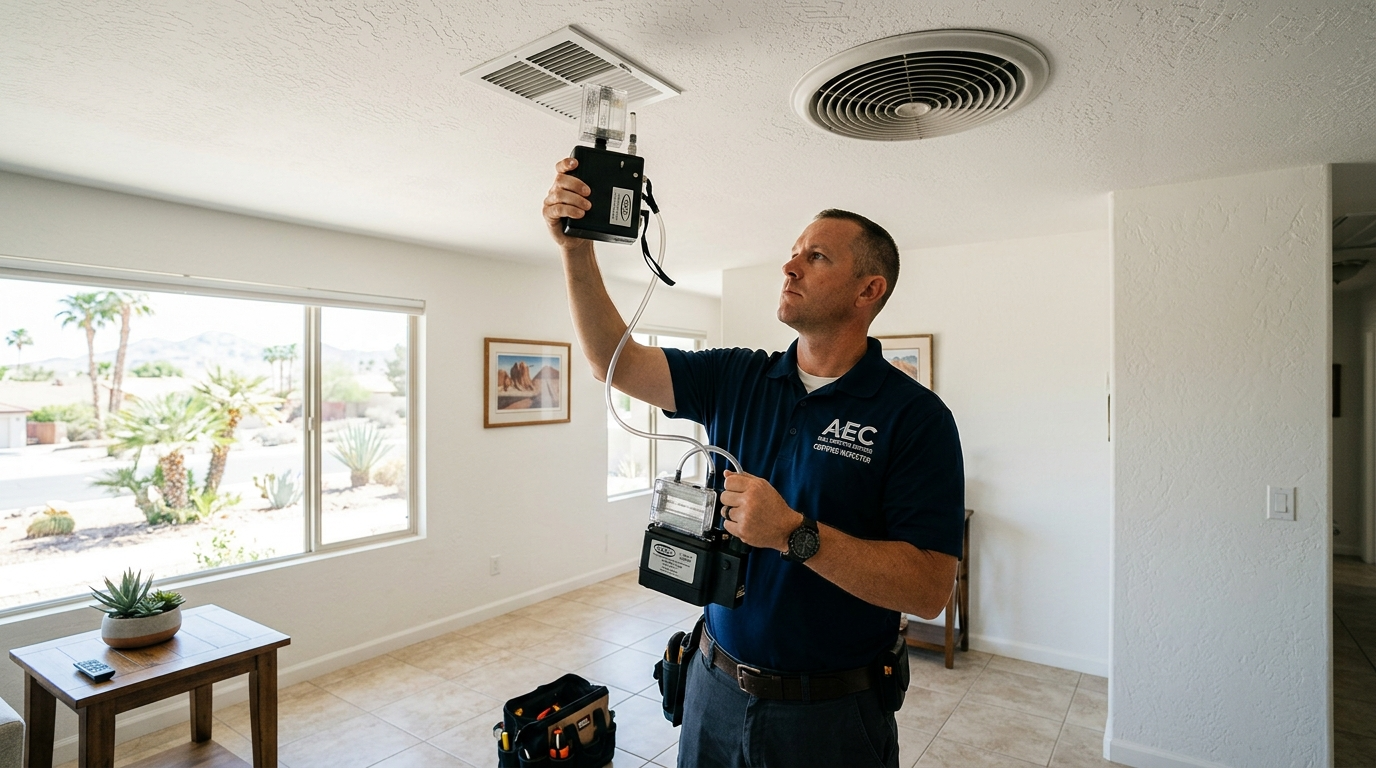
Air sampling captures what is actually in the air you breathe. A certified inspector draws a measured volume of air through a collection cassette, which goes to an accredited laboratory for analysis. The lab identifies which species are present and at what concentration. Results are then compared against outdoor baseline samples taken the same day.
That comparison matters more than the raw numbers. Las Vegas outdoor air carries its own spore load. A result that looks alarming in isolation may be normal for this environment. A result that looks moderate may indicate significant indoor amplification if the outdoor baseline is lower. Professional air quality testing interprets both numbers together, and that interpretation is what your written report documents.
What Homeowners Ask Before Scheduling an Inspection
My cooler is only three years old. Can it still be the problem?
Age is not the determining factor. Maintenance history is. A three-year-old unit that has never had its pads replaced or its reservoir cleaned can harbor more biological growth than a ten-year-old unit serviced annually. We have tested homes where units were contaminated within a single season because of poor water quality or inadequate drainage.
I cleaned the pads last month. Why does the smell persist?
Cleaning the pads removes surface buildup, but it does not address contamination that has already distributed through ductwork or settled into wall cavities. The odor source is probably no longer in the unit itself. That is exactly the scenario where air sampling and thermal imaging together locate what cleaning cannot reach.
The remediation company I called said I definitely have mold. Should I trust that?
A company that sells remediation has a financial interest in the answer it gives you. That does not mean they are wrong, but it does mean you have no way to verify their findings through the same source. A third-party inspector with no remediation services to sell produces results you can trust and, if needed, use to hold a contractor accountable for the scope of work they perform.
Should I test even if no one in the household feels sick?
Yes. Many mold species cause no immediate symptoms in healthy adults but produce mycotoxins that accumulate over time. Children, elderly family members, and anyone with respiratory conditions are affected first and often most severely. Waiting for symptoms means waiting for a problem that was testable weeks or months earlier. If you have concerns about personal exposure, a mycotoxin urinalysis is an option that can be completed from home using a shipped test kit.
Schedule Your Inspection Before the Cooling Season Ends
If your home has an evaporative cooler and something smells wrong, the time to test is while the unit is still running. Active contamination shows up in air samples. Waiting until fall means losing the conditions that produce the clearest data.
Las Vegas Mold Testing serves homeowners across the Las Vegas Valley, including Henderson, Summerlin, North Las Vegas, and surrounding communities in Clark County. Every inspection includes interior and exterior examination, HVAC evaluation, air sampling, and a written laboratory report with results you can act on.
Call (702) 766-8030 or submit a contact form to schedule your inspection. You will get straight answers, a defensible written report, and no pressure to buy services you do not need.
Contact Form
Check Out Our Other Environmental Blogs!