The Room Your Mold Inspector Walked Past This Summer
You checked under the bathroom sink. You looked behind the toilet. You had someone peek at the HVAC registers. Everything looked fine, but the smell is still there, and your allergies have not improved since June. The problem is not that you looked in the wrong places. The problem is that the most overlooked mold environment in a Las Vegas home during summer sits in a room most inspection checklists treat as an afterthought.
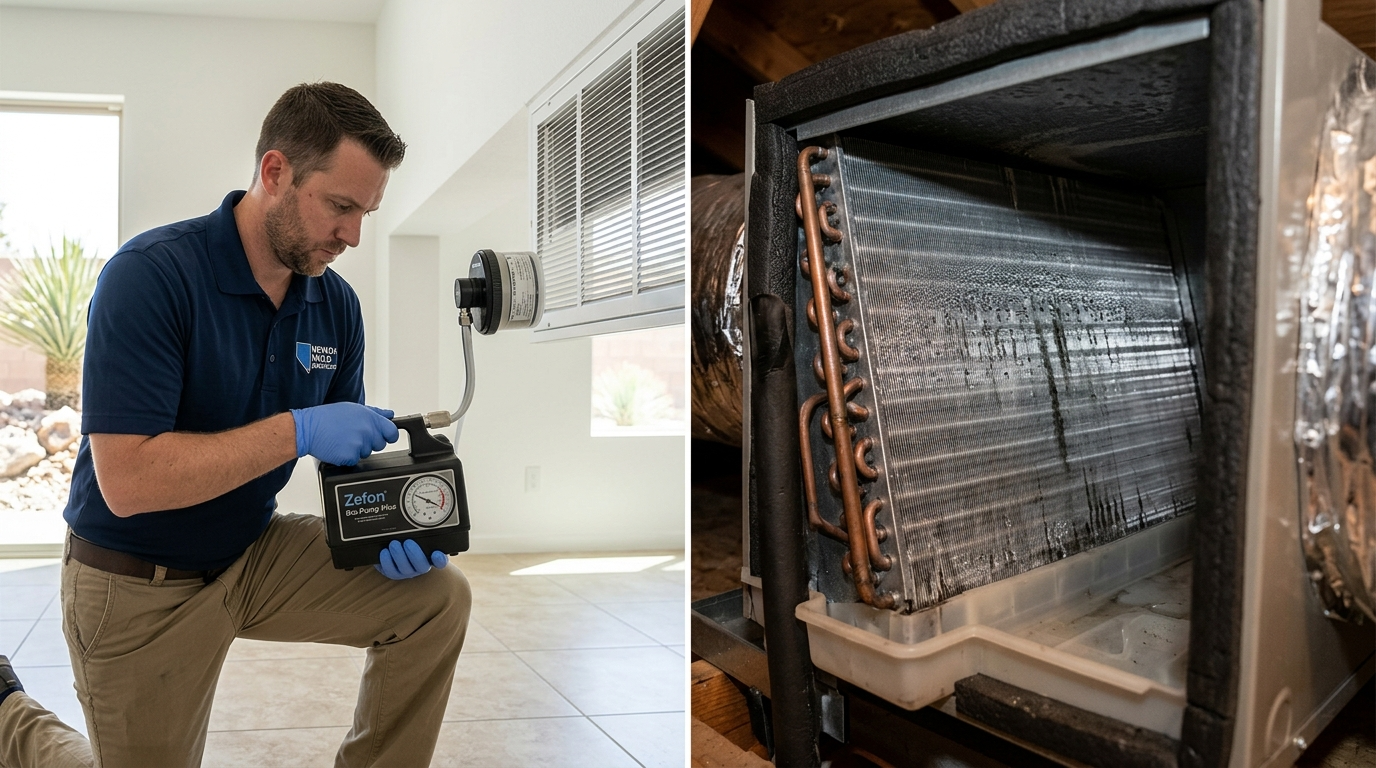
That room is your laundry or utility area. It is where dryer exhaust, condensate drainage, and trapped August humidity converge in ways that routine visual checks almost never catch. When you call a professional mold inspector in Las Vegas, you want someone who finds the source, not someone who confirms your bathroom is fine while the real problem sits thirty feet away behind a closed door.
Why August Turns Your Laundry Room Into a Mold Incubator
Las Vegas averages daytime temperatures above 105 degrees Fahrenheit in August. Most homeowners respond by running the air conditioner harder. That creates a sharp temperature differential between the air inside the utility room and the surfaces around the exterior wall, the dryer duct penetration, and the condensate line that drains from the air handler.
Cold surface plus warm humid air equals condensation. In a bathroom, that moisture evaporates quickly because the room sees regular airflow and light. In a utility closet or dedicated laundry room, it does not. The space stays closed, warm, and damp for hours at a time, and mold does not need much more than that.
Las Vegas also experiences its monsoon pattern between July and September. Exterior humidity spikes from single digits to 40 or 50 percent during those events. If your dryer vent hood seal has degraded, or if the condensate line runs through an unconditioned space before reaching its drain, you are introducing exterior moisture directly into an interior wall cavity during the most humid weeks of the year. You can read more about why this season creates conditions most homeowners do not expect in this piece on monsoon season in Las Vegas and why mold testing is essential after rain.
Three Moisture Sources That Compound Each Other in the Same Small Space
The utility area concentrates three moisture contributors that would each be manageable on their own. Together, they compound into something a single source never would.
Dryer exhaust. A gas or electric dryer expels warm, moisture-laden air through a duct that terminates outside the home. If that duct has a disconnected joint inside the wall, a crushed flex section, or a hood that does not close properly, humid exhaust vents directly into the wall cavity or the room itself. This is common in Las Vegas homes built between 1990 and 2010, where flex duct was standard and connections were not always secured with clamps.
Condensate lines. Your air handler produces condensate as it cools your home. That water drains through a PVC line, typically into a utility sink, a floor drain, or outdoors. When that line clogs, overflows, or develops a slow drip at a joint, it deposits water onto drywall, subflooring, or framing over weeks or months before anyone notices. The leak is often invisible from the surface.
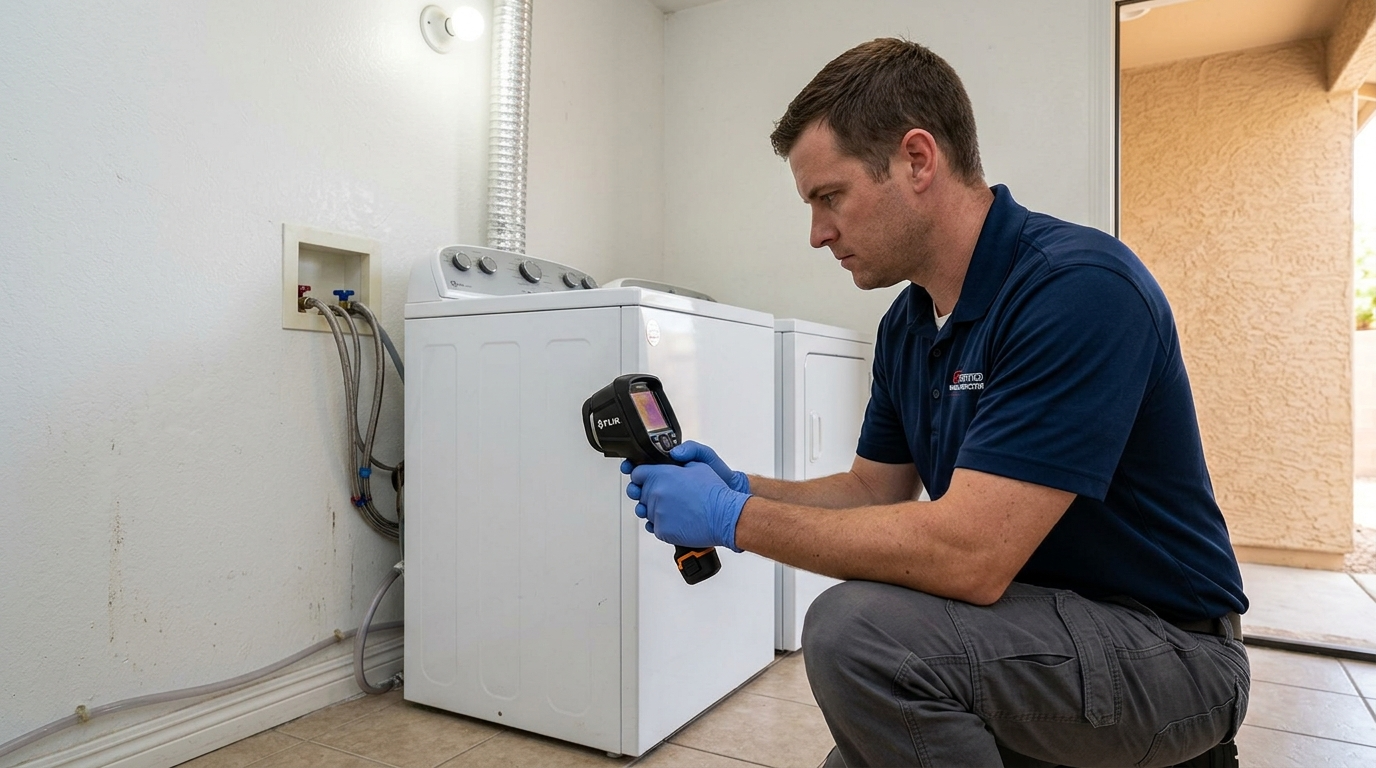
Washing machine connections. Supply hose fittings behind the machine are one of the most common sources of slow, undetected water intrusion in Clark County homes. A hose that seeps at the connection point saturates the wall cavity behind the machine without producing a visible puddle.
When all three are present in a room with limited ventilation and infrequent foot traffic, you have conditions that produce mold growth before the smell becomes noticeable enough to trigger action.
What a Surface Check Misses and What Testing Actually Reveals
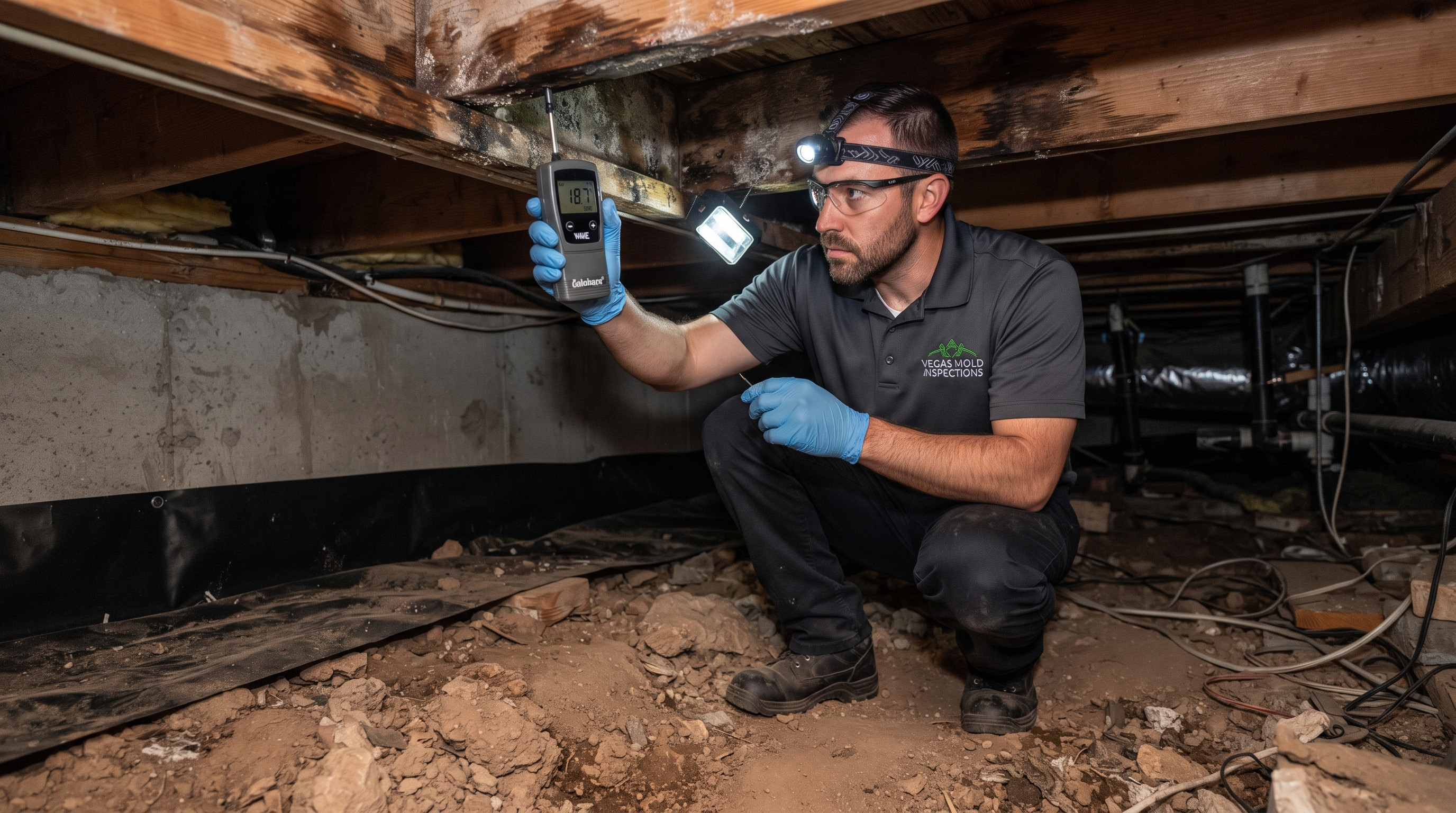
A visual inspection tells you what is visible. It does not tell you what is happening inside the wall cavity behind the dryer, beneath the washing machine pan, or along the condensate line path through the ceiling.
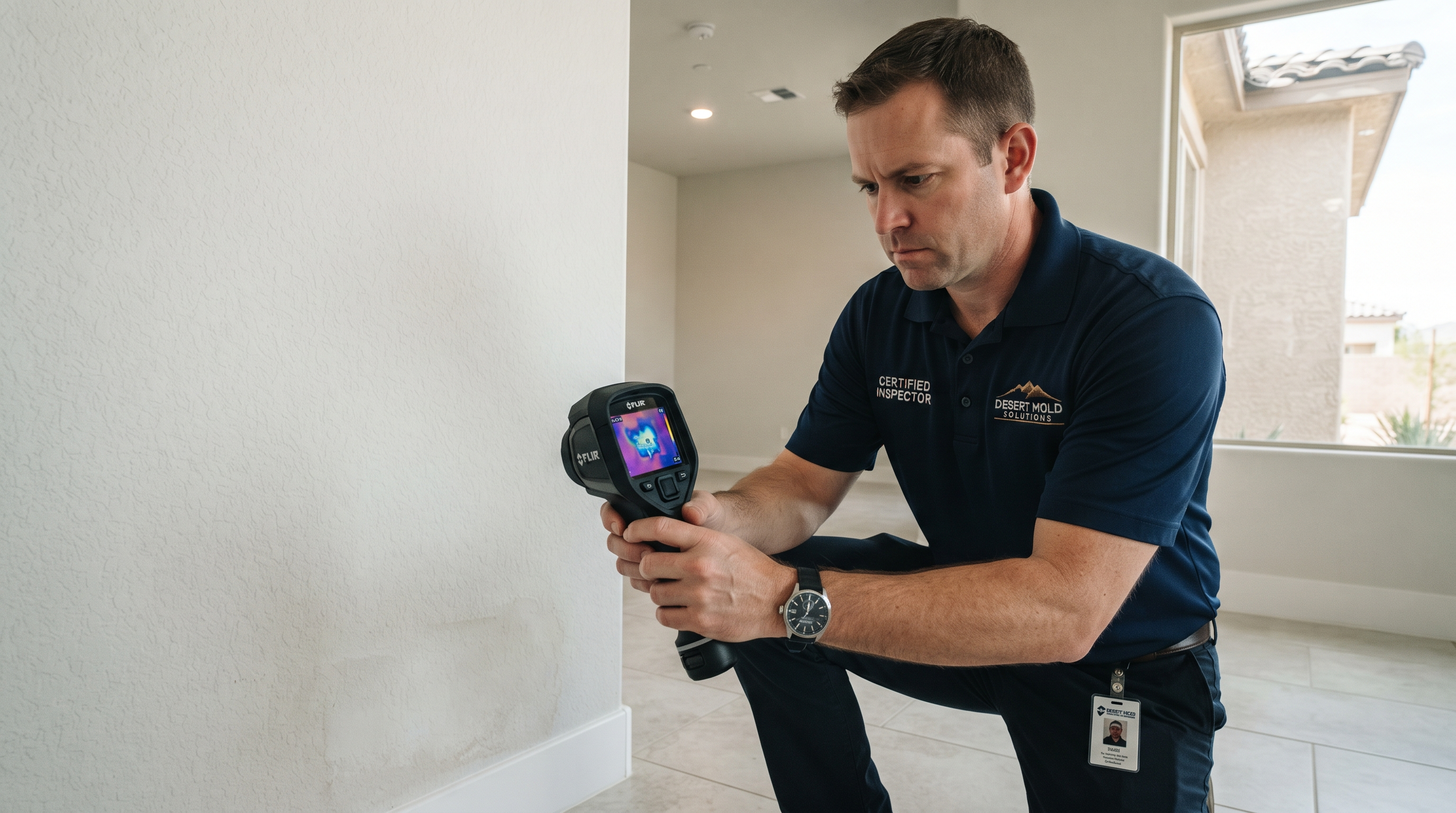
FLIR thermal imaging detects temperature differentials that indicate hidden moisture without requiring any demolition. A trained inspector using thermal imaging can identify a damp wall section behind the dryer in under two minutes. That finding then directs air sampling to the right location rather than relying on general room samples that may not capture a localized growth zone.
Air samples taken from a utility room are also frequently more informative than samples taken from adjacent living spaces. Spores concentrate where growth is active. A sample from the bedroom down the hall may show elevated counts, but the utility room sample often identifies the genus and points directly to the source environment. That distinction matters: knowing the genus tells you where to look, not just whether a problem exists.
Questions Homeowners Ask Before Scheduling a Utility Room Inspection
I had mold testing done two years ago and the utility room was checked. Why would it be different now?
Mold conditions are not static. A dryer duct that was intact two years ago can develop a disconnected joint after a rodent intrusion or a duct cleaning visit that stressed the flex. Condensate lines accumulate algae and clog gradually. A past inspection that found nothing is not a guarantee of current conditions, particularly after two full monsoon seasons.
The inspector I called said he could tell just by looking. Should I trust that?
Visual assessment has real limits. Mold grows inside wall cavities, beneath pans, and along hidden drain lines where no one is looking. An inspector who relies on sight alone in a utility space is not inspecting the space, he is inspecting the surfaces. Surface sampling and air sampling identify what is biologically present, not just what is visible. That distinction is the difference between a real finding and a cleared room that still has a problem.
I can see dark residue near the dryer vent. Is that mold or just lint?
Lint and dust accumulate near dryer penetrations and they look similar to early mold growth. The only way to know is surface sampling, which identifies the biological composition of what is actually on that surface. Guessing in either direction leads to problems: you either ignore a real source or spend money remediating something that did not need it.
How do I know if the smell I'm noticing is actually mold?
A musty, earthy odor that intensifies when the dryer runs or when the AC kicks on is one of the clearest field indicators that the source is in the utility area. If the smell is worse in the morning before the system runs, that points toward settled spore activity in a low-traffic space. Either pattern warrants sampling rather than guesswork.
You Deserve a Complete Answer, Not Just a Cleared Bathroom
Las Vegas Mold Testing is an independent inspection and testing company. We hold certifications through InterNACHI, IAC2, and NAMP. We do not offer remediation or repair services, which means the findings you receive reflect what is actually present in your home, not what would generate a follow-on contract.
If you have a smell you cannot trace, symptoms that have not resolved, or a utility area that has never been formally evaluated, call us at (702) 766-8030 or schedule online. You will receive a written report with documented findings, sample results, and clear guidance on next steps. No upsell. No alarm without evidence. A complete picture of what is happening in your home.
Contact Form
Check Out Our Other Environmental Blogs!