How Monsoon Humidity Gets Trapped Inside Las Vegas Walls
The surface of your drywall looks completely fine. No discoloration, no odor, no visible growth. But three weeks after a monsoon storm pushed water through your soffit vents or window frames, moisture is still sitting inside your wall cavity, and mold has already begun to colonize. This is the scenario most Las Vegas homeowners never see coming, because they are waiting for a sign that does not appear until the problem is weeks or months old.
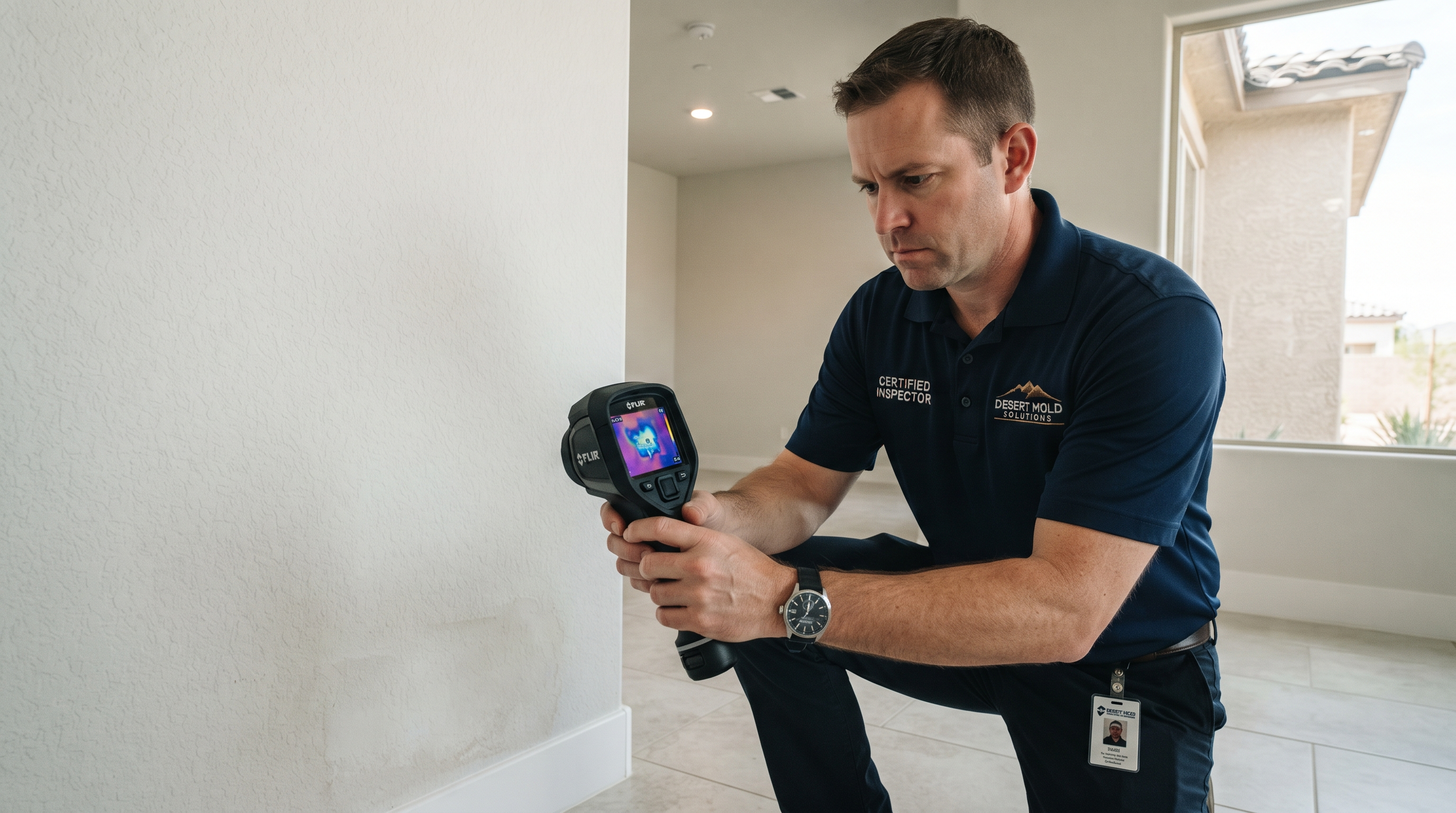
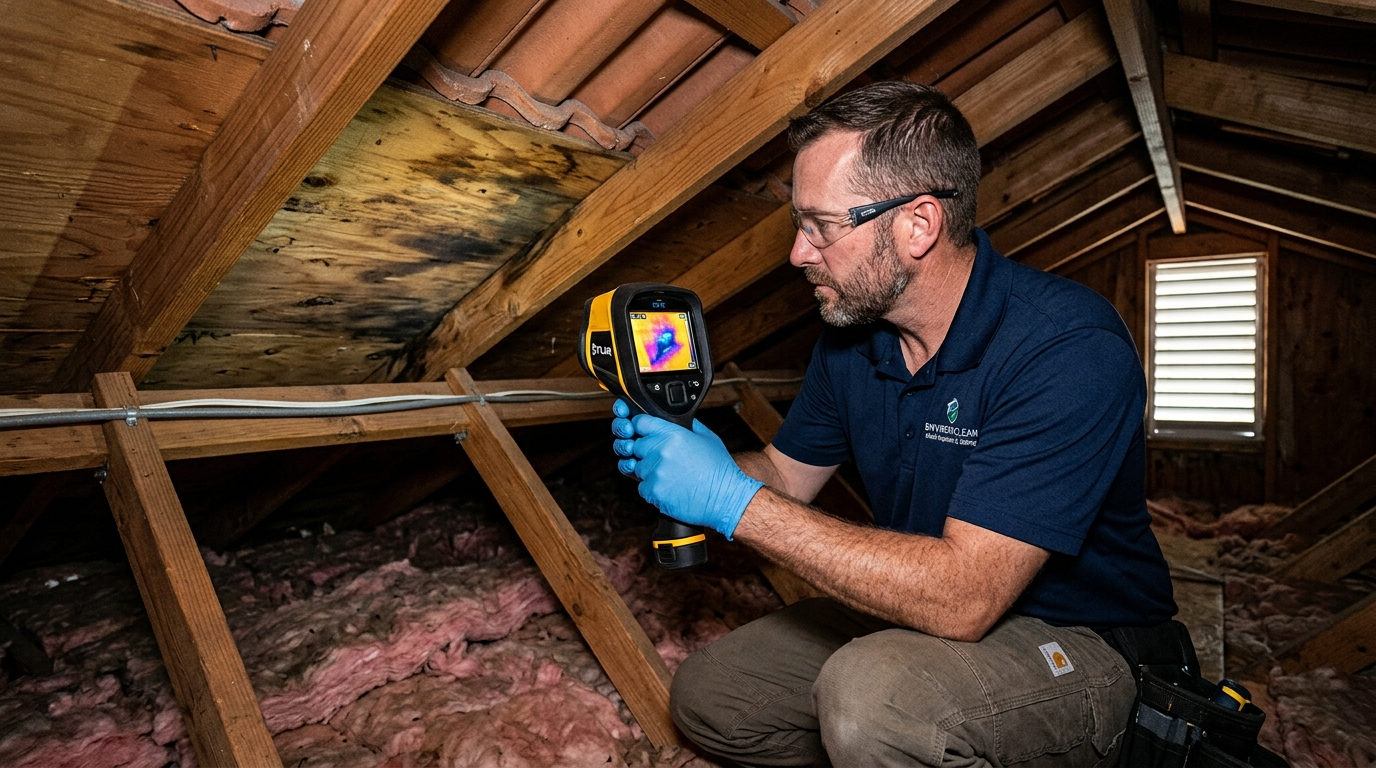
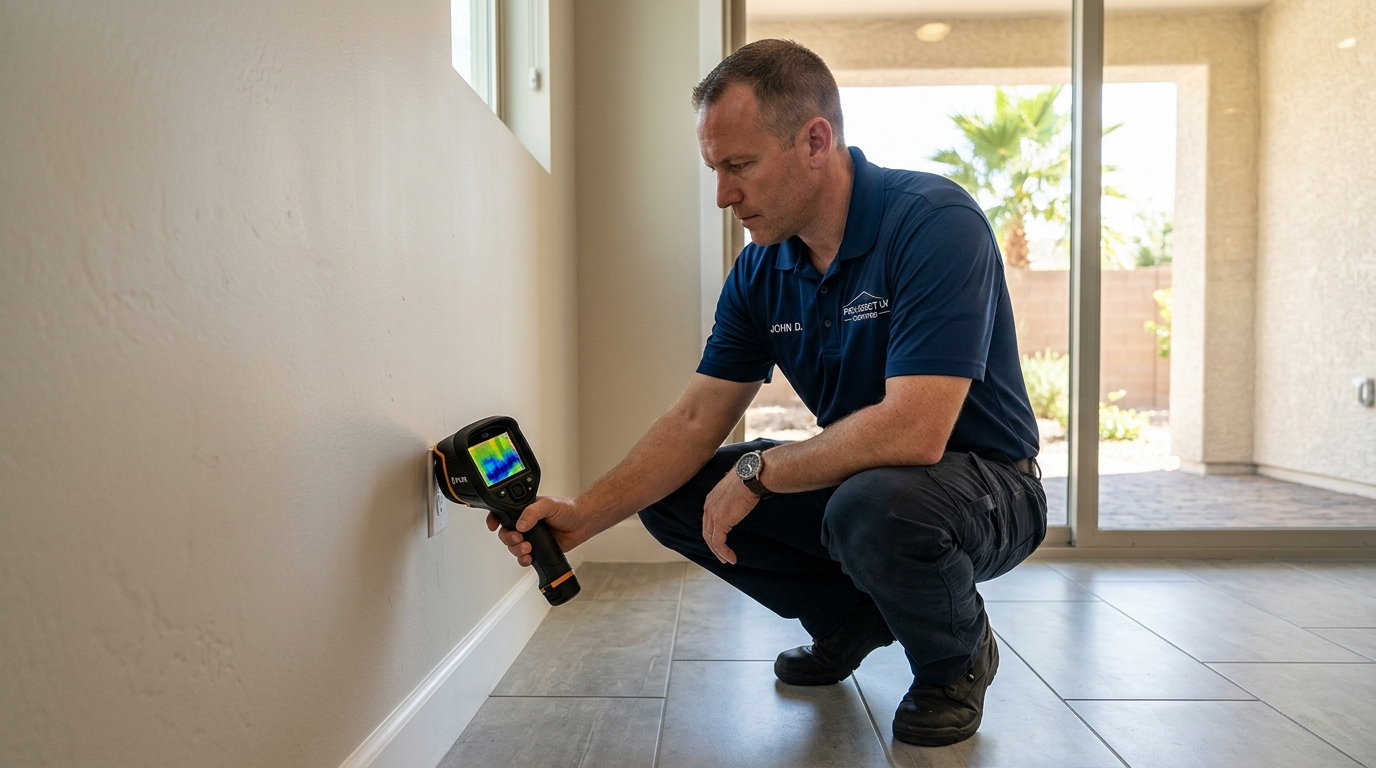
Thermal imaging mold detection in Las Vegas has become one of the most useful tools available during monsoon season precisely because it finds what your eyes cannot. A FLIR thermal camera reads surface temperature differentials on walls, ceilings, and floors. Where moisture is trapped behind a finished surface, it creates a measurable cold signature. No drilling. No guesswork. No waiting for a stain to appear.
Monsoon Moisture Does Not Evaporate the Way Desert Heat Suggests It Should
Most people assume Las Vegas heat dries everything quickly. In most seasons, that is true. July and August change that equation entirely. When monsoon storms drive humid air into building cavities through gaps in flashing, unsealed vents, or failing window caulk, that moisture does not encounter the same dry interior air it would in April. Indoor cooling systems lower ambient humidity, but they also cool wall surfaces, turning the interior side of your walls into a condensation trap. Humid air hits a cool surface and deposits moisture directly inside the wall assembly, where it has no path out.
This pattern appears most often in properties with block construction and interior drywall finishes. The block absorbs storm-driven moisture from the exterior. The interior drywall stays dry to the touch for weeks. By the time a homeowner notices anything, the cavity has been holding moisture long enough for mold to establish. The block acts as a reservoir. The drywall acts as a lid.
A Moisture Meter Cannot Reach What the Camera Already Sees
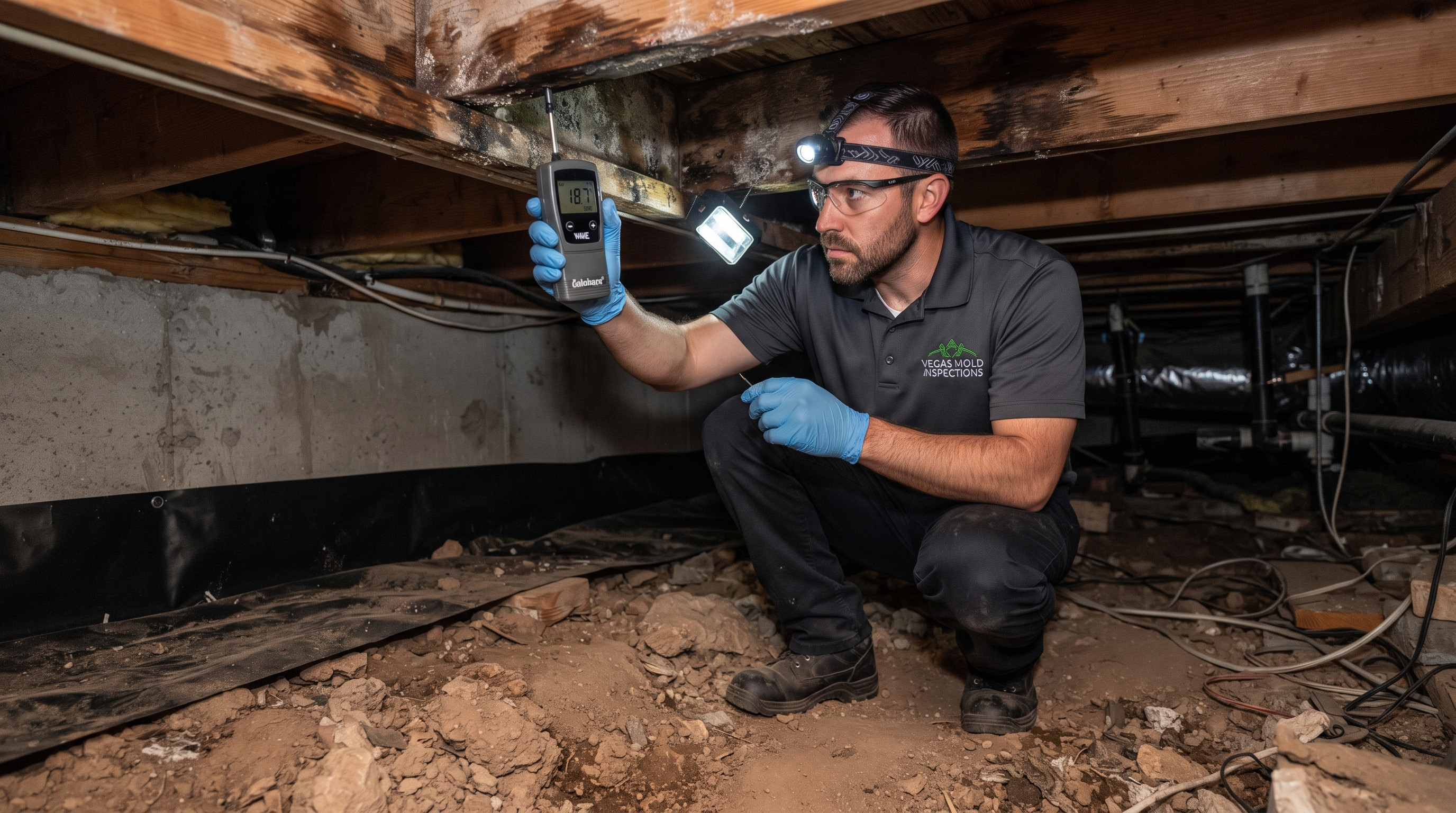
A handheld moisture meter requires contact with the surface being tested. If the moisture is two inches inside the wall, the meter reads normal. Thermal imaging works differently. The camera detects surface temperature, and trapped moisture changes that temperature in a visible, mappable pattern across the entire wall in seconds.
This distinction matters during monsoon season because affected areas are rarely where you would think to probe. Storm infiltration often enters at rooflines, travels down inside the wall cavity, and pools at the base of the wall or around a window rough opening. A moisture meter applied at eye level gives a clean reading while the problem sits six inches below the windowsill. Thermal imaging shows the full path of moisture migration, from entry point to resting location, without a single hole in the drywall.
Floor Condensation Along an Exterior Wall Is a Specific Warning Sign
If condensation forms on tile or concrete near exterior walls after a heavy monsoon, that moisture is not coming from the air in your room. It is coming through the slab or through the base of the wall. Condensation concentrated along a wall line, rather than spread across an open floor, points to moisture wicking through the building assembly and hitting your floor surface from the inside out.
This symptom appears most frequently in homes with attached garages, sunrooms, or covered patios where the wall between conditioned and unconditioned space is not fully sealed. The junction between the slab and the wall base is one of the most common infiltration points in Las Vegas residential construction. Most homeowners wipe the floor dry and assume the problem is resolved. It is not.
The Window for Intervention Is 24 to 72 Hours
Mold requires three things to colonize: a food source, the right temperature, and moisture. Drywall paper and wood framing provide the food source. Las Vegas interiors provide the temperature. Moisture is the only variable you can interrupt, and the window for doing so is roughly 24 to 72 hours after water enters a building assembly. After that point, conditions for growth are established, though visible surface evidence may not appear for weeks.
Thermal imaging used after a monsoon event identifies moisture before that colonization window closes. The inspection produces a map of where moisture is concentrated, which areas are dry, and which require targeted drying or further investigation. That documented baseline also creates a record: if a problem develops later, you have evidence of when and where moisture was present, which matters for insurance claims and remediation scoping alike.
What Las Vegas Property Owners Ask Before Scheduling After a Storm
My walls look fine and there is no smell. Is it worth having this done?
Visible signs and odor are late indicators. By the time you smell mold in a wall cavity, the colony has already produced enough growth to off-gas. Thermal imaging is most valuable precisely when everything looks normal, because that is the window in which you can intervene without a remediation project. Scheduling a FLIR thermal imaging inspection (FLIR Thermal Imaging service page) before symptoms appear is the point of the tool.
How soon after a monsoon storm should I schedule an inspection?
Schedule within the first week if you noticed any water intrusion, window leaks, roof drips, or condensation along exterior walls. Moisture moves and disperses over time, and earlier inspection produces more actionable thermal data. Beyond two weeks, some moisture signatures begin to equalize and become harder to distinguish on camera.
Does thermal imaging require any preparation or access to the home?
The scan works best when the home has been conditioned at its normal temperature for several hours before the inspection. Turn off fans and avoid opening windows. No furniture removal is required, and the process is entirely non-invasive.
If the report finds something, am I locked into using whoever you recommend for remediation?
No. Las Vegas Mold Testing does not perform remediation, and we do not refer clients to a preferred contractor. If the findings indicate remediation is warranted, you receive that assessment in writing from an inspector who has no financial stake in what the next step costs or who performs it. You get the report. You choose what happens next. You can review [what a mold inspection report includes](Blog post or service page covering the written report deliverable) before you schedule if you want to know exactly what you are paying for.
Schedule Before the Season Moves On
Monsoon season runs through September in the Las Vegas Valley. Properties that take storm water in July often do not show visible consequences until September or October, after moisture has had time to work through the wall assembly. By then, the intervention is more involved and more expensive.
Las Vegas Mold Testing uses FLIR thermal imaging as part of its inspection process to give property owners a documented, accurate picture of what is happening inside their walls. Our inspections are third-party and independent. We test. We report. You decide what happens next.
Call (702) 766-8030 or submit an inspection request online. You will receive a written report identifying every moisture signature found, every area confirmed dry, and any evidence of mold activity, so you can act on fact rather than assumption. If monsoon activity has reached your property this season, do not wait for a stain to confirm what a camera can already show you.
Contact Form
Check Out Our Other Environmental Blogs!