After the Storms Stop Is When Las Vegas Mold Actually Starts
The storms have stopped. The sky is clear. And now your house smells like something is wrong.
Most homeowners assume the monsoon season itself is the high-risk window for mold. They watch the July and August storms roll through the Las Vegas Valley, check their roof and windows, see nothing obvious, and exhale. But the four to six weeks after the last storm is when trapped moisture finishes its work inside wall cavities, under flooring, and behind baseboards, well out of sight and long after there is any rain to blame. If you are searching for a mold inspection in Las Vegas, NV in September, your instincts are correct. Something likely did happen, and it is still happening.
Mold Does Not Appear When the Rain Does
Water that enters a structure during a monsoon event does not announce itself immediately. It soaks into wood framing, concrete block, insulation batts, and drywall paper. Then it sits.
If the intrusion was moderate, it may take three to five weeks before surface conditions change enough to produce a visible stain or a detectable odor. That lag reflects the biology of mold growth. Spores require sustained moisture contact, not just a single wet event. A wall soaked in a July storm but only partially dried in August creates exactly the conditions mold needs: intermittent moisture with no complete drying cycle. By September, that colony is established and producing mycotoxins whether you can see it or not.
We regularly see clients who had no visible water damage after the monsoon but come to us in September with respiratory symptoms, musty odors, or unexplained fatigue that began weeks after the last storm. The connection is real. The timing is predictable. That pattern is why the post-storm window matters more than the storm itself.
Your Nose and Your Body Detect What Your Eyes Miss
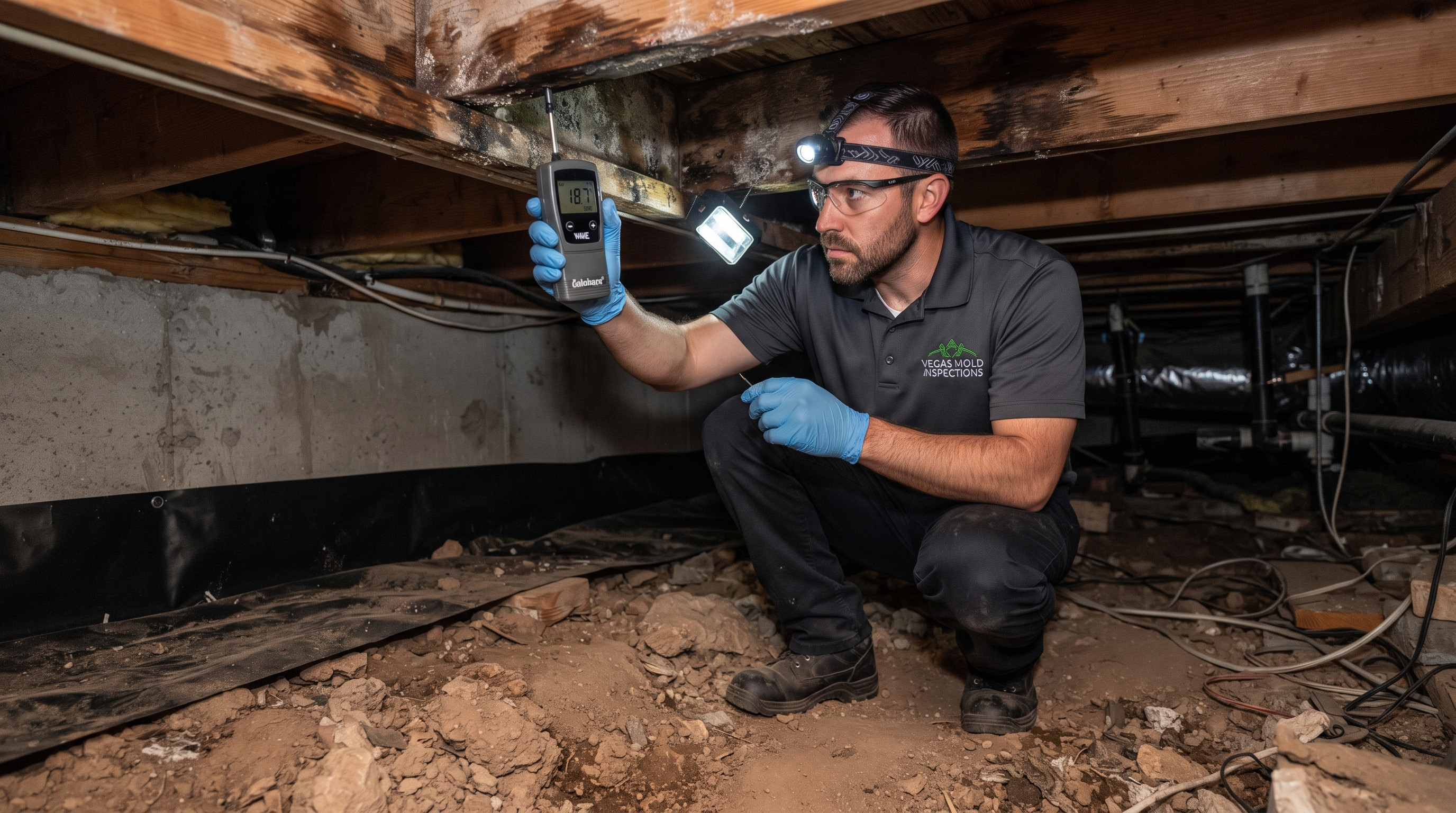
A visual scan of your home after monsoon season can miss almost everything that matters. Mold growing inside a wall cavity, under a tile floor, or in an HVAC duct leaves no visible trace on the surface until the colony is large and the damage is extensive.
A musty or earthy smell that was not present before monsoon season is a direct indicator of microbial activity somewhere in the structure. That odor comes from microbial volatile organic compounds, gases released by active mold colonies. If the smell is stronger in one room, near a particular wall, or when the HVAC runs, those are diagnostic clues a trained inspector uses to narrow the search.
Symptom patterns matter too. If one person in your household has had persistent congestion, headaches, or fatigue since August and no other explanation fits, mold exposure deserves to be ruled out. Testing your environment and testing your body address different questions, and both can be relevant. You can read more about the personal exposure side of this in our overview of how to test yourself for mold exposure.
Where September Mold Hides in Las Vegas-Area Homes
Las Vegas construction patterns create specific vulnerabilities that monsoon moisture exploits. Stucco exteriors, common throughout the valley from Summerlin to Henderson, can develop hairline cracks that allow water intrusion during hard, driving rain. The moisture enters but has nowhere to exit quickly because stucco systems are designed to be vapor-restrictive.
Flat and low-slope roofs, standard on many homes in zip codes like 89118 and 89121, are particularly prone to ponding after heavy storms. When a drain is even partially blocked by debris, water sits against the roofing membrane and eventually finds its way in through penetrations, seams, or fastener holes. The ceiling below shows nothing for weeks.
Crawl spaces and slab-on-grade construction present a third entry point. When soil becomes saturated around the foundation during monsoon events and drainage is insufficient, moisture wicks through the slab or into the crawl space and creates sustained humidity at floor level. Carpet, laminate, and engineered wood absorb that moisture and hold it.
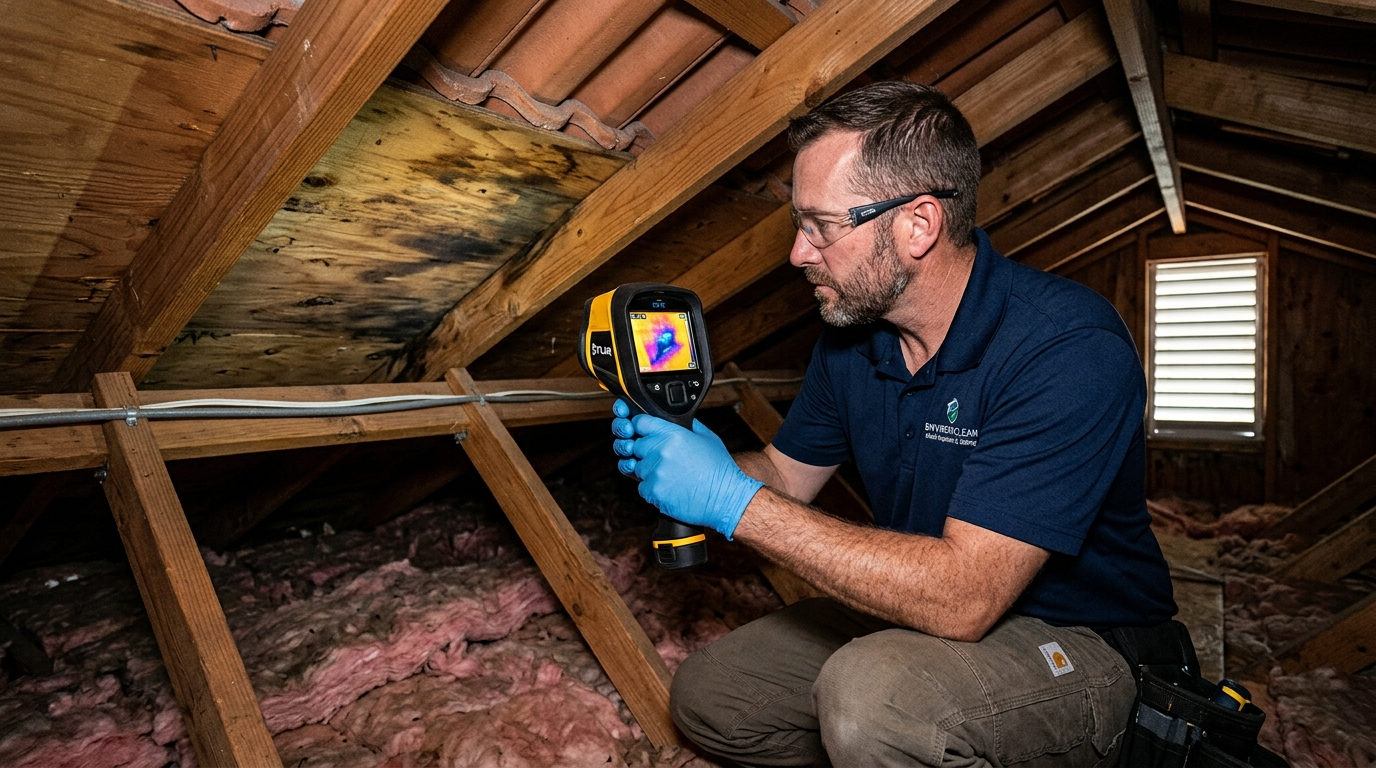
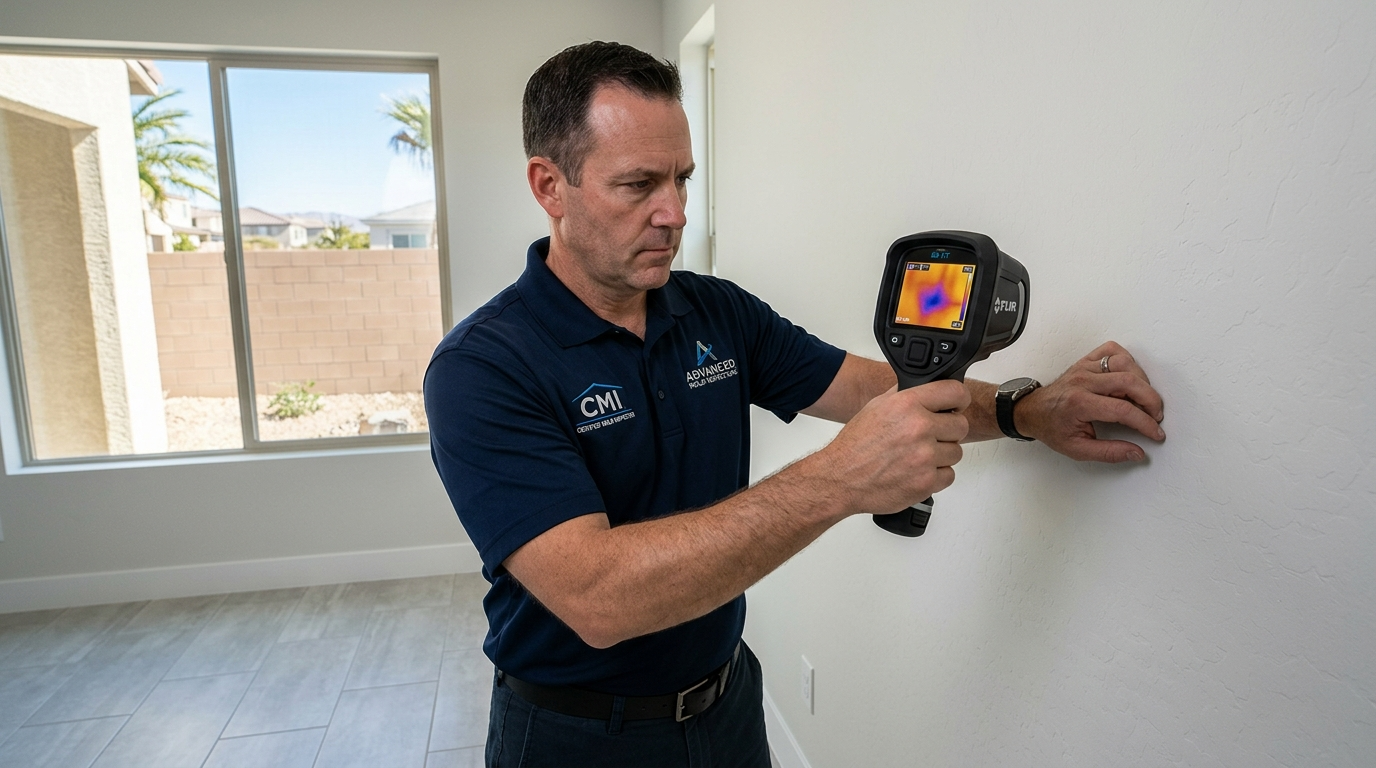
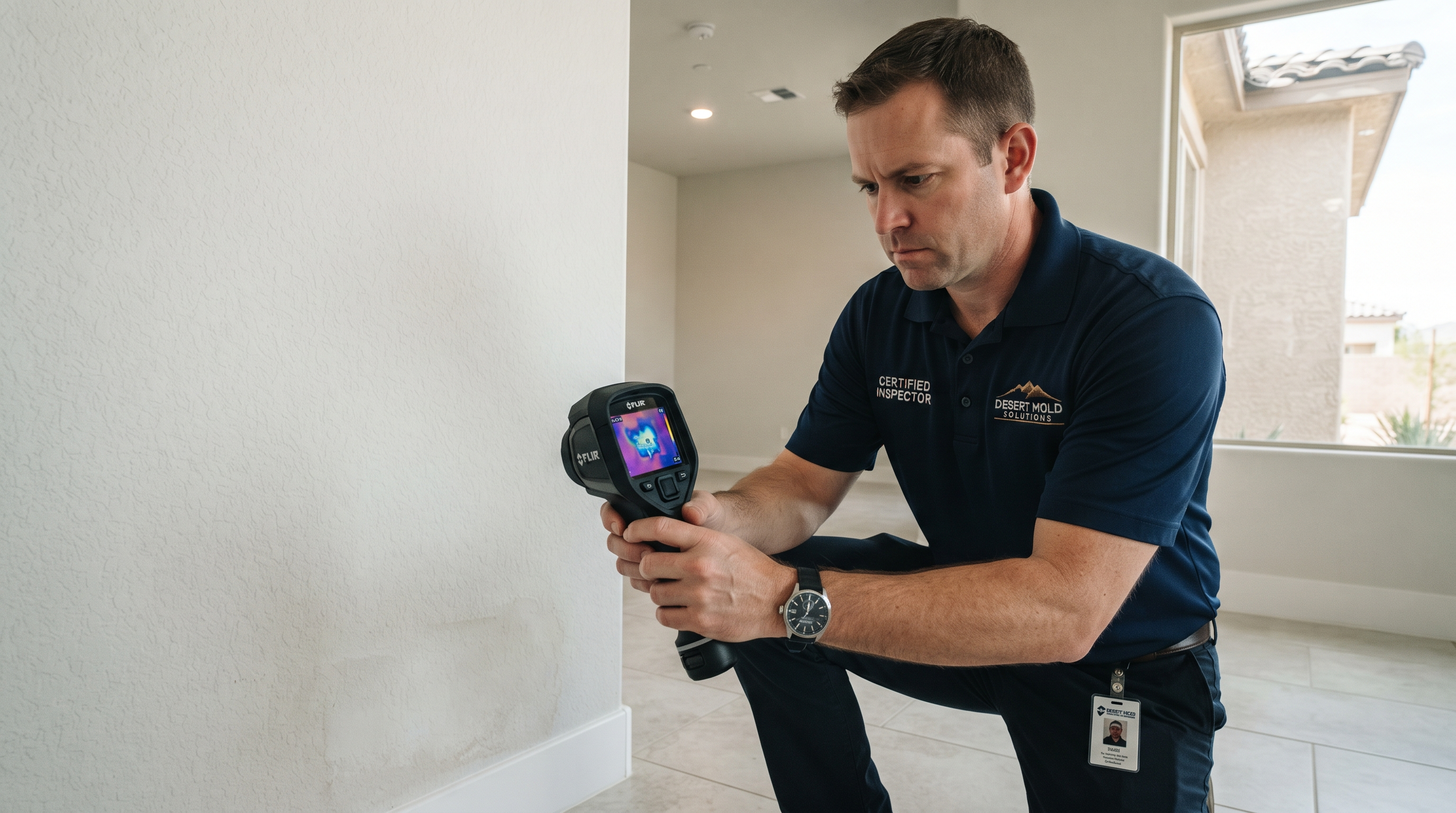
FLIR thermal imaging is one of the most effective tools for locating active moisture in these hidden zones. Thermal cameras detect temperature differentials caused by evaporative cooling in wet areas, revealing moisture pockets behind drywall and under flooring without cutting into surfaces. You can see how this works in our post on how FLIR thermal imaging detects what you cannot see.
Every Week You Wait, the Problem Gets Harder to Contain
The mold colony present in September is smaller, more localized, and less entrenched than the one that will exist in October. Every week of uninterrupted growth expands the affected area and deepens penetration into porous materials. Drywall that might be cleaned and treated at six weeks often requires full removal at twelve.
Remediation costs scale with colony size and material involvement. A contained issue in one wall bay is a fundamentally different project than one that has spread through a shared wall into an adjacent room.
The inspection that finds the problem now costs the same regardless of when you schedule it. The remediation it informs does not.
Scheduling a post-monsoon inspection does not commit you to anything. It gives you documented, objective information. If the results are clean, you have that on record. If they show a problem, you have specific findings from a certified third-party inspector you can take to a remediator, an insurer, or an attorney, without the bias of a company that profits from alarming you.
Questions Las Vegas Homeowners Ask Us Every September
I see no visible mold anywhere. Does that mean my home is clean?
No, and this is the question that matters most. Visible mold is late-stage evidence. Air sampling and surface testing detect mold colonies before they produce visible growth. A negative visual check tells you that nothing has broken through the surface yet. It says nothing about what is happening inside the structure.
I bought a DIY mold test kit from the hardware store. Is that enough?
Those kits cannot tell you where the mold is, how concentrated it is, what species is present, or whether levels are elevated relative to outdoor baseline conditions. They confirm that mold spores exist in your home, which is true of virtually every home. That result does not help you make a decision. A professional mold inspection gives you spore counts, species identification, location data, and a written report you can actually use. You can read more about why in our post on why DIY mold testing kits cannot replace professional testing.
If I call a remediator first and they say I have a problem, do I still need an independent inspection?
Yes. A remediation company earns revenue by doing remediation work. Their assessment, even when honest, is not objective. Without an independent baseline, you have no way to evaluate the scope they propose, verify the work after it is done, or defend a claim to your insurer. An inspection from Las Vegas Mold Testing gives you findings that carry no financial interest in what happens next. That report is what gives every other number in the process something to stand against.
Do you serve areas outside of Las Vegas proper?
Yes. We inspect properties throughout Clark County including Henderson, Summerlin, North Las Vegas, Boulder City, and surrounding communities. Our team also serves Pahrump and other rural Nevada locations where monsoon drainage issues and well water concerns often occur together.
How long does the inspection take and when do I get results?
Most residential inspections take two to three hours depending on home size and HVAC complexity. Lab results from air and surface samples typically return within two to five business days. You receive a full written report with findings, photos, and next-step recommendations.
Get Objective Findings Before the Problem Grows
If something changed in your home after monsoon season, September is the right time to find out what it is. Las Vegas Mold Testing performs inspection and testing only. We do not offer remediation services. That means every finding we report is objective, every recommendation is conflict-free, and the written report you receive reflects what is actually in your home, not what generates the next contract.
Call us at (702) 766-8030 or book online. You will leave with a written report, documented findings, and a clear picture of what your home actually needs.
Contact Form
Check Out Our Other Environmental Blogs!