What Your AC Is Actually Pumping Through Your Home This Summer
Most people assume that running the air conditioner constantly keeps their home clean. Sealed up tight, filtered air cycling through the system, no open windows letting in dust or pollen. That logic sounds reasonable, and it is almost entirely wrong. If you are doing air quality testing in your Las Vegas home this summer, the AC system itself is likely the first place the results will point.
The pattern is consistent across the valley. Homeowners running their units eight to twelve hours a day through June, July, and August create conditions inside the ductwork that are genuinely different from any other time of year. The combination of a locked-down house, an overworked system, and Las Vegas monsoon humidity spikes does not dilute indoor air. It concentrates it.
Running the AC Longer Recirculates What Is Already There
Standard AC systems do not bring fresh outdoor air into your home. They pull existing interior air across a coil, cool it, and push it back through the same duct network. Every pass picks up whatever has accumulated inside: dust, skin cells, pet dander, VOCs off-gassing from furniture and flooring, and mold spores from any moisture source the system has encountered.
A home sealed for 90 days of summer heat runs that recirculation loop thousands of times. Contaminants that would otherwise dissipate through normal ventilation build up instead. By mid-August, the air inside a tightly sealed Las Vegas home can be significantly worse than outdoor air, even during a dust event. That is not a seasonal inconvenience. It is a structural problem created by how cooling-dependent homes work.
The Monsoon Window Opens a Mold Risk That Closes Before You Notice It
Las Vegas receives nearly all of its annual moisture between July and September. Relative humidity that sits at 10 to 15 percent in May can spike above 60 percent during monsoon activity. That threshold matters because mold colonies require humidity above 60 percent to activate and grow.
The spike is brief, sometimes only a few hours. But a humid air mass pulled into a duct system, or condensed on a cold coil surface, does not evaporate as fast as it arrived. The moisture lingers in insulated ductwork, in the drip pan, and behind walls near supply vents. Outdoor humidity drops back to normal. Interior moisture sits.
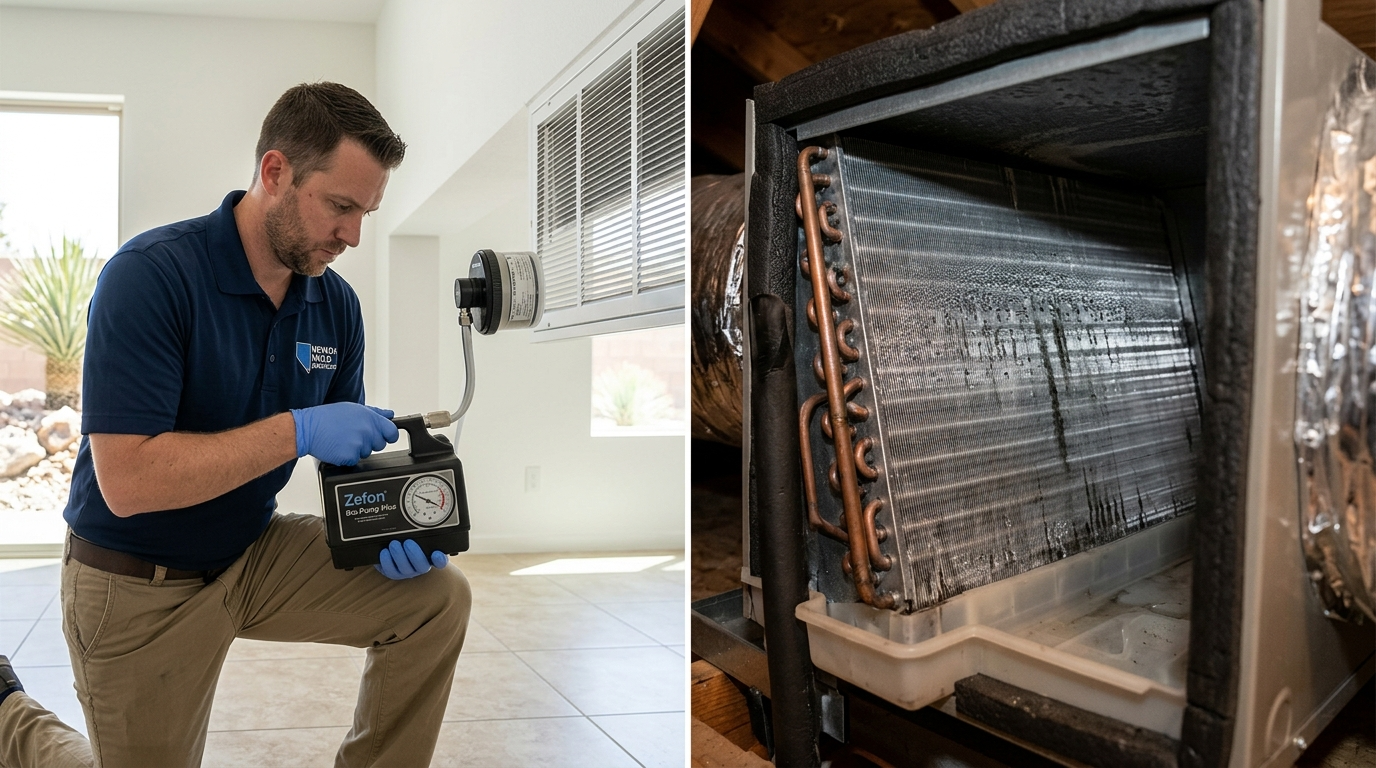
We regularly see properties where visible mold is absent but air sample results show elevated spore counts concentrated around supply registers. The source is almost always the duct system or air handler cabinet, not a leak or a visible water intrusion. Homeowners had no idea because nothing looked wrong.
If Your Symptoms Are Worse Inside Than Outside, Pay Attention to That
Congestion, headaches, eye irritation, and fatigue that appear or worsen in summer are routinely attributed to outdoor pollen and heat. That attribution is sometimes correct. But if your symptoms are worse inside the house than outside, worse in certain rooms, or worst in the morning after sleeping with the AC running all night, the source is more likely indoor than outdoor.
Mold spores, mycotoxins from active colonies, and VOCs from building materials concentrate near sleeping areas and primary living spaces because that is where air recirculates most. Someone spending eight hours in a bedroom with a supply vent cycling contaminated air will show different exposure patterns than someone reacting to outdoor sources. The location of your worst symptoms is a diagnostic clue worth taking seriously.
A written air quality report replaces assumption with an answer. It tells you whether spore counts are elevated, which species are present, and whether levels reflect normal background or an active indoor source. That distinction changes everything about what you do next.
What a Professional Inspection Actually Measures
Because the local climate and housing stock create specific risk patterns, air quality testing in a Las Vegas home during summer should cover more than one category of contaminant.
Mold spore sampling captures both indoor and outdoor air counts and compares them. If indoor counts exceed outdoor counts for the same species, there is an active indoor source. If a species appears indoors that is not present outdoors, that is a direct diagnostic signal.
HVAC mold testing of duct interiors and the air handler targets surface colonization that spore counts alone can miss. This is a separate sample type and often the most revealing one in summer inspections.
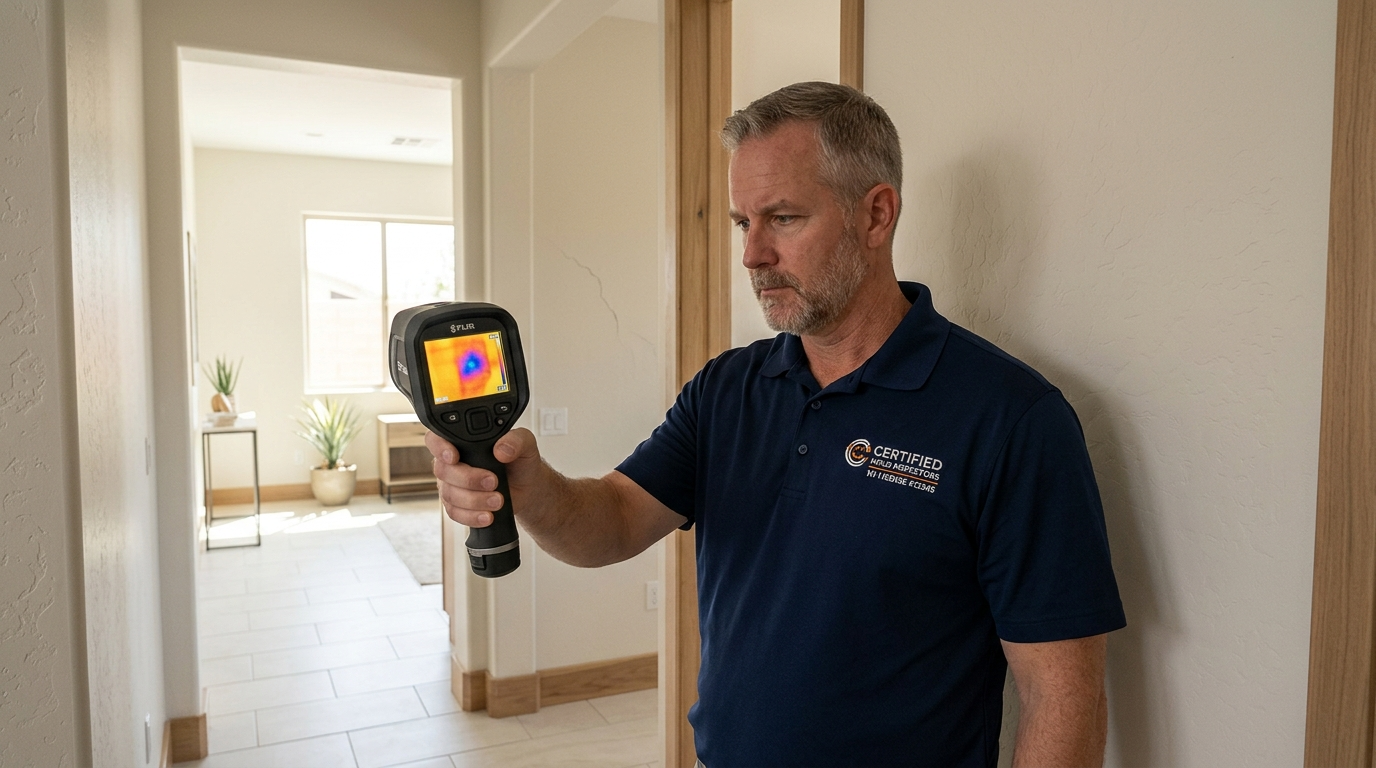
Thermal imaging for moisture detection uses a FLIR camera to identify moisture behind walls, ceilings, and floors without cutting into the surface. During summer, condensation patterns from oversized or improperly balanced AC systems create hidden moisture that never causes a visible stain but absolutely supports mold growth.
The written report documents all findings, identifies probable sources, and gives you a clear picture of what your household is breathing.
Questions Homeowners Ask Before Scheduling a Summer Air Quality Test
Is it worth testing if I do not see any mold?
Yes. Mold colonies in ductwork, inside wall cavities, or inside the air handler cabinet produce spores that enter your living space without any visible sign. The absence of visible growth does not mean absence of exposure. In summer inspections across the Las Vegas Valley, hidden duct contamination is one of the most common findings, and it would not have been caught by a visual check alone.
My AC filter is new. Does that mean my air is clean?
No. A new filter reduces particulate matter at the point of filtration. It does not address mold already established in the ductwork downstream, VOCs off-gassing from materials throughout the home, or contamination inside the air handler itself. Filters and air quality testing solve different problems. The confusion is understandable because filter marketing implies broader protection than filters actually deliver.
I am worried the inspection will find something serious and I will be pressured into expensive remediation. How do I know that will not happen?
Las Vegas Mold Testing performs inspection and testing only. No remediation, no repairs, no contractors to refer you to for a fee. The company has no financial interest in what the results show. If the report finds a problem, you receive documentation of what it is and where it is. What you do with that information is your decision. That structure is the reason clients who have been previously alarmed by remediation companies come here for a second opinion.
How long does the inspection take?
A basic inspection with air sampling typically takes 60 to 90 minutes for a standard residential property. The lab report follows within a few business days and includes a written summary you can read without a science background.
Do I need to prepare anything before the appointment?
Keep your AC running as you normally would. Do not clean or spray anything near vents or suspicious areas before the appointment. Testing conditions should reflect your home's normal daily operation, not a pre-cleaned version of it.
Can you also test my well water during the same visit?
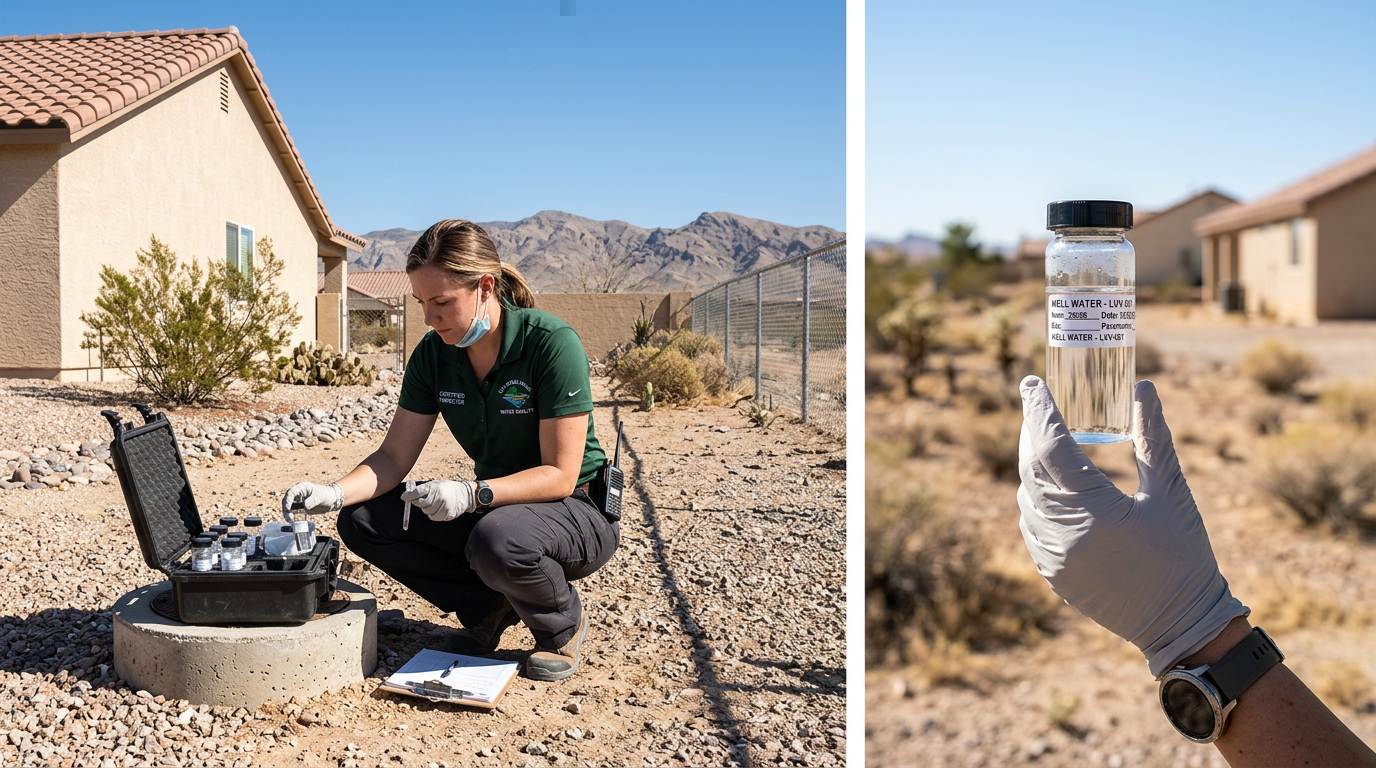
Yes. Las Vegas Mold Testing offers well water quality testing for bacteria, heavy metals, nitrates, VOCs, and pH. If your property in the outlying areas of Clark County uses a private well, this can be combined with a home inspection visit.
What if I want to know whether I have been personally exposed to mold toxins?
Las Vegas Mold Testing offers mycotoxin exposure testing through an at-home urinalysis kit. The kit ships to you, you collect the sample, and the lab analyzes it for mycotoxin presence. This is a separate service from the home inspection and can be ordered independently or alongside it.
Schedule an Inspection and Leave With a Written Report, Not a Sales Pitch
Las Vegas Mold Testing performs inspection and testing only. No remediation, no repairs. That separation exists so your results reflect what is actually in your home, not what justifies a work order. Certifications from InterNACHI, IAC2, and NAMP support findings that hold up to scrutiny, whether you need them for your own peace of mind or for a real estate transaction.
If your household has unexplained symptoms, your home smells different than it used to, or you have run the AC constantly this summer and want to know what it is cycling through, the next step is a scheduled inspection with documented results.
Call Las Vegas Mold Testing at (702) 766-8030 or submit a contact form. You will receive a complete written report identifying what is in your air, where it is coming from, and what the findings mean.
Contact Form
Check Out Our Other Environmental Blogs!