Why Your Las Vegas Pool Area Might Be Your Mold Blind Spot
You have checked under the bathroom sink. You have looked behind the washing machine. You replaced the caulk around the tub last spring. And still, something smells off in the back rooms of your house every summer. The answer is probably walking through your sliding glass door about fifteen times a day in wet feet.
Pool areas are one of the most overlooked mold entry points in Las Vegas homes, and most homeowners never connect the dots. If you have been searching for mold testing Las Vegas NV and wondering whether your situation warrants a call, the fact that your concern started outdoors does not make it less real. It makes it harder to find on your own.
Water Does Not Stay Outside Just Because It Started There
Every time someone walks from the pool to the house, they carry water across the threshold. That water does not evaporate instantly. It sits in the track of your sliding glass door, soaks into the adjacent flooring, and works its way under the baseboard.
Pool splash, outdoor shower runoff, and wet towels laid across interior floors all deposit moisture in zones your HVAC system was never designed to dehumidify. Your air conditioner pulls humidity from the air, but it does not draw moisture out of a saturated door track or a wet subfloor beneath a tile transition strip. The material stays wet, and the mold clock starts.
What makes Las Vegas pool homes particularly vulnerable is the temperature contrast. Outside temperatures push past 110 degrees on summer afternoons, while people keep their thermostats at 74 or 75 inside. That sharp boundary between hot-wet and cold-dry creates condensation along interior wall surfaces closest to the pool entry, especially on north-facing walls that do not get direct sun to aid drying. Standard advice about controlling indoor humidity does not account for this entry-point problem. That is why it goes undetected so often.
The Door Track Is a Moisture Trap Built Into Your Floor
Sliding glass door tracks sit below floor level by design. They collect water. In a house without a pool, this is a minor inconvenience. In a house where that door opens twenty times on a Saturday afternoon, it becomes a continuous delivery system for moisture into the wall cavity on either side of the door frame.
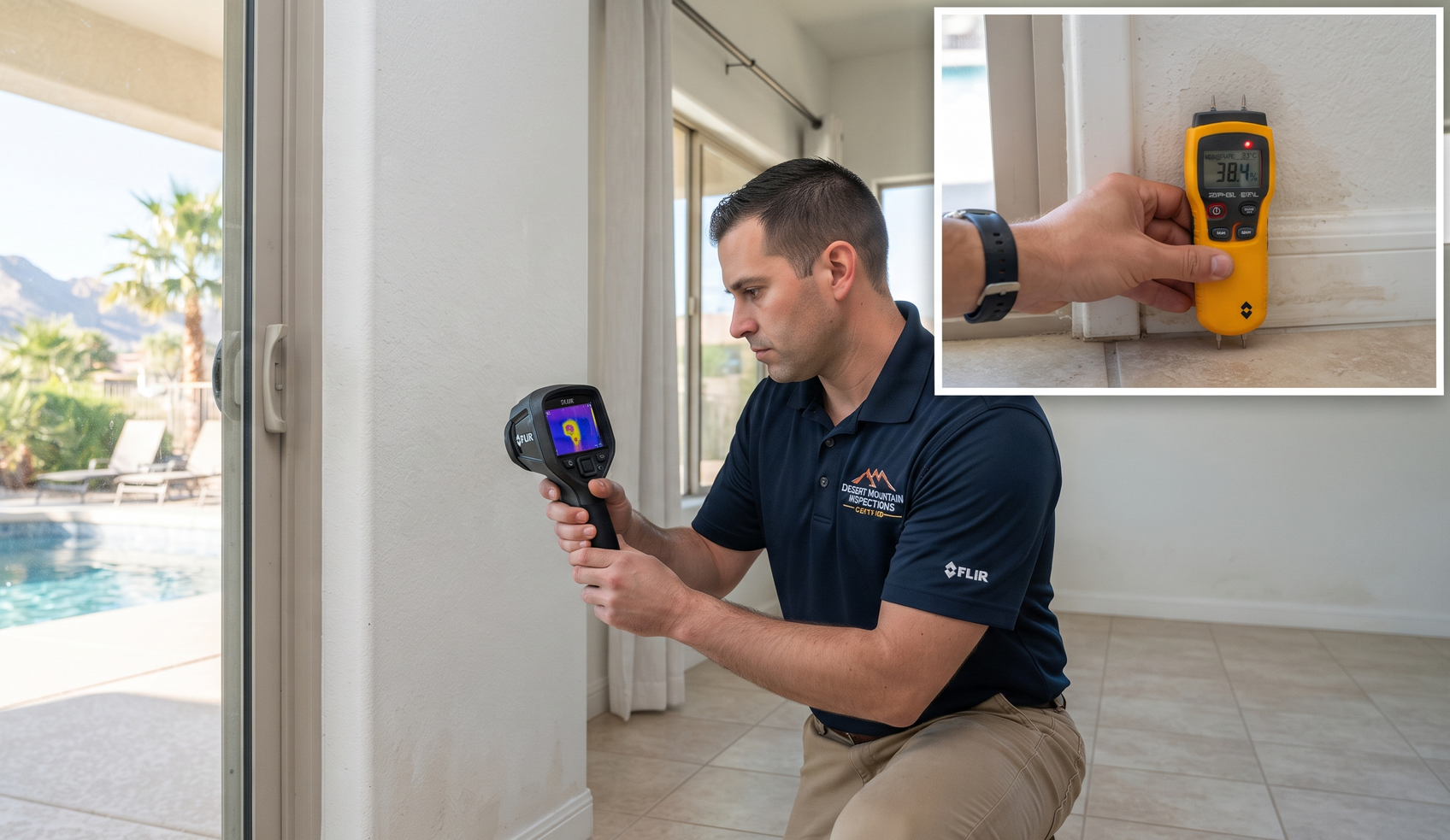
We regularly see mold growth in the drywall adjacent to pool-facing sliding doors that shows no visible sign from inside the room. The wall looks clean. The floor looks dry. The interior cavity tells a different story. By the time the smell is noticeable, the colony has typically been growing through one or two drying seasons without detection.
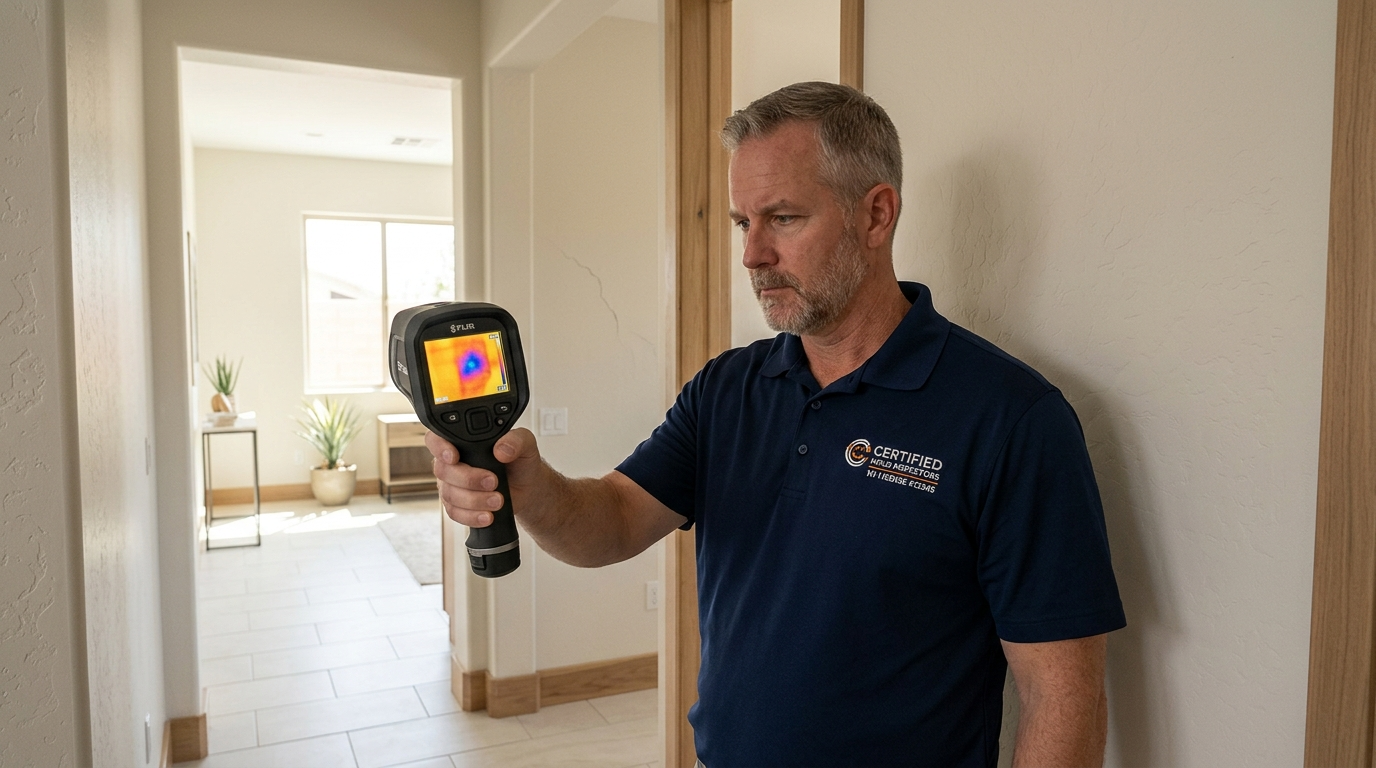
The framing lumber around door openings absorbs moisture readily when the cycle of wet-dry-wet repeats across a summer. A FLIR thermal imaging inspection shows the moisture boundary clearly in these cases, running vertically along the door frame and sometimes extending upward into the ceiling cavity if a covered patio overhead channels rain or mist inward. Knowing where the moisture boundary ends tells you exactly what a contractor needs to address.
Outdoor Showers Leave a Moisture Shadow on Interior Walls
If your pool area includes an outdoor shower, you have an additional moisture source that most inspection guides completely ignore. Outdoor showers are typically installed against an exterior wall of the house. The water drains away from the structure in theory, but the wall itself gets wet repeatedly, and that moisture does not always stay on the surface.
Stucco exteriors, common throughout the Las Vegas Valley, absorb and hold water when the coating develops micro-cracks over time. That absorbed moisture migrates inward slowly. On the interior side of that same wall, the surface stays cool from air conditioning, which slows drying further.
The pattern we encounter most often on properties with outdoor showers is a vertical band of elevated moisture readings on the interior wall surface, typically eighteen to thirty-six inches wide, centered on the shower location outside. Homeowners walk past that wall every day and see nothing unusual. A moisture meter and a thermal camera read it immediately. That is exactly why what a basic mold inspection includes goes well beyond a visual walkthrough.
Signs Pool Owners Should Not Ignore This Summer
You do not need visible mold to have a problem worth investigating. The following signs in homes with pool access warrant a professional inspection:
- A musty or earthy smell concentrated in the room closest to the pool entry, particularly after heavy pool use
- Soft spots or slight discoloration along the base of walls adjacent to sliding glass doors
- Grout or caulk around the interior threshold darkening or deteriorating faster than expected
- Tile that has started to lift or separate near the pool entry without an obvious cause
- Family members experiencing allergy-type symptoms that worsen during pool season and improve when away from home
None of these signs are proof of mold by themselves. Together, they are reason enough to stop guessing.
Questions Pool Homeowners Ask Before Scheduling
Does mold testing make sense if I have not seen any visible growth?
Yes, and this is actually when testing is most useful. Visible mold means the colony is established and has been growing long enough to surface. Testing before you see growth can catch elevated spore counts in the air or identify moisture-saturated materials before remediation becomes a major project. Early detection keeps the scope of any response small.
A mold company came out last year and told me everything was fine. Should I believe them?
That depends on whether that company also offered remediation services. A company that earns money from treating mold has a different incentive than one that earns money only from accurate testing. They are not necessarily dishonest, but the structure creates pressure in how results get communicated. Las Vegas Mold Testing does not offer remediation. Our only product is an accurate written report. If you still have symptoms or odors, a second opinion from an independent tester is worth the cost.
Will the inspection damage my walls or flooring?
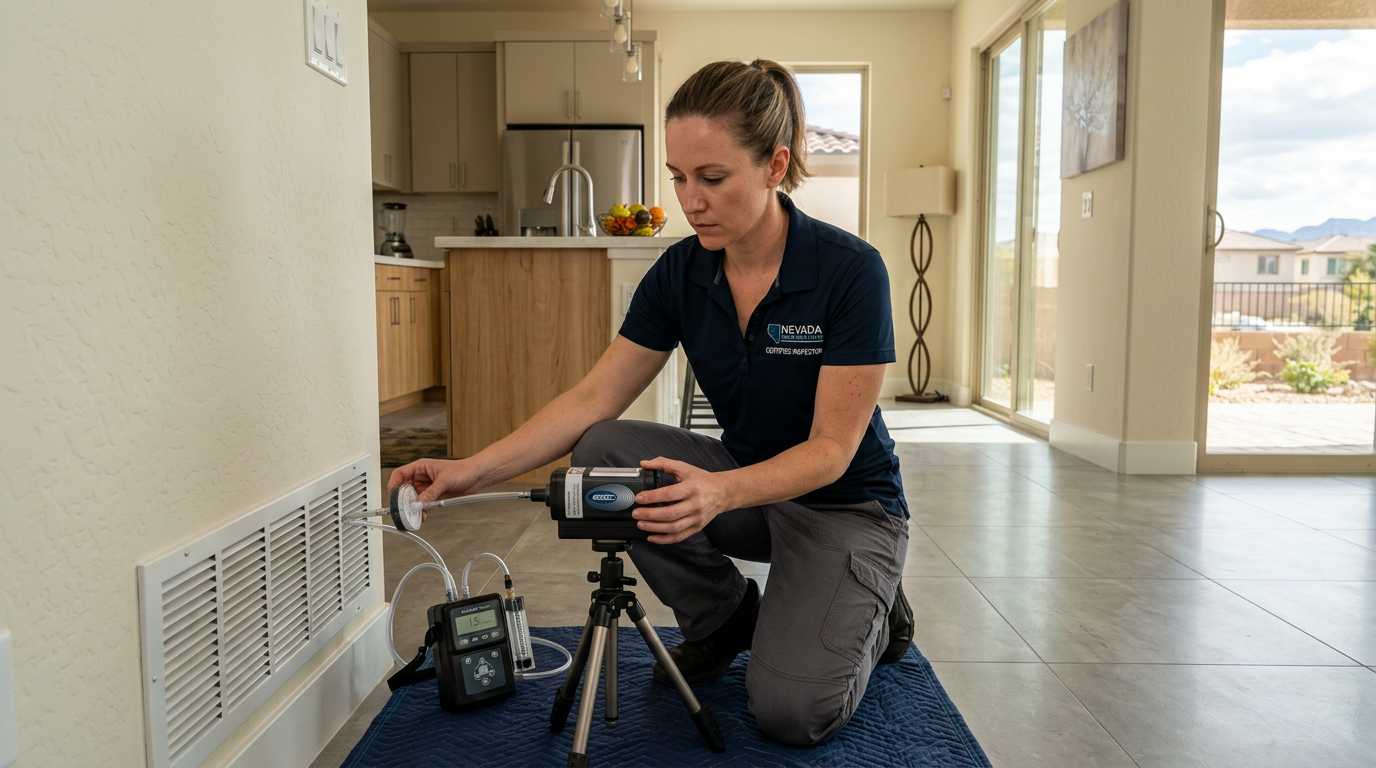
A standard inspection is non-invasive. Air samples, surface swabs, moisture readings, and thermal imaging do not require cutting into walls. If the inspection finds strong evidence of moisture intrusion in a specific area, that finding is documented in the report and you decide what happens next.
How long does an inspection take for a home with a pool area concern?
Most residential inspections take two to three hours depending on the size of the property and the number of areas of concern. A pool-entry focus adds time only if thermal imaging reveals additional moisture pathways that need thorough documentation. If mold symptoms and health exposure are also part of your concern, that may expand the scope of the inspection.
Get a Clear Answer, Not a Sales Pitch
If something about your home does not feel right during pool season, you deserve a straight answer backed by a written report. Las Vegas Mold Testing performs inspection and testing only. Our InterNACHI, IAC2, and NAMP certifications reflect independent, credentialed work. You receive a clear written report you can use for peace of mind, contractor guidance, or documentation. No remediation services means no incentive to alarm you.
Call (702) 766-8030 or schedule online. We serve homeowners throughout the Las Vegas Valley and Clark County.
Contact Form
Check Out Our Other Environmental Blogs!