Mold vs. Dust in Las Vegas Homes - How to Tell the Difference Before It Becomes a Health Issue
Is that buildup mold or just dust - and does it really matter?
In many Las Vegas homes, especially those relying on constant air conditioning, homeowners notice gray, black, or brown buildup on vents, baseboards, ceilings, or forgotten corners. It is tempting to assume it is just dust and wipe it away. Sometimes it is. Other times, it is mold quietly growing in conditions you cannot easily see or smell.
Knowing the difference between mold and dust is more than a housekeeping concern. It directly affects indoor air quality, respiratory health, and long-term property condition. Understanding what you are dealing with is the first step toward protecting your home and your family.
Why correctly identifying mold versus dust matters for your health
Dust is mostly a nuisance. Mold is a biological contaminant that can actively affect your health. Mold releases microscopic spores into the air, which can be inhaled and trigger symptoms such as coughing, sinus irritation, headaches, fatigue, or worsening asthma.
In Las Vegas, mold often surprises homeowners because of the desert climate. However, indoor moisture from air conditioning systems, plumbing leaks, evaporative coolers, or past water damage can create ideal conditions for mold growth even when it is hot and dry outside.
Misidentifying mold as dust allows the problem to spread. Mold can grow behind walls, inside HVAC systems, and above ceilings long before it becomes obvious on surfaces.
Common visual differences between mold and household dust
While visual inspection alone is not definitive, there are common clues that can help you tell mold and dust apart.
• Dust is usually light gray or tan and looks fuzzy or powdery
• Dust accumulates evenly on flat surfaces and returns quickly after cleaning
• Dust wipes away easily and does not smear
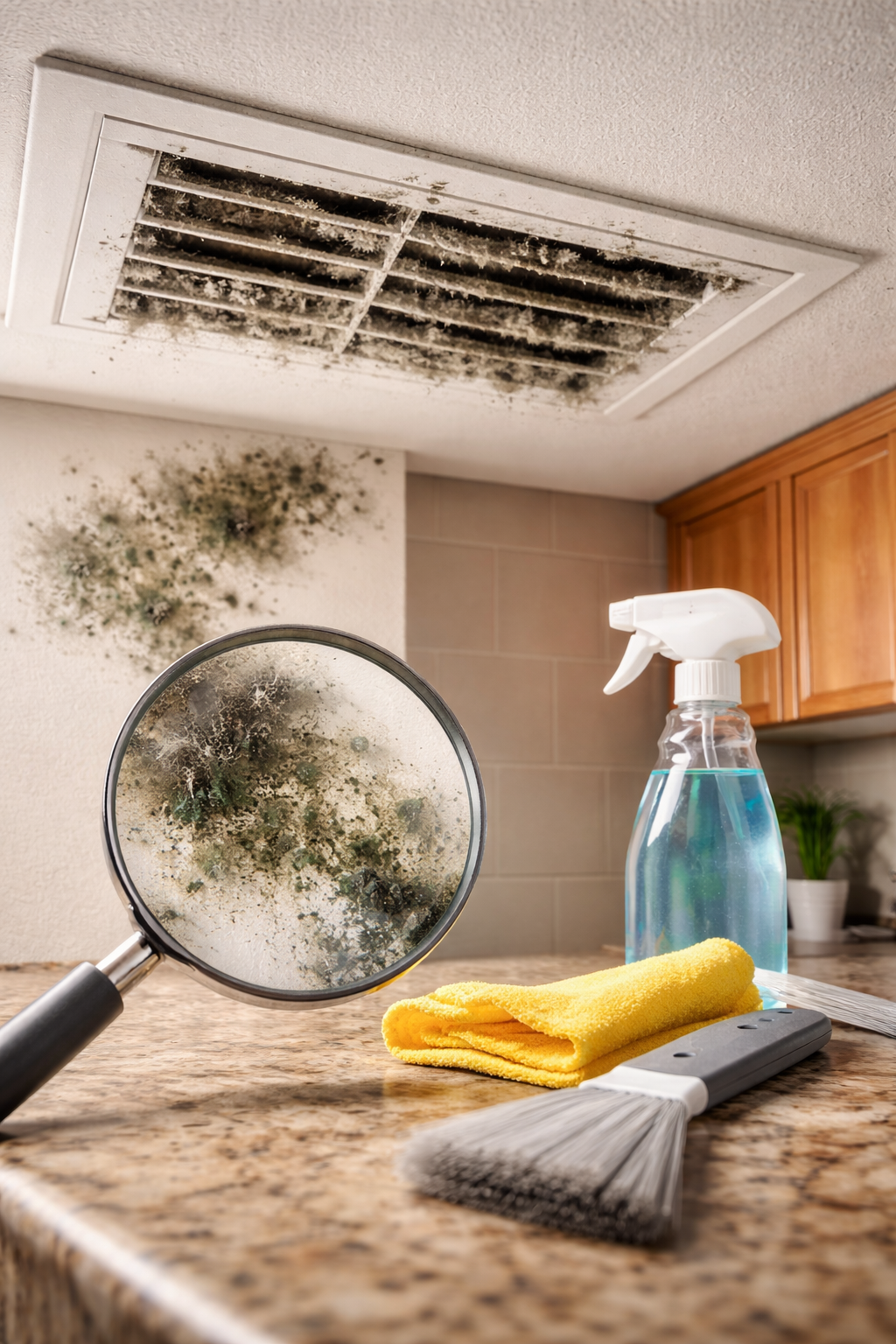
• Mold often appears darker, including black, green, or brown
• Mold may look spotty, streaked, or clustered rather than uniform
• Mold can smear or leave a stain when wiped
• Mold often appears near moisture sources like vents, bathrooms, windows, or under sinks
If you see discoloration that keeps returning in the same spot despite cleaning, mold becomes a stronger possibility.
How smell and texture can reveal hidden mold
Dust typically has little to no odor. Mold often produces a musty or earthy smell, even when you cannot see it clearly. If an area smells damp, stale, or like wet cardboard, mold may be present behind surfaces.
Texture also matters. Dust feels dry and loose. Mold may feel slimy, sticky, or slightly gritty depending on the species and surface. However, touching suspected mold is not recommended, as it can release spores into the air.
Why Las Vegas homes are not immune to mold growth
Many homeowners assume mold is a coastal or humid climate problem. In reality, indoor environments matter more than outdoor conditions.
Common mold contributors in Las Vegas include:
• Constant air conditioning creating condensation
• Poorly maintained HVAC systems
• Plumbing leaks hidden in walls or ceilings
• Past water damage from monsoon storms
• Bathrooms without proper ventilation
• Evaporative coolers adding moisture to indoor air
Because windows are often kept closed year-round, mold spores can become trapped indoors and circulate repeatedly.
When dust becomes a warning sign instead of a nuisance
Excessive dust buildup can sometimes indicate underlying moisture or air circulation issues. Mold spores often mix with dust, making contamination harder to detect visually. Dark dust near vents or recurring buildup in the same locations should raise concern.
If anyone in the household experiences unexplained respiratory symptoms, allergy-like reactions, or persistent odors, testing is often the safest next step.
What professional mold testing reveals that visual checks cannot
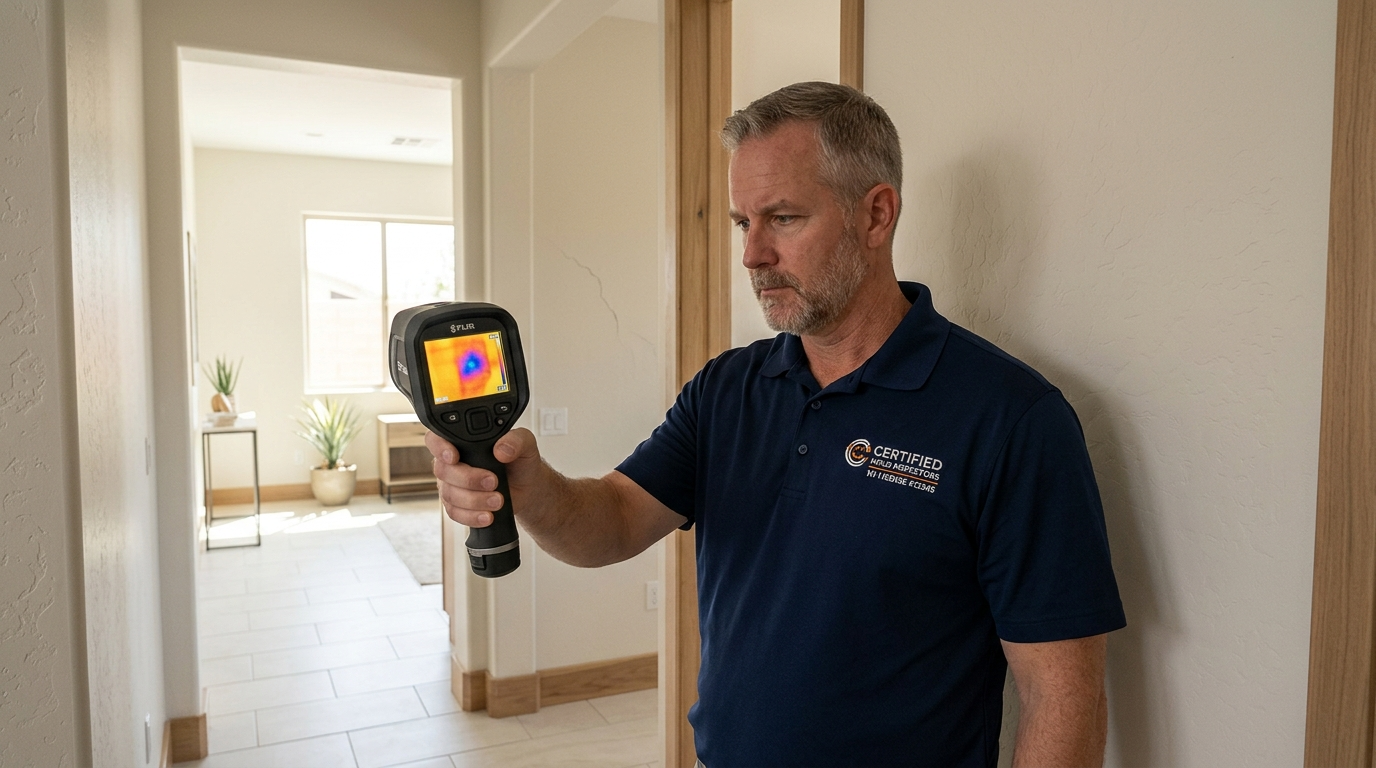
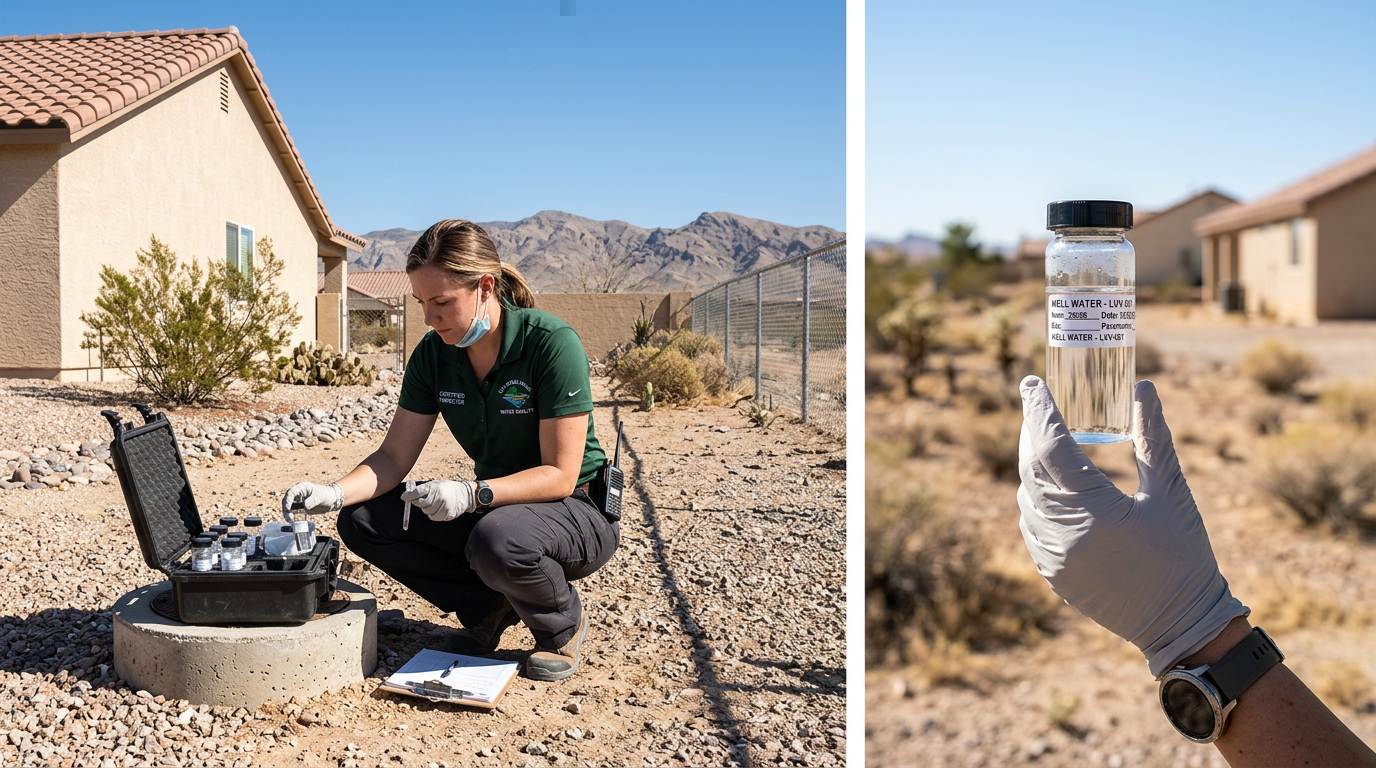
Only laboratory testing can confirm whether a substance is mold and identify the type and concentration present. Professional mold testing evaluates both visible surfaces and airborne spores to determine if levels are elevated compared to normal indoor environments.
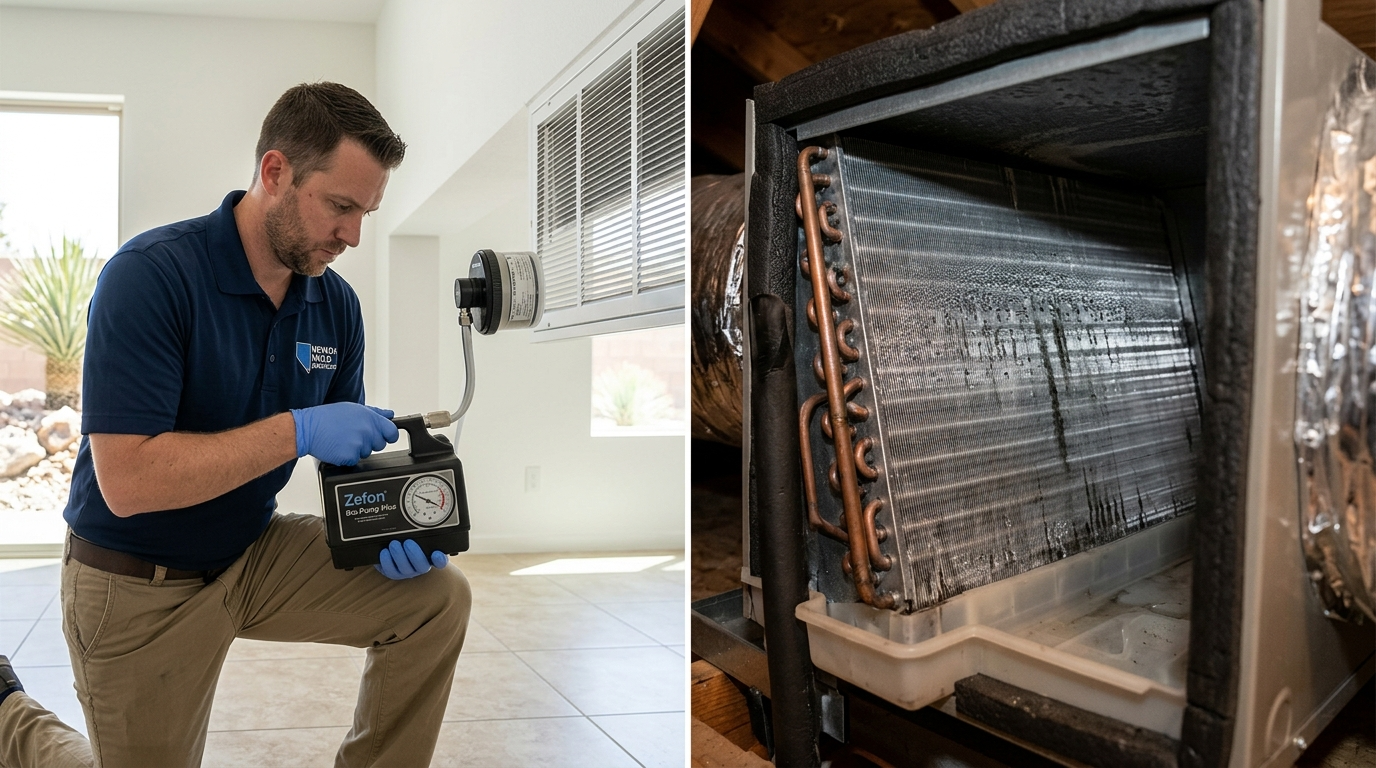
At Las Vegas Mold Testing, assessments are performed using calibrated air sampling equipment and surface testing when appropriate. Results provide clear data rather than guesswork, helping homeowners make informed decisions without unnecessary remediation.
Importantly, professional testing also helps rule mold out. Knowing that buildup is truly dust can provide peace of mind and prevent costly overreaction.
Simple steps homeowners can take before testing
While testing is the most accurate method, these steps can help reduce risk:
• Replace HVAC filters regularly and use high-quality filters
• Clean vents and registers carefully using damp cloths
• Monitor indoor humidity and keep it below 50 percent
• Address leaks or water intrusion immediately
• Use bathroom exhaust fans during and after showers
Avoid spraying bleach or antimicrobial products on unknown substances, as this can spread spores if mold is present.
Who should be especially cautious about mold exposure
Mold exposure poses greater risk for:
• Children and elderly individuals
• People with asthma or allergies
• Those with weakened immune systems
• Anyone experiencing unexplained chronic symptoms
In these cases, professional evaluation is strongly recommended rather than relying on visual judgment alone.
Schedule expert mold testing before a small issue grows
If you are unsure whether you are dealing with mold or dust, do not rely on assumptions. Early testing is far less disruptive and far less expensive than waiting for visible damage or health problems to appear.
Las Vegas homes face unique indoor moisture challenges, and mold often hides in plain sight. Accurate identification is the key to protecting your air quality and your property.
Contact Las Vegas Mold Testing today to schedule a professional mold inspection and get clear answers you can trust.
Contact Form
Check Out Our Other Environmental Blogs!