Mold does not always follow a burst pipe, but it often does when the wet drywall, insulation or cabinet floor stays wet after the repair. The plumber's job ends when the pipe holds pressure. Whether mold starts depends on how fast the materials around that pipe dry, and in a wall cavity you cannot judge that by touching the paint. If your pipe burst during a Las Vegas freeze, the useful question is not "did the plumber fix it" but "is the wall actually dry before it gets patched."
Why a few freezing nights split pipes in Las Vegas homes
Las Vegas homes are built for heat, so a lot of plumbing runs through spaces nobody expects to get cold: garage walls, exterior walls, attics and the hose bibs and irrigation lines outside. Clark County's fire department notes that it is not unusual for the Las Vegas Valley to drop below freezing in winter, and that a temperature of 32 degrees or less can freeze pipes and cause them to burst. The county's advice is to wrap exposed pipes in insulation and cover hose bibs and sprinkler valves before a cold night.
A frozen pipe usually does not leak while it is frozen. The split shows up when the ice thaws and water pressure returns, which is why many Las Vegas homeowners find the damage on a sunny morning after a freeze warning, often hours after the pipe actually cracked.
Where the water goes: garages, exterior walls and the space under cabinets
Where a burst pipe sends its water decides what needs checking after the repair:
- Garage walls. Supply lines to a laundry, a water softener or a utility sink often run inside the shared wall between the garage and the house. Water from a split there can soak the bottom of the drywall on both sides and the insulation between them.
- Exterior walls. A pipe in an exterior wall sits closest to the cold. When it splits, water runs down inside the cavity and collects at the bottom plate and the base of the drywall, out of sight behind baseboards.
- Under sinks and cabinets. Kitchen and bathroom sinks on exterior walls are a common failure point. The cabinet floor is usually particleboard, which swells and holds water, and the wall behind the cabinet back is rarely looked at.
- Ceilings below a second floor or attic run. Water from a pipe above spreads across the top of the drywall and through insulation before it shows as a stain.
In each case, the visible puddle is the smallest part of the water. The rest went into porous material.
The first 48 hours after the plumber leaves
The EPA's guidance is direct: dry water-damaged areas and items within 24 to 48 hours to prevent mold growth, and when materials are dried in that window, in most cases mold will not grow. That window starts when the water hit the material, not when the plumber finished.
In practice, that means:
- Shut off the water and get the pipe repaired right away. Know where your main shutoff valve is before the next cold night.
- Pull baseboards and remove soaked items from under the sink so air can reach the wet wall.
- Run fans and, if you have one, a dehumidifier. Do not close the room up and wait.
- Ask the plumber or a water damage company whether the cavity itself was opened or ventilated, or only the pipe access hole.
The EPA also points out that this window is a guideline. In its water damage table, the agency notes that mold can still grow even when materials are dried within 48 hours, and that it will not always grow after that point either. Timing tells you the risk level. It does not tell you the result.
Dry on the surface, wet inside the wall: what drywall and insulation hide
Painted drywall dries fast on the room side and slowly on the back. A wall that feels dry to your hand can still be wet at the paper facing inside the cavity, at the bottom plate, and in the insulation. The EPA lists the back side of drywall and areas inside walls around leaking pipes among the places mold hides.
For clean water damage, the EPA's table says wallboard may be dried in place if there is no obvious swelling and the seams are intact; otherwise it should be removed and replaced, and the wall cavity ventilated if possible. Wet cellulose and fiberglass insulation are listed as discard and replace. That matters after a burst pipe because insulation behind a patched access hole is easy to leave in place, and it holds water against the back of the new drywall.
Signs the wall did not fully dry tend to arrive weeks later: paint that bubbles or peels near the floor, a baseboard that swells, a cabinet floor that softens, or a musty smell in a room that was fine before the freeze. By then the patch is painted and the wall has to be opened again.
When a moisture scan and air samples are worth it
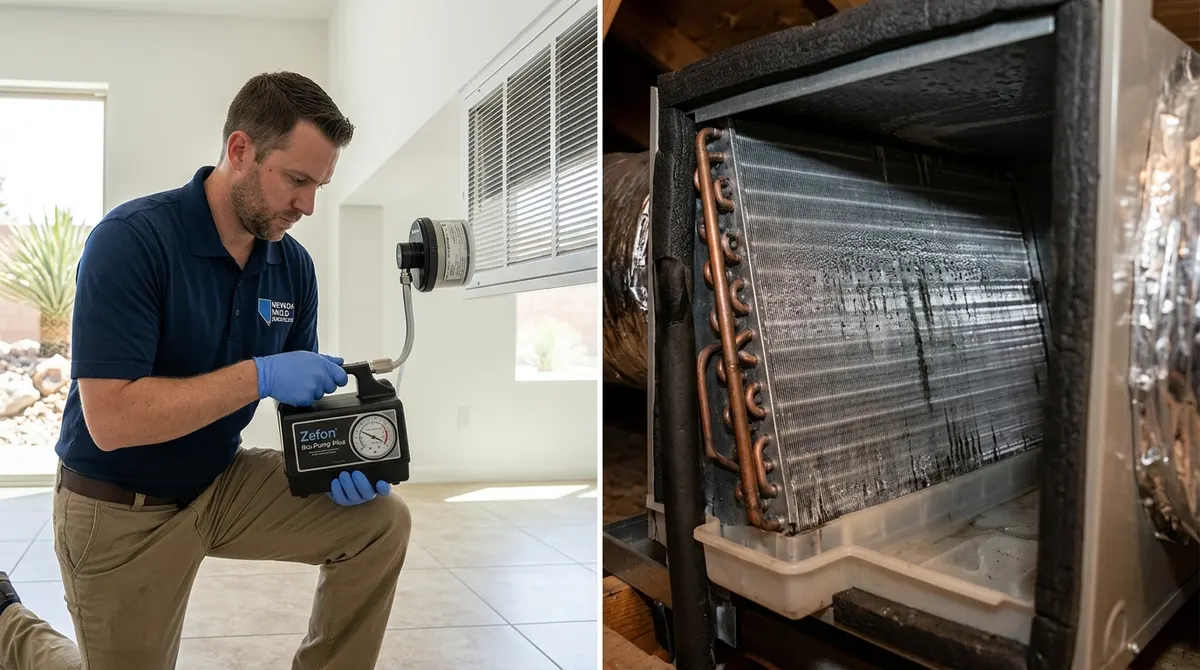
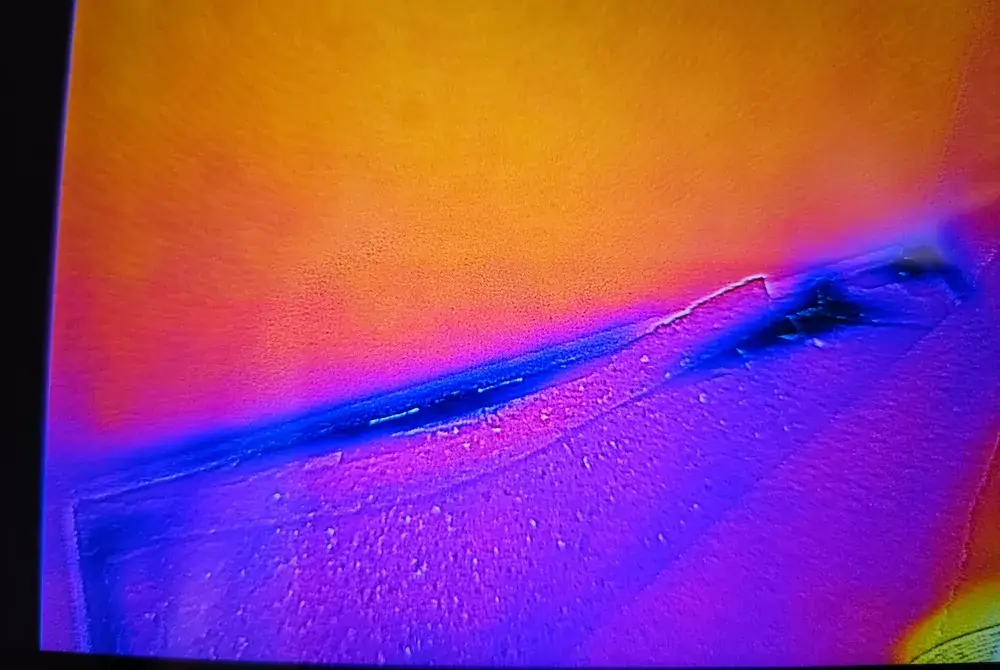
A moisture check is worth it when the water sat in a wall, ceiling or cabinet you cannot see into, when it took a while to find the leak, or when the wall is about to be patched and painted. A FLIR thermal scan shows where the wall surface reads cooler than the area around it, which is how damp material usually looks on camera. Each suspect area is then confirmed with a moisture meter, so the answer is a reading, not a guess.
Air or surface sampling is a separate question. The EPA notes that sampling is unnecessary in most cases where mold growth is visible, and that no federal limits exist for mold. Samples help when there is a musty odor or a health concern but nothing visible, or when you want documentation that the repaired area is clean before you sell, file an insurance claim or close out a dispute with a contractor.
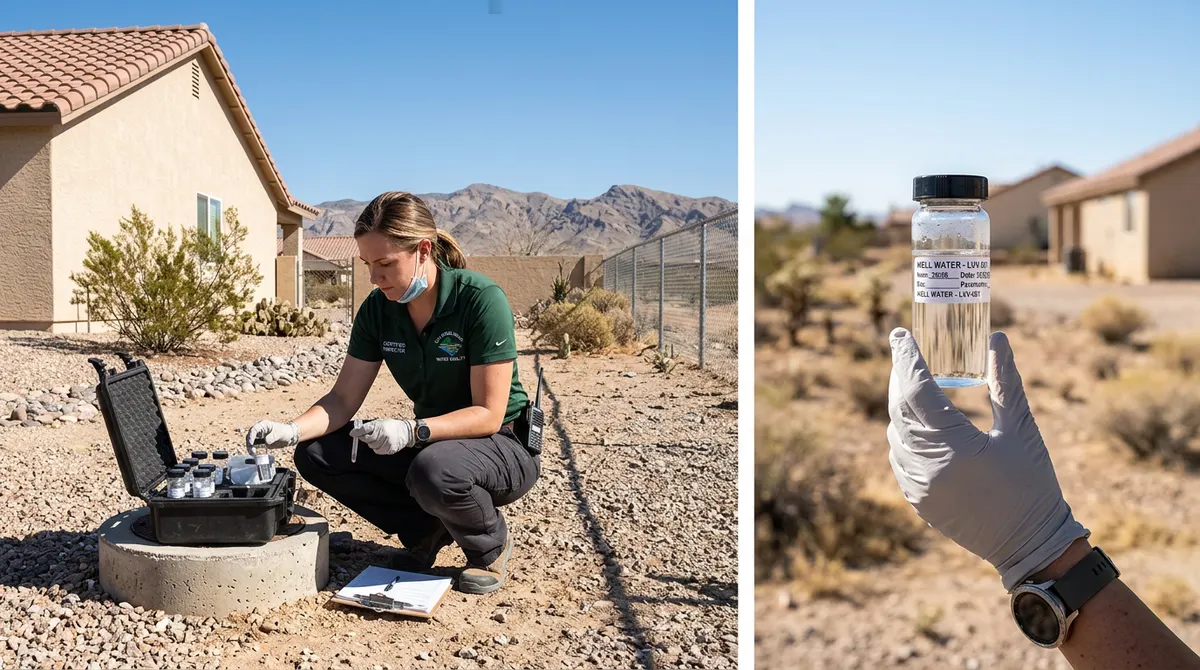
An independent water and mold repair verification from Las Vegas Mold Testing combines both: moisture readings at the repair and the areas the water reached, and lab-analyzed samples where they are warranted. Las Vegas Mold Testing does not do repairs or remediation, so the report has no reason to find more work than is there. If a slab line was involved rather than a wall pipe, the same logic applies to flooring; see how to know the floor dried after a slab leak.
What to ask before the wall is closed up and painted
Before a burst pipe repair in a Las Vegas home is patched, textured and painted, ask whoever is doing the work:
- Was the wall cavity opened wide enough to see how far the water went, or only around the pipe?
- Was the insulation in that cavity removed and replaced, or left in place?
- Were moisture readings taken on the drywall, the bottom plate and the cabinet floor, and what did they show compared with a dry wall in the same room?
- Is there any swelling, soft drywall or separated seams that means the board should be replaced instead of dried?
- Who confirms the area is dry: the same company doing the repair, or someone independent?
If the answers are vague, it is cheaper to check now than to cut the patch open again later. To have the repaired area checked by an inspector who only tests, schedule a water and mold repair verification with Las Vegas Mold Testing, serving Las Vegas, Henderson, Summerlin, North Las Vegas and Pahrump.
Call (702) 766‑8030 to book a check before the wall is closed up. You receive a written report of what was found, wet or dry.