A repaired slab leak does not mean the floor is dry. The plumber stops new water from coming in, but the water that already soaked into the concrete, the flooring underlayment, the bottom of the drywall and the baseboards has to leave on its own, and it often leaves slower than the drying equipment stays. The only reliable way to know the floor and walls are dry before new flooring goes in is to measure them, ideally with an independent water and mold repair verification done after the fans are gone and before anything gets covered up.
Below is what slab leak water does inside a Las Vegas home, what the repair does and does not fix, the signs that moisture is still there, and what to ask before the flooring crew comes back.
Why water from a slab leak hides under flooring and baseboards
A slab leak is a break in a water line that runs under or through the concrete foundation. Because the line is under pressure, water can run for weeks before anyone notices a warm spot, a damp patch of carpet or a jump in the water bill. During that time the water spreads sideways through the concrete and the gap between the slab and the flooring, then wicks up into whatever sits on top of the slab.
The places slab leak water ends up are the places a homeowner cannot see: the underside of carpet and pad, the bottom few inches of drywall, the back of baseboards, and the inside of the slab itself. The EPA's guide to mold and moisture lists the back side of drywall and the underside of carpets and pads among the common hiding spots for mold. Dry desert air at the surface does not reach any of those spots quickly.
What the plumber's slab leak repair does and doesn't cover
A plumber's job on a slab leak is to find the break and stop it, whether by repairing the line through the slab, rerouting it through the walls or attic, or replacing it. Once the pressure test passes, the plumbing job is done.
What the plumbing repair does not cover is the water that escaped before the fix. Drying the house is usually a separate job, handled by a water damage company with fans and dehumidifiers. That crew decides when to pull its equipment. Nobody on either job is usually responsible for confirming, independently, that the slab, the subfloor and the lower walls are back to normal moisture levels before new flooring is installed. That gap is where problems start.
Signs the slab or lower drywall is still holding moisture after a slab leak
Some signs of leftover moisture are visible to a homeowner. None of them prove the floor is dry when they are absent, but any of them means the area needs to be measured before new flooring goes down:
- A musty or earthy smell near the floor in the rooms around the leak, especially when the house has been closed up.
- Baseboards that are swollen, separating from the wall, or have paint bubbling along the bottom edge.
- Drywall that feels soft or crumbles near the floor, or shows a faint stain line a few inches up.
- Darker patches on bare concrete in some spots but not others once the old flooring is pulled.
- Tack strip, underlayment or pad that is still damp or discolored when it is removed.
- Floor tiles or planks next to the repaired area that are lifting, cupping or sounding hollow.
Hardware store moisture meters can give a rough reading on drywall, but they are not built to tell you what is happening inside a concrete slab, and a single reading on one spot does not show where the wet area ends.
Why reinstalling flooring too soon after a slab leak traps mold underneath
New flooring acts like a lid. Vinyl plank, tile, laminate and carpet pad all slow down how fast moisture can leave a concrete slab, so a slab that was still drying in open air can stay damp much longer once it is covered. The EPA says it is important to dry water-damaged areas and items within 24 to 48 hours to prevent mold growth, and that the key to mold control is moisture control. Any material that stays wet past that window under a new floor is a place mold can start where nobody will see it.
The flooring industry treats slab moisture as its own risk, too. The ASTM standard for measuring moisture in concrete floors, ASTM F2170, notes that excessive moisture coming from a floor slab after installation can cause flooring failures such as debonding and deterioration of the finish flooring, along with microbial growth. The same standard notes that a moisture test only describes the slab at the time it was tested, which is why the check should happen right before the new flooring goes in, not weeks earlier.
Once mold is growing under flooring, the fix is more expensive than the check. The EPA's mold cleanup guidance notes that porous materials such as carpet may have to be thrown away if they become moldy, so a damp slab sealed under new carpet can mean paying for that carpet twice.
What an independent moisture and mold check measures after a slab leak
A water and mold repair verification from Las Vegas Mold Testing is built for exactly this moment: the leak is fixed, the drying equipment is gone, and the flooring has not gone back in yet. The visit covers:
- The job history. What leaked, which rooms were affected and what the drying company says it did, using its drying log or invoice if you have one.
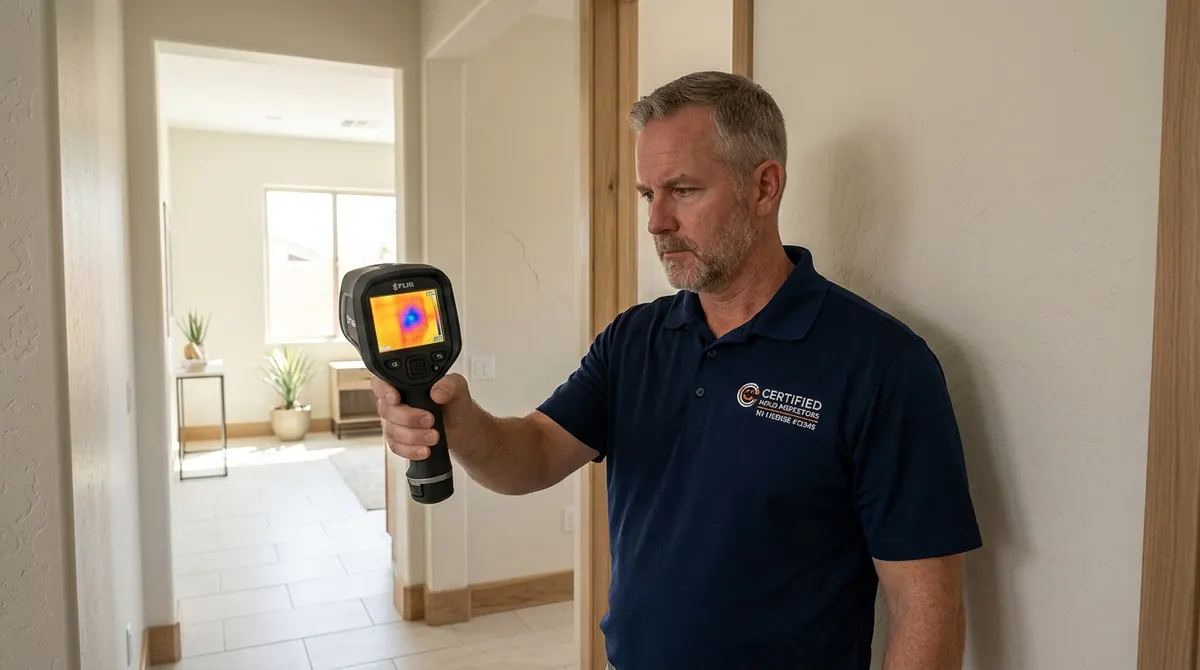
- A thermal scan. A FLIR thermal imaging scan of the floors and the lower walls in and around the affected rooms, to find cool, damp areas the drying equipment missed, including spots past where the crew set up.
- Moisture readings. Meter readings in the flagged areas, compared against dry spots in the same home, so the results reflect your house and not a generic number.
- A surface swab. Where materials stayed damp, a swab sent to a certified lab to show whether mold has already started.
- A written report. Thermal images, readings and lab results, with a clear finding for each area: dry and ready, or needs another look.
Las Vegas Mold Testing only tests and reports. It does not dry homes, remove mold or install flooring, so the report has no reason to pass a job or fail one. If you are not sure whether you need a tester or a cleanup company first, see should you call a mold inspector or a remediator first.
Questions to ask before the flooring crew comes back after a slab leak
Before you confirm an install date, a few questions can save you from sealing a wet slab under a new floor:
- Ask the drying company for its drying log and final readings, and which rooms and walls it actually measured.
- Ask the flooring installer whether the flooring manufacturer requires a slab moisture test before installation, and who is responsible for doing it.
- Ask whether the baseboards and lower drywall in the affected rooms were opened, dried or replaced, or only dried from the surface.
- Ask yourself whether anyone with no stake in the job has confirmed the area is dry. If the only sign-off came from the company that did the drying, an independent check is worth doing before the floor is covered.
If you are in the Las Vegas Valley and your slab leak has been repaired but the new flooring is not in yet, now is the time to check. Contact Las Vegas Mold Testing to schedule a water and mold repair verification, and get a written answer on whether the floor and walls are dry before the flooring crew comes back.