COMMON MYTHS ABOUT MOLD TESTING - DEBUNKED

Mold is one of those subjects people tend to misunderstand until they are forced to deal with it directly. A musty smell gets ignored because nothing is visible. A small stain causes panic because someone assumes the whole property is contaminated. A hardware store test grows something in a dish, and suddenly the result is either overconfidence or fear.
That confusion is exactly why mold testing matters.
For homeowners, tenants, property managers, and business owners, the biggest problem is often not just mold itself. It is misinformation. People hear half-truths about what mold testing can reveal, when it is worth doing, and how serious a concern really is. Those misconceptions can delay action, distort expectations, and lead to poor decisions.
This article breaks down common myths about mold testing and explains what professional evaluation is actually meant to do.
WHAT MOLD TESTING IS REALLY FOR
A lot of people think mold testing is supposed to answer one simple question: is there mold in the building?
That is too simplistic to be useful.
Mold spores exist naturally in the environment. The more important question is whether the indoor environment appears abnormal, elevated, moisture-affected, or otherwise inconsistent with what should be expected in a healthy structure. Professional mold testing is not just about detecting that mold exists somewhere. It is about helping determine whether a property may have an indoor mold issue worth addressing.
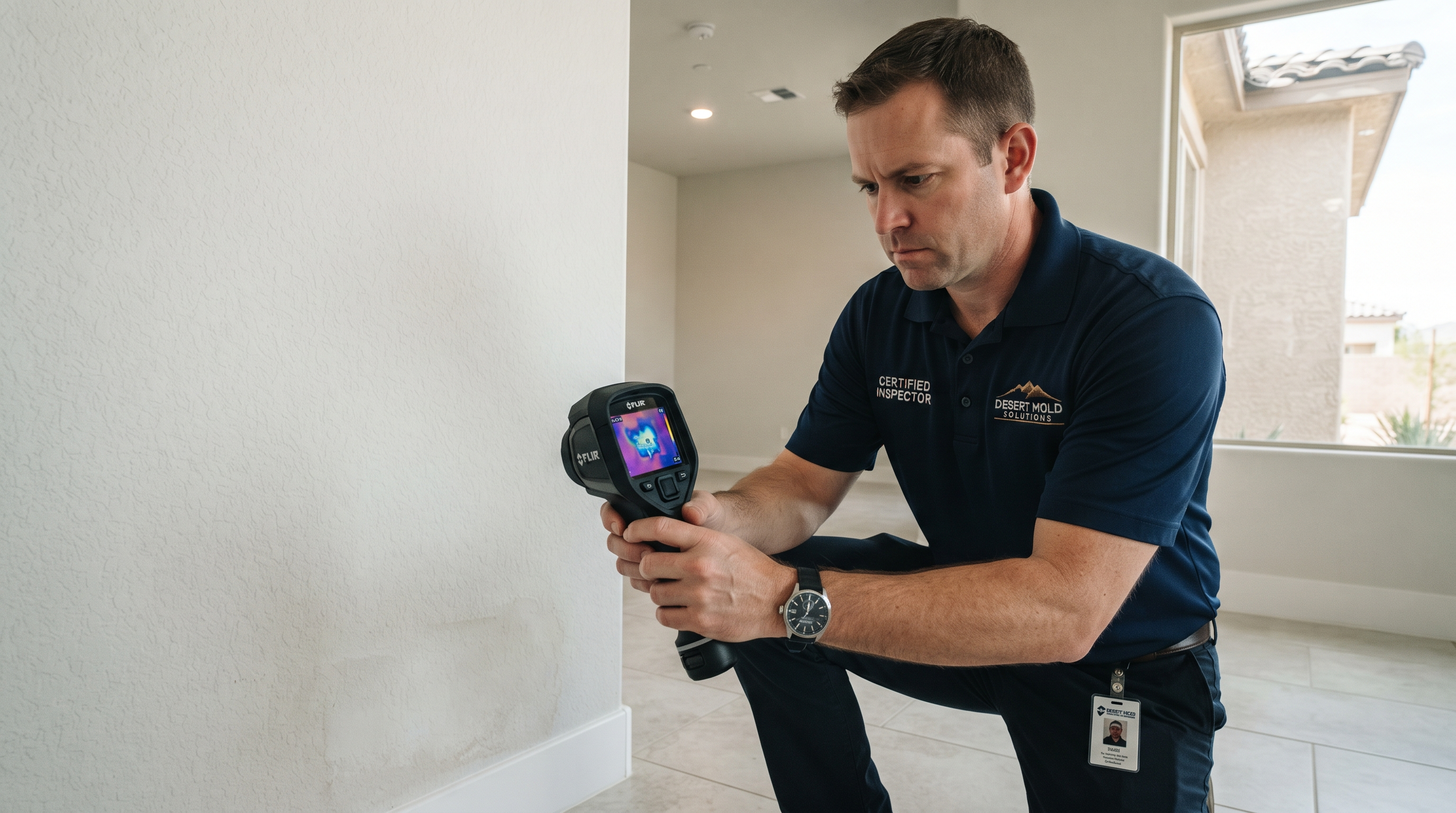
That is why proper testing works best when it is tied to an inspection. The inspection looks at the structure, the moisture conditions, the HVAC system, and the history of the concern. The samples provide data. The lab analysis adds objective support. Together, those pieces create a much clearer picture than any single test result alone.
MYTH 1: IF YOU CANNOT SEE MOLD, THERE IS NO PROBLEM
This is one of the most common reasons people wait too long to investigate.
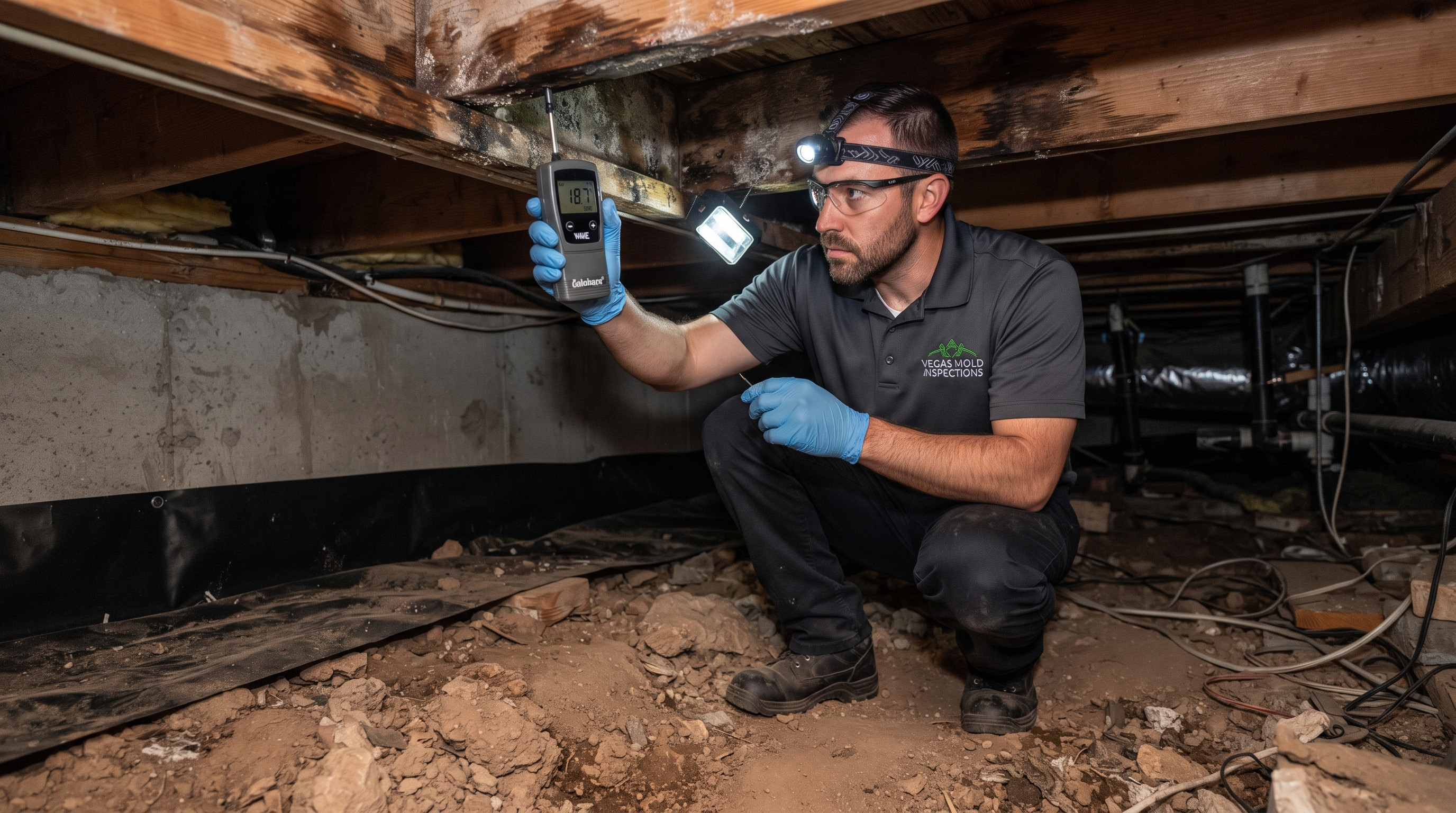
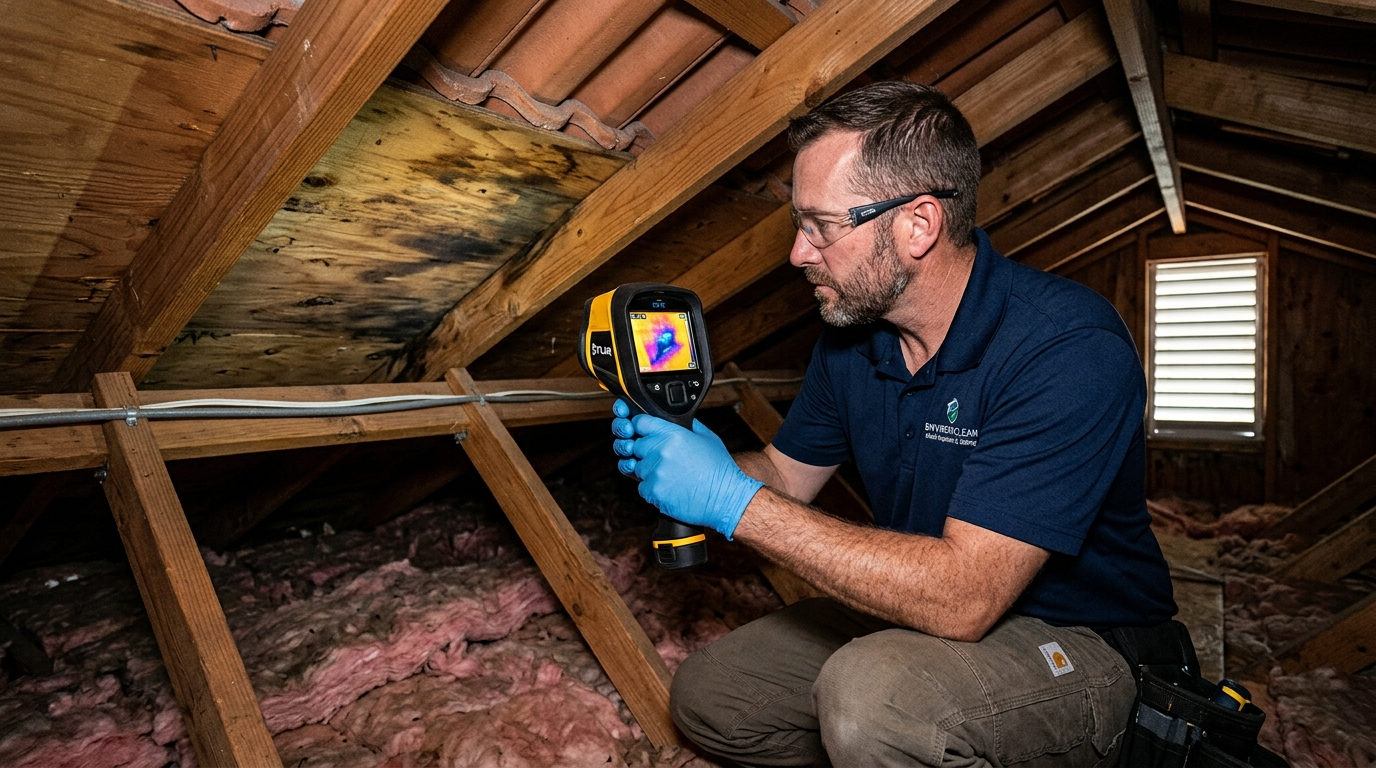
Visible mold is only one possible sign. Mold can develop behind drywall, beneath sinks, around window framing, inside HVAC components, under certain flooring areas, or in other concealed spaces that are not part of someone’s daily line of sight. In many situations, the first clues are not visual at all. They are a lingering odor, a history of water intrusion, repeated humidity problems, or a room that always seems questionable compared to the rest of the property.
A clean-looking space is not proof that everything is normal. Some of the most worthwhile inspections happen precisely because the environment feels off even when nothing obvious is growing in plain view.
MYTH 2: ALL MOLD IS EQUALLY DANGEROUS
This myth usually grows out of internet fear and oversimplified conversations.
Some people hear the word mold and immediately assume the worst. Others dismiss every mold concern as overblown. Neither position is helpful. Mold should be taken seriously, but it should also be evaluated with context. Different molds behave differently, different conditions support different types of growth, and different people respond differently depending on sensitivity, exposure, and existing health factors.
This is one reason testing has value. It helps move the conversation away from rumors and toward evidence. Instead of guessing based on color, smell, or someone else’s horror story, you get a more grounded understanding of whether the property is actually showing signs of abnormal indoor contamination.
MYTH 3: DIY TEST KITS ARE JUST AS GOOD AS PROFESSIONAL TESTING
DIY kits are popular because they feel inexpensive and convenient. The problem is that convenience is not the same as clarity.
Many consumer kits simply show that mold spores landed somewhere and grew. That does not automatically mean the building has a meaningful indoor mold problem. Mold spores exist naturally, so growth on a plate often proves far less than people think it does. What these kits usually do not provide is the context that makes results useful. They do not inspect the structure. They do not evaluate moisture conditions.
They do not assess HVAC relevance. They do not explain whether the result is routine or suspicious in relation to the building itself.
Professional mold testing is valuable because it is tied to interpretation. It is not just about collecting something. It is about understanding what the findings mean in the real-world setting of the property.
MYTH 4: IF THE PROPERTY LOOKS CLEAN, TESTING IS A WASTE OF MONEY
Visual cleanliness and environmental normalcy are not the same thing.
A freshly painted wall can cover cosmetic history. A repaired leak may leave lingering contamination behind if the area was never properly evaluated. An HVAC system can circulate particulates in a way that affects the indoor environment without leaving obvious signs in every room. Some buildings look perfectly fine during a quick walkthrough while still carrying a moisture-related issue beneath the surface.
Testing is often most valuable when the situation is uncertain. If everything were already obvious, many people would not need outside help in the first place. The purpose of an inspection is not to confirm what anyone can already see. It is to investigate what may not be visible, what may not be understood correctly, and what may still need objective documentation.
MYTH 5: MOLD INSPECTION AND MOLD TESTING ARE THE SAME THING
People often use these terms as if they are interchangeable, but they are not identical.
A mold inspection is the broader process. It involves evaluating the structure, identifying possible moisture sources, reviewing areas of concern, observing conditions that may support growth, and determining whether the property shows signs of a mold-related issue. Mold testing is the sampling portion. That may include air samples, swab samples, or other targeted collection methods that are then analyzed by a laboratory.
Testing without inspection can produce detached results with very little meaning. Inspection without testing can leave certain questions unresolved. The strongest approach usually combines both so that the data is grounded in the real condition of the property.
MYTH 6: MOLD TESTING IS ONLY NEEDED AFTER A MAJOR FLOOD
Big water events absolutely matter, but they are not the only source of mold problems.
A slow plumbing leak can be enough. So can roof seepage, condensation, appliance leaks, poor bathroom ventilation, HVAC drainage issues, or a chronically damp area that never quite dries properly. Many mold concerns start small and stay hidden long enough to become more established before anyone notices them.
That is part of what makes this myth so misleading. People imagine mold as something that only follows dramatic disasters, when in reality it often follows ordinary building problems that went unresolved or unnoticed.
MYTH 7: IF MOLD IS FOUND, THE WHOLE PROPERTY IS RUINED
This myth pushes people into panic before they have enough information.
Finding mold does not automatically mean a total loss, structural catastrophe, or a building-wide crisis. The response depends on the extent of the issue, the location, the materials involved, the moisture source, and whether the concern appears isolated or more widespread. That is exactly why objective evaluation matters. Without it, people tend to underreact or overreact.
A localized problem should be understood as a localized problem until evidence shows otherwise. A more widespread issue should be identified as such only when the structure, conditions, and testing support that conclusion. Good mold testing helps define scope. It does not exist to create drama.
MYTH 8: AIR SAMPLING ALONE CAN TELL THE WHOLE STORY
Air sampling can be extremely useful, but it is not a magic answer to every mold question.
Air samples capture a snapshot of airborne conditions at the time of sampling. That snapshot can provide meaningful insight, especially when tied to building history and inspection findings. But it still has limits. A property may have hidden growth that is not heavily expressing into the air at that moment. A suspect material may need surface sampling. HVAC concerns may require additional context. Moisture conditions may explain more than a single air result can.
Air data matters most when it is part of a larger evaluation. It is one piece of a diagnostic picture, not the entire picture by itself.
MYTH 9: LAB RESULTS SPEAK FOR THEMSELVES
Numbers on a report can look authoritative, but they still need interpretation.
A test result only becomes useful when it is connected to the actual property. Where were the samples taken? Why were those locations selected? Was there a known odor complaint? Was the HVAC system running? Was there recent leak history? Were there visible concerns in one area but not another? Those details shape what a result actually means.
The same type of lab finding can carry different weight depending on the structure and the circumstances. That is why a report should not just hand over data. It should explain the findings in plain language so the client can understand what is normal, what is questionable, and what the next step may need to be.
MYTH 10: NEWER HOMES DO NOT HAVE MOLD PROBLEMS
New construction is not immunity.
A newer property can still develop mold from plumbing leaks, window failures, roof issues, construction moisture that was never fully dried, tight building envelopes with poor ventilation, or HVAC-related condensation. Age does not prevent mold. Moisture control does.
This myth is especially risky because people tend to trust newer homes too much. They assume mold is only a problem in older, neglected properties. In reality, any building can develop mold if water gets where it should not be and stays there long enough.
MYTH 11: LAS VEGAS IS TOO DRY FOR MOLD TO BE A REAL ISSUE
This is one of the most persistent local misconceptions.
Dry outdoor conditions do not eliminate the possibility of indoor mold growth. Mold does not need the entire region to be humid. It only needs the right moisture conditions within the property. A leak under a sink, a roof issue, condensation around HVAC equipment, poor bathroom ventilation, or trapped moisture behind materials can still create the environment mold needs to develop.
Desert climates can actually make people slower to suspect mold because they assume the local weather rules it out. It does not. Mold is about localized moisture, not just regional climate.
MYTH 12: IF THE SMELL GOES AWAY, THE PROBLEM IS GONE
Odors can change with airflow, temperature, humidity, and HVAC operation. That means a disappearing smell does not necessarily mean the issue has been resolved.
Sometimes a musty odor fades because conditions shifted temporarily. Sometimes occupants get used to it. Sometimes the source remains hidden and only becomes obvious again when weather, moisture, or ventilation changes. Treating odor reduction as proof of resolution can leave a real issue unaddressed.
If a property had a persistent odor, moisture history, or recurring concern, the right question is not whether the smell faded for a few days. The right question is whether the source was ever truly identified and understood.
MYTH 13: MOLD TESTING IS ONLY FOR PEOPLE WHO ARE ALREADY SICK
Health-related concerns are one reason people schedule testing, but they are far from the only reason.
Mold testing can also be useful for real estate due diligence, post-leak investigation, landlord and tenant disputes, indoor air quality concerns, documentation needs, HVAC suspicion, and situations where a property simply does not feel right. Waiting until someone is already significantly affected is not a smart threshold.
Testing is often about information and documentation just as much as it is about symptoms. It helps people make decisions with evidence instead of assumptions.
MYTH 14: YOU CAN TELL HOW BAD IT IS JUST BY THE COLOR
Color causes more confusion than clarity.
People see something black and assume the worst. They see something lighter and assume it is harmless. That is not how mold evaluation works. Color alone does not tell you the type, the extent, whether it is active, how long it has been there, or whether the issue is isolated or part of a broader moisture problem. Different materials, lighting conditions, dust buildup, and age can all affect appearance.
This is one of the clearest examples of why professional assessment matters. Visual impressions can point to a concern, but they are not a substitute for proper inspection and testing.
WHY THESE MYTHS CREATE BAD DECISIONS
Most mold myths lead people in one of two directions. They either ignore a legitimate concern because they assume it is nothing, or they panic before they have enough facts to understand what they are dealing with.
Neither response is useful.
Professional mold testing exists to reduce guesswork. It helps clarify whether a concern appears minor, hidden, elevated, localized, or more involved. It helps separate ordinary background conditions from findings that deserve closer attention. Most importantly, it gives property owners and occupants a more defensible basis for deciding what to do next.
WHEN PROFESSIONAL MOLD TESTING MAKES SENSE
There are several situations where professional testing is especially worthwhile:
- A musty odor keeps returning
- There has been past or recent water intrusion
- You suspect hidden mold but cannot find the source
- Indoor air quality feels off
- The HVAC system may be contributing to spread
- You need documentation for a property concern
- A building has unresolved moisture history
The point is not to create alarm. The point is to replace assumptions with useful evidence.
CLEAR ANSWERS BEAT GUESSWORK
Mold testing is surrounded by myths because mold problems are rarely as simple as people want them to be. They are not always visible. They are not always obvious. And they are not always accurately understood through smell, color, or a do-it-yourself kit.
That is why professional evaluation matters.
Good mold testing does not exist to scare people. It exists to bring clarity to an uncertain situation. It helps determine whether a property appears normal, whether there are signs of hidden contamination, and whether the structure shows evidence of a moisture-related concern that deserves further action.
When the stakes involve your home, your building, your tenants, or your indoor environment, guesswork is not good enough.
IS VISIBLE MOLD THE ONLY REASON TO SCHEDULE TESTING?
No. Many worthwhile mold inspections happen because of odors, moisture history, HVAC concerns, or suspicion of hidden contamination even when no visible mold is present.
ARE DIY MOLD TEST KITS ENOUGH TO RULE OUT A PROBLEM?
No. DIY kits may show that spores exist, but they rarely provide the building context needed to determine whether the indoor environment has an abnormal mold issue.
CAN MOLD REALLY BE A PROBLEM IN A DRY CLIMATE LIKE LAS VEGAS?
Yes. Indoor mold growth can still develop when localized moisture is present from leaks, condensation, ventilation issues, or trapped dampness inside the structure.
DOES A NORMAL-LOOKING HOME MEAN TESTING IS UNNECESSARY?
No. A property can look clean and still have hidden moisture problems, concealed mold growth, or indoor air concerns that justify professional evaluation.
IS AIR SAMPLING BY ITSELF ALWAYS ENOUGH?
Not always. Air sampling is useful, but it works best when interpreted alongside inspection findings, moisture conditions, HVAC observations, and the overall history of the property.
FAQS ABOUT COMMON MOLD TESTING MYTHS
Contact Form
Check Out Our Other Environmental Blogs!