Many people start to suspect mold exposure when health symptoms seem tied to their home or workplace. Fatigue, headaches, sinus and respiratory irritation, brain fog, and skin irritation are some of the issues people commonly connect with moldy buildings.
That leads to a very common question: how do I test myself for mold exposure?
The honest answer is that testing your body is less straightforward than most online ads suggest, and testing your home usually tells you more. Here's what personal testing can and can't do, and where it makes sense to start.
Understanding Mold vs Mycotoxins
Mold is a naturally occurring organism found indoors and outdoors. Most people encounter small amounts every day without any health effects.
The concern begins when certain molds grow indoors and produce compounds called mycotoxins. These are toxic substances some mold species release as part of their normal metabolism.
Where mold growth is significant, spores and mold fragments can become part of indoor dust and air. People living or working in that space may be exposed through breathing or contact.
Environmental testing looks at whether mold contamination exists inside the building. Personal testing tries to look at whether mold-related compounds show up in the body. They answer different questions, and they are not equally reliable.
What Is a Mycotoxin Urine Test?
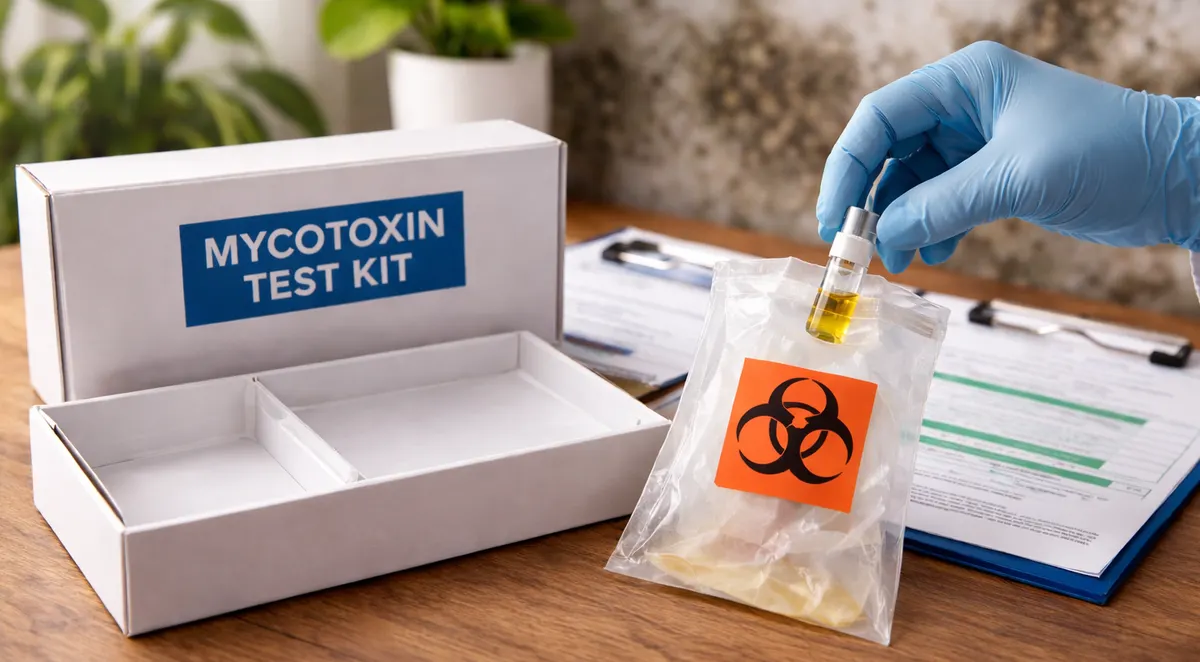
A mycotoxin urine test is a laboratory test that looks for mold-related toxins in a urine sample. Panels commonly screen for toxins associated with molds such as:
- Aspergillus
- Penicillium
- Stachybotrys
- Fusarium
The result shows whether measurable levels of those compounds were present in the sample at the time it was collected.
What a Urine Test Can't Tell You
Before ordering any personal test, it helps to know its limits.
- It can't tell you where the exposure came from. Many mycotoxins also enter the body through food, such as grains, nuts, coffee, and dried fruit. A positive result doesn't prove your house is the source.
- There's no agreed "normal" level. Reference ranges vary by lab, and there isn't a widely accepted threshold that separates harmless background levels from a health problem.
- It isn't a diagnosis. Many physicians and medical organizations do not consider urine mycotoxin testing a validated way to diagnose mold-related illness.
None of that means your symptoms aren't real. It means a urine result on its own rarely gives you a clear next step.
Start With Your Doctor
If you think mold is affecting your health, your physician is the right first call. A doctor can evaluate your symptoms, rule out other causes, and order established tests where they make sense, such as allergy testing for mold sensitivity. They can also tell you whether any personal toxin testing is worth doing in your situation.
What helps most at that appointment is evidence about your environment. "My symptoms ease when I leave the house" becomes much more useful when it's paired with lab results from the house itself.
Then Test the Place You Spend the Most Time
A professional mold inspection answers the question a urine test can't: is there a mold problem in this building, and where is it coming from?
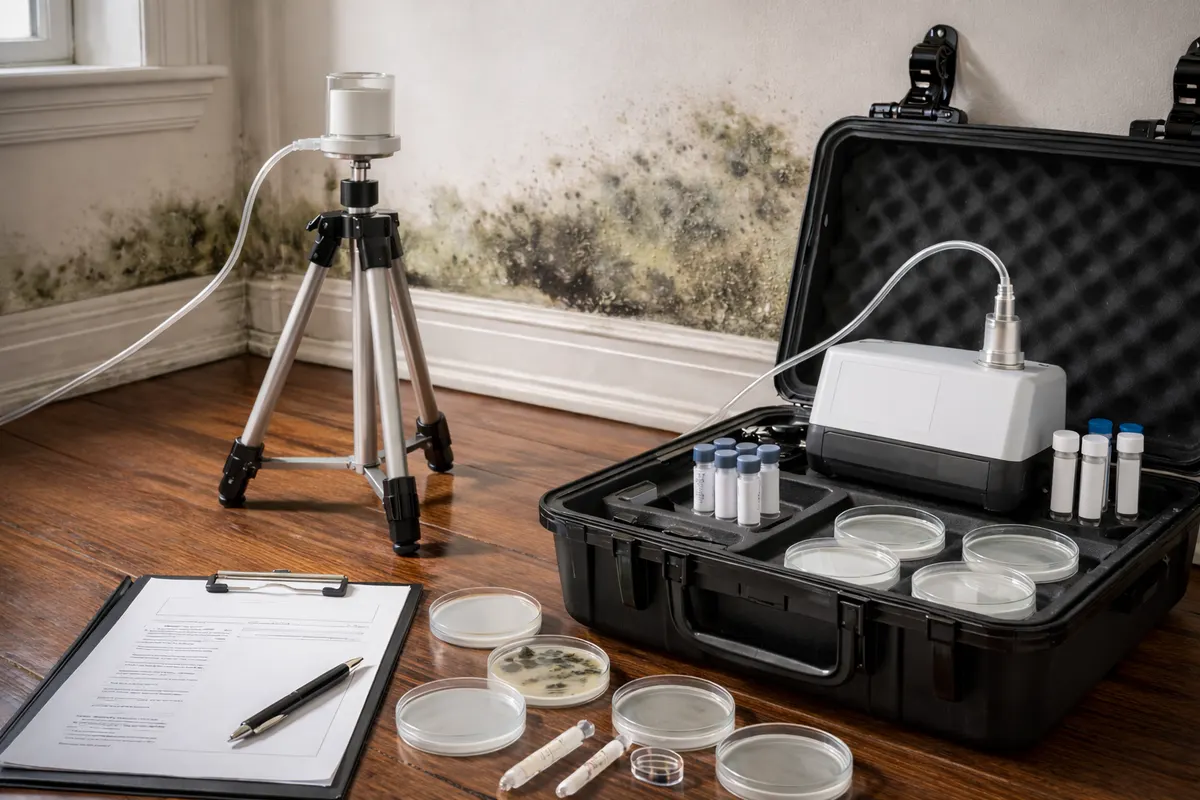
- Air samples compare the mold spores inside your home with normal outdoor levels.
- Swab samples from the HVAC system show whether your air conditioning is spreading growth from room to room.
- Moisture readings and thermal imaging find the hidden water that feeds mold.
- A certified laboratory analyzes every sample, so results don't depend on anyone's opinion.
If someone in the home has symptoms, a Total Home Health Inspection adds a bacteria sample and health resources to the full inspection, and the written report is something you can hand directly to your doctor.
Frequently Asked Questions About Testing Yourself for Mold
- HOW DO I TEST MYSELF FOR MOLD EXPOSURE?Start with your doctor, who can evaluate your symptoms and order established tests, such as allergy testing for mold sensitivity, where appropriate. Urine mycotoxin tests are sold directly to consumers, but their results are hard to interpret on their own and can't tell you where an exposure came from.
- CAN YOU TEST YOUR BODY FOR MOLD?Some labs offer urine tests that screen for mycotoxins. However, mycotoxins can also come from food, there's no widely agreed normal range, and many physicians don't consider these tests a validated way to diagnose mold-related illness. Testing your home gives you clearer, more actionable information.
- WHAT IS MYCOTOXIN URINALYSIS?Mycotoxin urinalysis is a laboratory test that looks for toxins produced by certain mold species in a urine sample. It does not diagnose medical conditions and does not identify the source of exposure.
- DOES MOLD SHOW UP IN BLOOD OR URINE TESTS?Mold itself doesn't typically appear in blood or urine. Blood tests can show whether your immune system is sensitized to mold, which is how mold allergies are diagnosed. Urine tests look for mycotoxins, but results are difficult to interpret without context.
- SHOULD I TEST MY HOME OR TEST MYSELF FOR MOLD?If you suspect mold is affecting your health, see your doctor and test your home. A professional inspection with lab-analyzed samples confirms whether there's a mold problem, where it is, and how severe it is, which is the information you need to actually fix it.
- WHY DO PEOPLE TEST THEMSELVES FOR MOLD?People usually look into personal testing when they notice persistent musty odors, past water damage, visible growth, or symptoms that improve when they leave a building. In each of those cases, inspecting the building is the most direct way to find out what's going on.
Get Answers About Your Home
If you're worried mold in your home is affecting your health, start with what can be measured. Las Vegas Mold Testing performs independent mold inspections throughout Las Vegas, Henderson, Boulder City, Pahrump, Primm, and Moapa Valley, and we never sell remediation.
Contact Las Vegas Mold Testing to schedule an inspection, or call (702) 766‑8030.