Before You Make an Offer Final, Get a Mold Test on That Las Vegas Home
If you just toured a house in Henderson or Summerlin and it looked clean, smelled fine, and passed the general home inspection, you might assume you are done. Most buyers do. But Las Vegas homes listed in October and November carry a contamination pattern that general inspectors are not equipped to find, and it forms quietly over the five hottest months of the year before the listing ever hits the MLS.
Mold testing before buying a house in Las Vegas is not a formality. It is a response to how desert HVAC systems actually behave when they run continuously through a 115-degree summer. What that means for buyers under contract right now is worth understanding before you close.
A Las Vegas Summer Does Not End When the Showings Start
By the time fall listings appear, most homes in the Las Vegas Valley have had their air conditioning systems running at near-maximum capacity since late May. That is roughly five months of continuous cycling, condensation, and airflow through duct systems that sellers rarely open and general inspectors almost never sample.
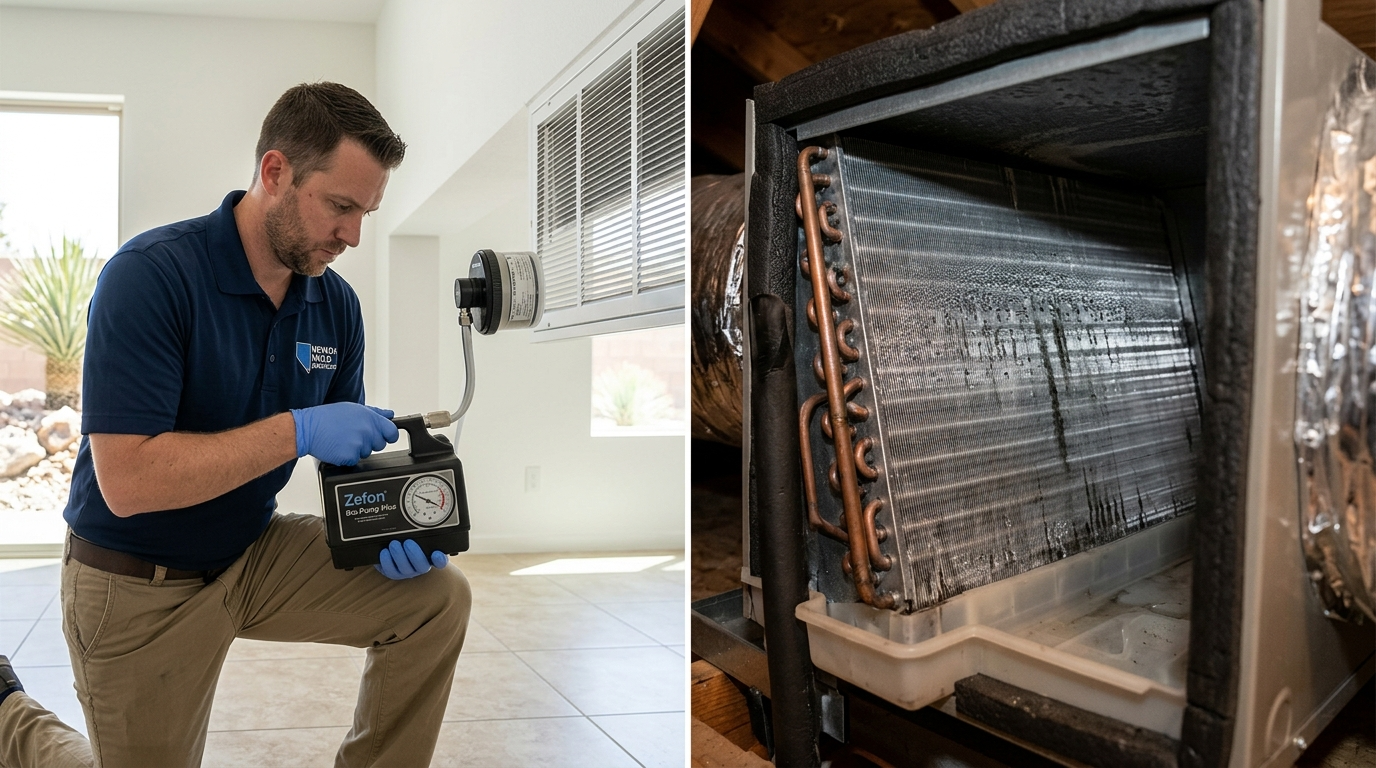
When an HVAC system works that hard, the evaporator coil and surrounding ductwork accumulate moisture. Dust, organic debris, and humidity create conditions where mold colonies can establish inside the system. The air the unit pushes into every room passes directly through that contaminated space. By fall, whatever grew over the summer has had months to spread and settle throughout the home.
We regularly see heavy mold counts on HVAC swab samples from homes that had no visible water damage and no obvious musty odor during the showing. The contamination lives inside the system, not on the walls.
What a Standard Home Inspection Actually Checks
A licensed general home inspector evaluates the visible, accessible condition of a property. They look at the water heater, the roof, the electrical panel, the plumbing fixtures, and the HVAC unit as a mechanical system. They confirm the unit turns on and cools. That is a different question than whether the air it produces is clean.
General inspectors are not trained or certified to collect air samples, interpret spore counts, or evaluate duct contamination. That is not a criticism. It is simply outside their scope.
If you want to know what is in the air you will breathe after you move in, you need a separate environmental test performed by a certified mold inspector. The two inspections serve completely different functions, and one does not substitute for the other. Understanding why mold inspector certifications matter before you hire anyone for this kind of testing will help you ask the right questions and recognize qualified work when you see it.
Fall-Listed Homes Carry a Risk Most Buyers Miss
Fall is when buyers feel the most time pressure. Inspection periods are short, lenders are pushing toward closing, and every add-on to the due diligence checklist feels like another obstacle. That pressure is exactly why environmental testing gets skipped.
Here is what makes October and November listings in Clark County particularly worth scrutinizing. Las Vegas receives the majority of its annual rainfall during the monsoon season that runs July through September. Homes that experienced any roof intrusion, window seal failure, or foundation moisture during that window and then dried out under the fall heat may show no visible damage at all by the time they go to market. The moisture is gone. The mold that fed on it is not.
That combination, a summer of HVAC strain followed by a monsoon season that erased its own visible evidence, is specific to this market. Buyers relocating from other states rarely know to ask about it.
For more on how monsoon patterns create post-rain contamination risk, see our post on why mold testing is essential after monsoon season in Las Vegas.
What a Pre-Purchase Mold Inspection Actually Includes
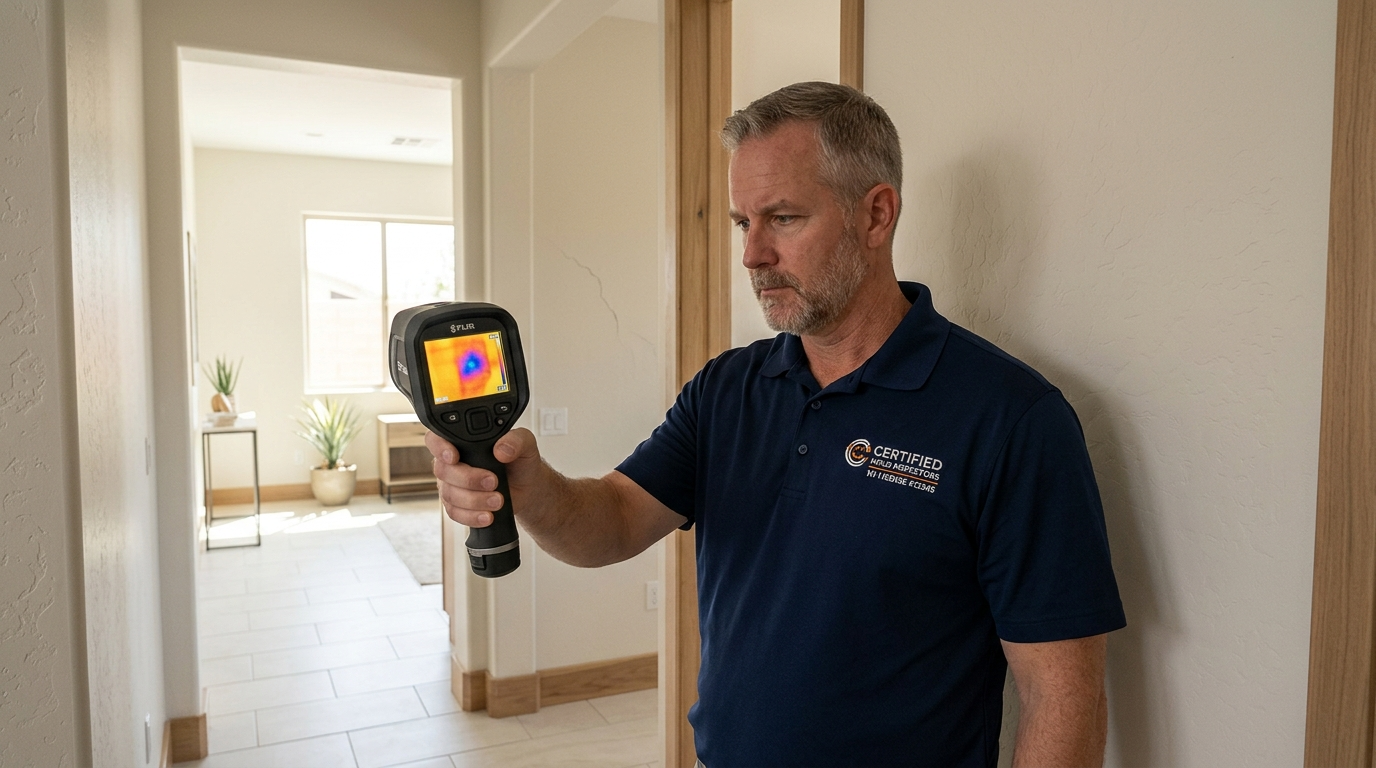
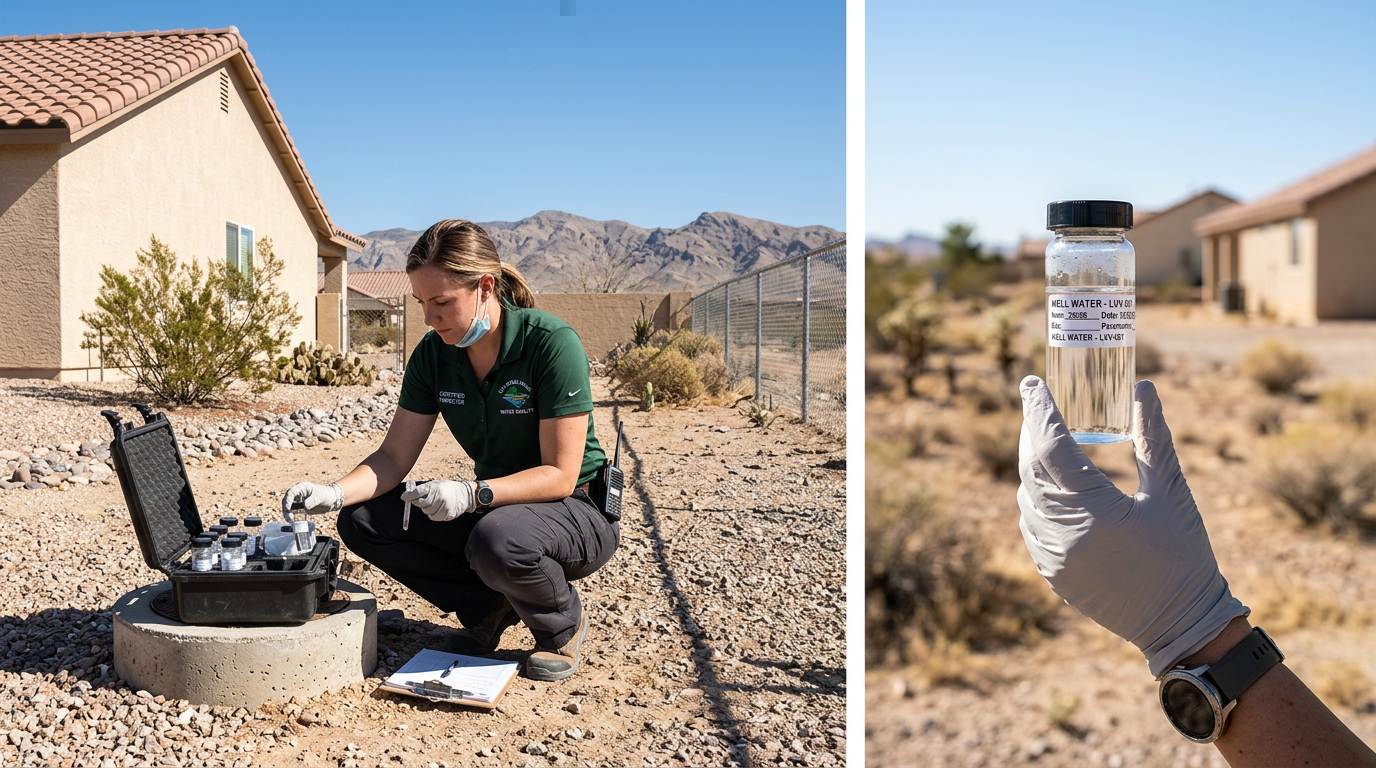
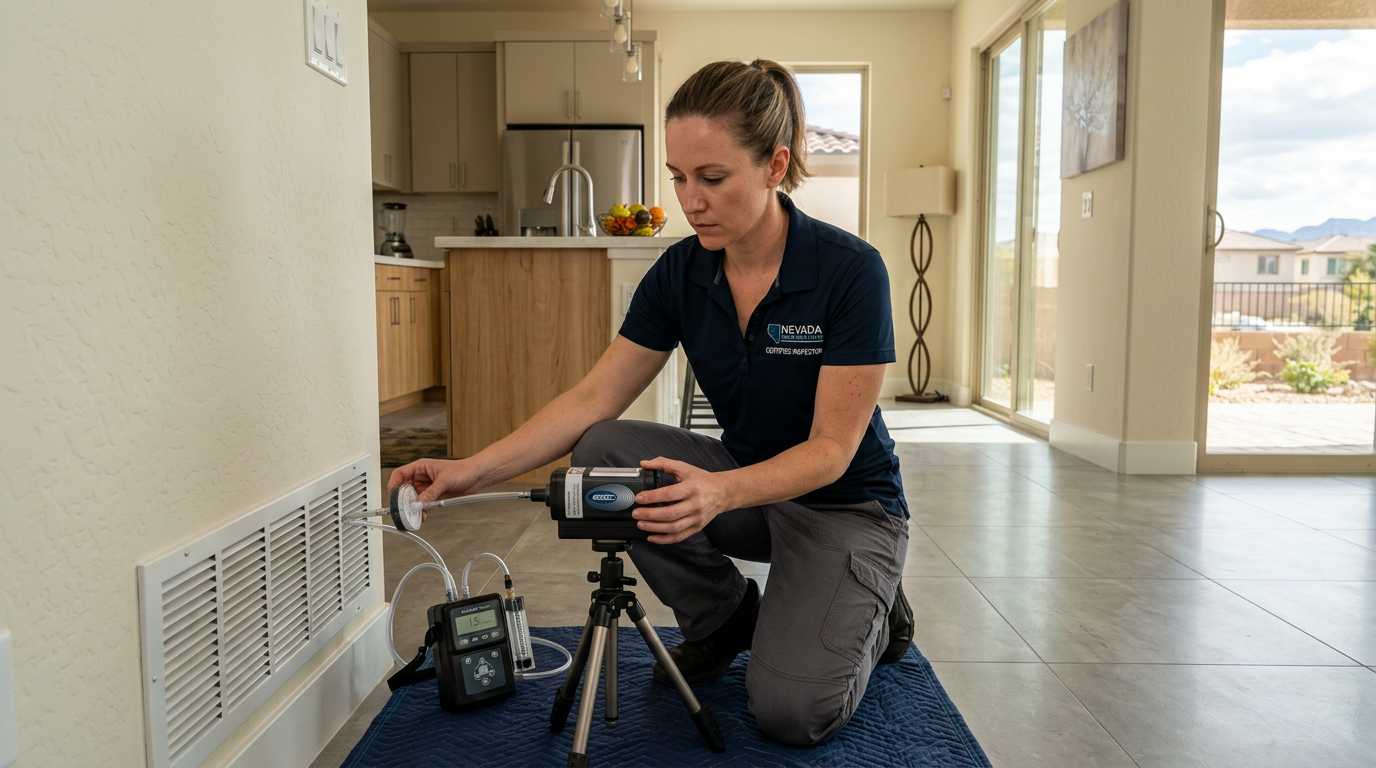
A professional pre-purchase mold inspection covers the interior, exterior, and HVAC system. Air samples are collected from multiple areas of the home and sent to an independent laboratory for analysis. An HVAC swab sample targets duct surfaces directly. The inspector also evaluates the property for moisture conditions, staining patterns, and building anomalies that suggest past water events.
Every client receives a written report with laboratory results attached. Not a verbal summary from someone standing in your kitchen. A documented, defensible record of air quality conditions inside the property at the time of inspection.
That documentation carries real weight in negotiation. If lab results show elevated spore counts or contaminated HVAC surfaces, you have evidence that supports a price reduction request or a remediation contingency. A general inspection note that says "recommend further evaluation" does not accomplish the same thing. You need numbers, lab results, and a signed report to move a seller.
What Buyers Ask Us Before Scheduling
Does the seller have to know I am ordering a mold test?
You do not need the seller's permission to order environmental testing during your inspection period. You are paying for the right to evaluate the property before you commit. Schedule it the same way you would schedule any other inspection.
If the home passed a general inspection, is mold testing still necessary?
Yes. A passing grade on a general inspection means the structure and systems are mechanically functional. It says nothing about air quality or microbial contamination. These are separate evaluations that require separate tools and separate expertise. Conflating the two is one of the most common and costly assumptions buyers make.
I have a tight closing timeline. How long does testing take?
A mold inspection is typically completed in two to three hours on-site. Laboratory results generally come back within two to three business days. If you communicate your closing date when you book, we can work to fit within your inspection period. Call (702) 766-8030 to confirm current availability before scheduling.
What if mold is found? Does that automatically kill the deal?
No. Finding elevated mold counts does not mean the house is uninhabitable or that the deal falls apart. It means you have documentation of a condition that needs to be addressed. Most of the time, that translates to a negotiated credit, a remediation contingency, or a price adjustment. You are in a stronger position with the test than without it.
The seller just had the HVAC serviced. Does that mean the ducts are clean?
Not necessarily. HVAC servicing typically covers mechanical function: refrigerant levels, coil cleaning, filter replacement. It does not include microbial testing of duct surfaces or air quality sampling. A recently serviced unit can still push contaminated air. The service receipt tells you the system works. It does not tell you what is in it.
Should I be concerned if the home smells fresh or has been recently painted?
Fresh paint and cleaning products can mask odors without eliminating the underlying source. Air samples measure what is actually present in the air regardless of how the home smells. Do not let your nose make this call.
Schedule Before You Close
Las Vegas Mold Testing performs inspection and testing only. The company does not offer remediation or repair services. That structure means findings are objective and reports are independent. There is no financial incentive to find a problem, and no upsell waiting on the other side of the results.
If you are under contract on a property in the Las Vegas Valley and the inspection period is still open, now is the right time to schedule. You will close with a written laboratory report, documented air quality results, and the negotiating leverage that comes with real data. Call (702) 766-8030 or submit a request online.
Contact Form
Check Out Our Other Environmental Blogs!